Best Embroidery Machine for Hats (2026): 9 Picks, From Patches to Cap Drivers
The best embroidery machine for hats is a multi-needle machine with a cap driver, like the 15-needle Poolin EOM-15 (about $3,994), which runs a 270 degree cap system at up to 850 spm on caps. On a hobby budget, embroider patches on a flatbed machine and apply them with the HTVRONT Auto Hat Press (about $150).
If you want to embroider finished, structured caps well, you need a machine built for them. The Poolin EOM at about $3,994 is our top pick: 15 needles, a 270 degree cap system and a published cap speed of 850 stitches per minute, at a price well below most commercial cap machines.
Here is the honest part many listings skip. A regular flatbed home embroidery machine, even an expensive one, is poorly suited to structured caps. The front panel is curved, stiffened and attached to a brim, so it will not lie flat in a hoop. Hobbyists get far better results by stitching a patch on a flatbed machine and pressing it on with a hat press like the HTVRONT Auto Hat Press.
Hat embroidery options at a glance
| Product | Price | Needles | Cap method | Max speed | Buy |
|---|---|---|---|---|---|
 Poolin EOM Poolin EOM | $3,994.00 | 15 | 270 degree cap system | 1,200 spm flat, 850 spm caps | Price |
 Ricoma EM-1010 Ricoma EM-1010 | $4,499.00 | 10 | 220 degree cap system | Not listed | Price |
 Ricoma Swift 1501 Ricoma Swift 1501 | $6,499.00 | 15 | 270 degree cap system | 1,200 spm | Price |
 Brother PR680W Brother PR680W | $12,999.99 | 6 | Cap embroidery kit included | 1,000 spm | Price |
 Brother PRS100 Brother PRS100 | $4,499.99 | 1 | Free arm with cap frame included | Not listed | Price |
 Brother PR1X Brother PR1X | $6,999.98 | 1 | Free arm, laser positioning | Not listed | Price |
 Janome MB-4S Janome MB-4S | $4,999.00 | 4 | Sold with a hat hoop | Not listed | Price |
 HTVRONT Auto Hat Press HTVRONT Auto Hat Press | $149.99 | None | Heat press for patches and transfers | Not applicable | Price |
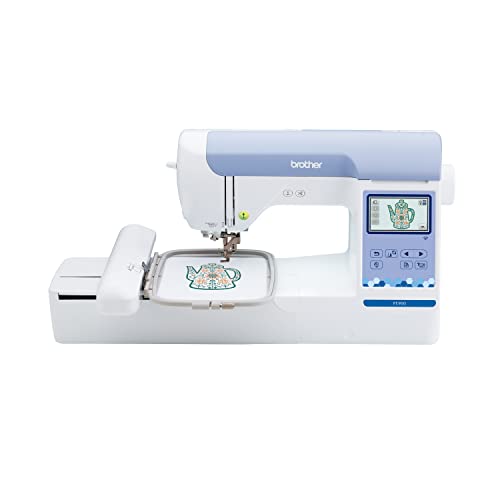 Brother PE900 Brother PE900 | $1,179.99 | 1 | Flatbed, stitch patches only | Not listed | Price |
Beginner
Beginner route: embroider patches and press them on, about $150 to $1,330
For a handful of family, club or gift hats, this is the route most hobbyists should take. You stitch a patch flat, where a home machine does its best work, then attach it with heat-activated adhesive or stitching.
HTVRONT Auto Hat Heat Press Machine
$149.99An automatic hat press with over 80 kg of pressure, adult and kids cap platens, and 104 to 410 F control. It applies iron-on patches and DTF transfers to curved cap fronts without you holding pressure by hand.
Best for: Applying patches to finished caps
Check price Brother PE900 Embroidery Machine
$1,179.99A 5 x 7 in flatbed with jump stitch trimming and color sort, ideal for satin-edged patches on wash away or cut away stabilizer. It can also stitch unstructured caps with a seam opened.
Best for: Stitching patches
Check price
OESD Badge Master Wash Away Stabilizer, 12 in x 8 yd
$40.99A thick water-soluble stabilizer made for patches and badges. It dissolves around the satin border so patch edges come out clean.
Best for: Clean patch edges
Check pricePrices change often, so confirm on Amazon. As an Amazon Associate we earn from qualifying purchases.
Intermediate
Intermediate: single-needle free-arm machines with cap frames, about $4,500 to $7,000
A free arm lets the cap slide over the machine, so the front panel sits under the needle. These machines stitch finished caps directly, but you still rethread for every color change.
Brother Persona PRS100 Single-Needle Embroidery Machine
$4,499.99A tubular free arm with an included cap frame and driver, four compact frames and an 8 x 12 in field for flat work. It is the gentlest step from home embroidery into direct cap stitching.
Best for: Hobbyists stitching real caps
Check price Brother Entrepreneur One PR1X Single-Needle Embroidery Machine
$6,999.98A free-arm single-needle machine with 495 designs, 33 fonts including a 3D font, automatic needle threading and a crosshair laser for positioning on caps, sleeves and bags.
Best for: Precise placement
Check price Janome MB-4S Four-Needle Embroidery Machine
$4,999.00Four needles hold four colors at once, and it is sold with a hat hoop and lettering hoops. A home-scale option for small batches of names and simple logos.
Best for: Small batches, fewer colors
Check pricePrices change often, so confirm on Amazon. As an Amazon Associate we earn from qualifying purchases.
Expert
Expert: multi-needle machines with cap drivers, about $4,000 to $13,000
These are the right tools for structured caps in quantity. Skip this tier if you plan to make fewer than a few dozen hats a year: a multi-needle machine needs floor space, a stand, maintenance and a learning period, and the patch route delivers good-looking hats for a fraction of the cost.
Poolin EOM 15-Needle Embroidery Machine
$3,994.0015 needles, a 270 degree cap system, 1,200 spm flat and 850 spm on caps, laser positioning and a 9 in touchscreen. The most published cap-specific detail of any machine here.
Best for: Best value cap production
Check price Ricoma EM-1010 10-Needle Embroidery Machine
$4,499.0010 needles, a 220 degree cap system, automatic color change and trimming and a 10.1 in touchscreen. Ricoma is widely used by small shops; note the stand is not included.
Best for: Entry commercial shop
Check price Ricoma Swift 1501 15-Needle Embroidery Machine
$6,499.0015 needles, a 20.5 x 13.8 in flat area, 270 degree cap system and 1,200 spm maximum. Built for shops running hats and jacket backs on the same machine.
Best for: Higher-volume shops
Check pricePrices change often, so confirm on Amazon. As an Amazon Associate we earn from qualifying purchases.
Can you embroider hats with a regular embroidery machine?
Partly. A flatbed home machine like the Brother PE900 or Brother SE700 can embroider flat things that later become hats, and some soft, unstructured caps if you open a seam and hoop the front panel with sticky stabilizer. What it cannot do well is a finished structured cap: the stiff buckram front and brim stop it lying flat, and forcing it into a hoop commonly causes crooked designs, broken needles and puckering.
That leaves three realistic routes, compared below. For a deeper look at single versus multi-needle designs, read single-needle vs multi-needle embroidery machines.
| Method | Works on structured caps? | Typical cost | Best for |
|---|---|---|---|
| Embroidered patch plus heat press | Yes | About $150 press plus any flatbed machine | Gifts, clubs, a few hats at a time |
| Single-needle free arm with cap frame | Yes, with rethreading per color | About $4,500 to $7,000 | Hobbyists and custom one-offs |
| Multi-needle with cap driver | Yes, best results | About $4,000 to $13,000 | Selling hats in quantity |
| Flatbed machine, hat hooped flat | Poor; unstructured caps only | Machine you already own | Occasional soft caps |
What size embroidery design for a hat?
Commonly cited guidance keeps a structured cap front design around 2 to 2.5 in tall and roughly 4 to 5 in wide, because the crown curves away from the needle above that height. Low-profile and unstructured caps allow a bit more. Side and back designs are much smaller, often around 1 to 1.5 in tall. A 270 degree cap system, like the one on the Poolin EOM and Ricoma Swift 1501, can stitch wider designs that wrap toward the sides; a 220 degree system, as on the Ricoma EM-1010, covers the front and a little beyond.
| Placement | Typical height | Typical width |
|---|---|---|
| Structured cap front | 2 to 2.5 in | 4 to 5 in |
| Unstructured dad cap front | Up to about 2.5 in | 4 to 5 in |
| Cap side | About 1 to 1.5 in | 1.5 to 2.5 in |
| Cap back above strap | About 1 in | 2 to 3 in |
| Beanie cuff | 1.5 to 2 in | 3 to 4 in |
| Patch for a cap front | 2 to 2.5 in | 3 to 3.5 in |
Check stitch time and density for a specific size with the embroidery stitch count calculator. Designs meant for caps should be digitized for caps, stitching from the center outward and bottom to top to avoid puckers.
What is the best multi-needle embroidery machine for hats?
For cap work, three specs matter more than needle count: the cap system angle, the published cap speed and how easily the cap driver swaps with flat hoops. The Poolin EOM publishes all three, which is why it is our pick. The Ricoma EM-1010 is the lower-cost Ricoma with a narrower 220 degree cap system. The six-needle Brother PR680W includes a complete cap embroidery kit and Brother's dealer support network, at roughly three times the Poolin price. Our best multi-needle embroidery machine roundup covers flat-work strengths too.
Is a hat press a good alternative to a hat embroidery machine?
For most hobbyists, yes. Embroidered patches look like direct embroidery from a few feet away, you can stitch them in batches while doing something else, and a bad patch costs a few cents of thread instead of a ruined $15 cap. The HTVRONT Auto Hat Press applies consistent pressure to the curved front, which is the hard part of doing it with a household iron.
Heat-activated adhesive patches hold well on cotton and polyester caps; many makers also add a line of stitching around the edge for caps that will be washed often. Our best heat press for crafts roundup covers flat presses for shirts and totes.
Heat press safety
Hat press platens reach over 400 F. Keep hands clear of the upper platen as it lowers, set it on a heat-safe surface, and keep children and pets away while it heats and cools.
Are multi-needle hat machines worth it for a small business?
They are when volume is steady. Caps are one of the most requested custom embroidery items, and a multi-needle machine changes colors and trims on its own, so one person can hoop the next cap while the current one runs. Before buying, price a typical order with the craft pricing calculator and read our guide to starting a machine embroidery business. The best embroidery machine for small business roundup covers the economics in detail.
How we chose
We did not test these machines in person. Picks draw on manufacturer specifications for cap systems, speeds and included frames, owner manuals, current Amazon listings, and recurring themes in verified owner reviews about cap results. We ranked honesty about structured caps above raw needle count, and included the patch and heat press route because it is the right answer for most hobby hat makers.
Buying tips
- A "hat hoop" and a "cap driver" are different things; confirm which one a machine includes.
- Look for the cap system angle (220 or 270 degrees) and a published cap speed.
- Budget for a stand, cap frames in extra sizes and cap-specific backing on multi-needle machines.
- Buy designs digitized for caps, or learn to digitize center-out.
- Practice on inexpensive blank caps before customer orders.
Frequently asked questions
What is the best embroidery machine for hats and shirts?
A multi-needle machine with both a cap driver and flat hoops handles hats and shirts best. The Poolin EOM-15 offers 15 needles, a 270 degree cap system and a 14.2 x 9.5 in flat area for about $3,994, while the Ricoma Swift 1501 adds a larger 20.5 x 13.8 in flat area. For hobby use, a Brother PE900 for shirts plus patches and a hat press for caps costs far less.
Can a Brother SE700 embroider hats?
Not finished structured caps. The SE700 is a flatbed machine with a 4 x 4 in field, so the curved, stiffened front of a cap will not sit flat under the needle. It can embroider patches that you then press or sew onto a cap, and some owners stitch soft unstructured caps after opening a seam. For direct cap embroidery, look at a free-arm or multi-needle machine with a cap frame.
What is a cap driver on an embroidery machine?
A cap driver is a curved frame assembly that holds a cap and rotates it around the needle as the machine stitches, so the design follows the curve of the crown instead of being flattened. It is standard on commercial multi-needle machines. The angle, such as 220 or 270 degrees, describes how far around the cap the system can reach, which determines how wide a design can wrap.
How many needles do you need to embroider hats?
One needle can do it on a free-arm machine with a cap frame, but you rethread for every color. For regular hat orders, 6 to 15 needles let the machine switch colors automatically, which matters because team and business logos often use several colors. Needle count affects convenience and speed more than stitch quality, so the cap system and support matter just as much.
Are embroidered patches as good as direct hat embroidery?
For appearance, a well-made satin-edged patch looks polished and is a popular style in its own right. Direct embroidery lies flatter and has no edge that could lift. Patches have practical advantages: you stitch them flat on any home machine, mistakes cost only thread and stabilizer, and you can apply them to caps that are hard to hoop. Adding edge stitching improves durability.
What stabilizer do you use for embroidering hats?
On a cap driver, embroiderers commonly use a firm tear away cap backing, because the cap front already has structure and the backing tears cleanly inside the crown. Unstructured caps may need a heavier or cut away backing. For patches stitched on a flatbed, a thick wash away stabilizer such as OESD Badge Master gives clean edges, or you can use twill fabric on cut away.
How we research: we compare manufacturer specifications, owner manuals, published standards and recurring themes in verified owner reviews. We do not test products in person, and this is researched guidance, not professional advice. Follow your machine manual and pattern, and take care with rotary cutters, hot irons and needles. As an Amazon Associate we earn from qualifying purchases.