Beginner Cross Stitch Setup: Everything You Need for About $244
A complete beginner cross stitch setup costs about $244 and centers on the Dimensions Garden Bouquet kit, a 12 by 12 inch design on 14 count Aida with presorted floss. Add an 11 inch Q-Snap frame, size 24 tapestry needles, Gingher embroidery scissors and a floss box with bobbins. Extra Aida, 100 DMC colors and an OttLite magnifier lamp are optional.
Beginner setup
Cross stitch is a gentle, portable craft and one of the least expensive to begin. The essentials here come to under $100, and the complete setup, including fabric and floss for your next few pieces and a magnifier lamp, is about $244 across 9 lines.
The centerpiece is a first kit, the Dimensions Garden Bouquet, about $25. A good kit takes the guesswork out of your first project: the 14 count ivory Aida, presorted thread, needle and chart all match, so you learn to stitch rather than learning to shop. Everything else on this list is what the kit leaves out.
Everything in the beginner cross stitch setup
Your first project
Aida is a stiff, evenly woven cotton with visible holes. 14 count means 14 stitches per inch, the easiest size to see and count.
| Item | Why this one | Qty | Price | Buy |
|---|---|---|---|---|
 Dimensions Garden Bouquet Dimensions Garden Bouquet | 14 count ivory Aida, presorted thread, needle and instructions for a 12 by 12 inch design. The intermediate setup moves to buying fabric and floss separately and choosing any chart you like. | 1 | $24.95 | Price |
| Your first project subtotal | $24.95 | |||
Holding the work
Fabric held taut makes even stitches. Loose fabric puckers.
| Item | Why this one | Qty | Price | Buy |
|---|---|---|---|---|
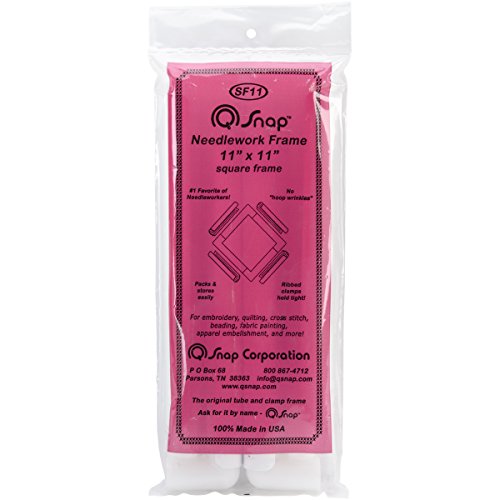 Q-Snap 11x11 Q-Snap 11x11 | An 11 by 11 inch PVC frame made in the USA. The clamps grip fabric without leaving the crease rings a wood hoop can press into Aida, and it slides to new areas of a 12 inch design easily. The intermediate tier adds a lap stand so both hands are free. | 1 | $22.97 | Price |
| Holding the work subtotal | $22.97 | |||
Needles and scissors
| Item | Why this one | Qty | Price | Buy |
|---|---|---|---|---|
 Colonial Tapestry Needles Size 24 Colonial Tapestry Needles Size 24 | Six blunt-tip English tapestry needles in size 24, the usual size for 14 count Aida. Blunt tips slip between fabric threads instead of splitting them. Kits include one needle, and needles do get lost. | 1 | $6.46 | Price |
 Gingher Stork Scissors Gingher Stork Scissors | Classic 3.5 inch gold stork scissors made in Italy. Fine points trim floss close to the back of the fabric, which household scissors cannot do neatly. | 1 | $15.99 | Price |
| Needles and scissors subtotal | $22.45 | |||
Floss organization
Floss is six-strand cotton thread; you separate strands as you stitch. Once skeins leave their paper bands, colors get confused quickly.
| Item | Why this one | Qty | Price | Buy |
|---|---|---|---|---|
 ArtBin Floss Finder ArtBin Floss Finder | A 10.75 by 7.375 inch clear latching box made in the USA with 6 fixed compartments and 12 removable dividers. Bobbins are not included, hence the next line. | 1 | $13.90 | Price |
 DMC Plastic Floss Bobbins DMC Plastic Floss Bobbins | 28 plastic bobbins for winding each color and writing its number on. One pack covers a typical kit, with spares. | 1 | $7.73 | Price |
| Floss organization subtotal | $21.63 | |||
Fabric and floss for your next pieces
| Item | Why this one | Qty | Price | Buy |
|---|---|---|---|---|
 Charles Craft Aida 14ct Optional Charles Craft Aida 14ct Optional | A 30 by 36 inch piece of 14 count antique white cotton Aida, enough to cut several future projects. Optional until the kit is finished. | 1 | $16.99 | Price |
 DMC Floss 100 Colors Optional DMC Floss 100 Colors Optional | 100 different DMC cotton skeins, no duplicates. DMC numbers are what most charts list, so a starter library lets you stitch free and purchased patterns. Optional until you move beyond kits. | 1 | $62.95 | Price |
| Fabric and floss for your next pieces subtotal | $79.94 | |||
Light and magnification
| Item | Why this one | Qty | Price | Buy |
|---|---|---|---|---|
 OttLite Prevention Magnifier Optional OttLite Prevention Magnifier Optional | A desk lamp with a 1.7x magnifier and a 3.4x spot viewer, CRI 95 plus, four brightness levels and 10 to 21 inches of height. Counting holes in Aida under evening light is the first thing that gets hard. Optional if you stitch in bright daylight. | 1 | $71.99 | Price |
| Light and magnification subtotal | $71.99 | |||
The required lines come to about $92; the extra Aida, 100-color DMC set and magnifier lamp make up the rest of $244. The frame, needles, scissors and storage all carry forward.
Prices were current when compiled and change often, so confirm each on Amazon. Lines marked "See price" have no verified listing price and are left out of the total rather than guessed. As an Amazon Associate we earn from qualifying purchases, at no extra cost to you.
What you can skip for now
Skip giant hoop and floss "starter kits" with 200 unbranded colors. Most charts list DMC numbers, and unbranded floss colors do not map exactly. The DMC Floss 100 Colors set is the better long-term base.
Skip a floor stand for now. A Lowery Workstand is wonderful for large pieces and long sessions, but it is a lot of money before you know you enjoy the craft.
Skip linen. 28 count Wichelt Linen 28ct is beautiful but harder to count. Learn on Aida first.
What to upgrade first
1. Light. If you stitch in the evening, a bright daylight lamp such as the Daylight Slimline 4 makes 14 count easy and 16 or 18 count possible.
2. Hands-free holding. A lap stand like the Morgan Lap Stand frees both hands, so one works above the fabric and one below, which is faster and easier on the wrists.
3. A larger frame. A Q-Snap 17x17 holds more of a big design at once.
What do you need to start cross stitch?
To start cross stitch you need five things: evenweave fabric such as Aida, six-strand embroidery floss, a blunt tapestry needle, something to hold the fabric taut, and a chart. A kit supplies fabric, floss, needle and chart. You add the frame or hoop, spare needles, small scissors and a way to keep floss organized.
- Fabric count: start with 14 count. See the cross stitch fabric count chart.
- Fabric size: the design size plus about 3 inches on every side for framing. The cross stitch fabric calculator does this math.
- Floss quantity: kits are presorted; for charts, the cross stitch floss calculator estimates skeins.
What size needle and how many strands for cross stitch?
Needle size and strand count follow fabric count. The finer the fabric, the smaller the needle (higher number) and the fewer strands. These are common starting points, and your chart or kit instructions take priority.
| Fabric | Stitches per inch | Tapestry needle | Floss strands |
|---|---|---|---|
| 11 count Aida | 11 | Size 22 | 3 |
| 14 count Aida | 14 | Size 24 | 2 |
| 16 count Aida | 16 | Size 24 or 26 | 2 |
| 18 count Aida | 18 | Size 26 | 1 or 2 |
| 28 count linen, over two threads | 14 | Size 26 or 28 | 2 |
| 32 count linen, over two threads | 16 | Size 28 | 1 or 2 |
The Colonial Tapestry Needles Size 24 suit this beginner kit, and the Colonial Tapestry Needles Size 26 suit finer fabrics later. For floss types and weights, see the floss and thread chart.
Is a hoop or Q-Snap better for beginner cross stitch?
Either works. A wood or plastic hoop is inexpensive and portable, but it can leave a crease ring on Aida if left on between sessions. A Q-Snap frame like the Q-Snap 11x11 is a square PVC frame with snap-on clamps that grip the fabric evenly and leave less of a mark, and its square shape suits square and rectangular designs. Take either off the fabric when you stop for the day. Our Q-Snap vs scroll frame comparison covers the next step up, and the embroidery hoops roundup covers hoops.
Start from the center
Fold the fabric in quarters to find the center, and start stitching there. The chart center is usually marked with arrows. Starting in the middle keeps the design centered for framing.
Frequently asked questions
How much does it cost to start cross stitch?
You can start cross stitch for about $92: a beginner kit with fabric, floss, needle and chart, an 11 inch Q-Snap frame, a pack of size 24 tapestry needles, small embroidery scissors, and a floss box with bobbins. Adding a large piece of 14 count Aida, a 100-color DMC floss set and a magnifier desk lamp brings the complete beginner setup to about $245. After that, you mainly buy charts, fabric and individual floss colors.
What count Aida is best for beginners?
14 count Aida is best for beginners. It has 14 stitches per inch, so the holes are large enough to see and count easily, and it works with two strands of floss and a size 24 tapestry needle. 11 count is even larger but makes designs look blocky. 16 and 18 count produce finer detail and are a good second step once counting feels natural.
Should a beginner buy a cross stitch kit or separate supplies?
A beginner is usually better served by a kit, because the fabric, presorted floss, needle and chart are matched and nothing is missing. Separate supplies make sense once you want to stitch patterns that are not sold as kits, or to use your own color choices. A 100-color DMC set and a large piece of 14 count Aida are the common next purchase.
Do I need a magnifier for cross stitch?
Not everyone does, but many stitchers find a magnifier lamp makes counting holes much easier, especially on 16 count and finer fabric or in the evening. A lamp like the OttLite Prevention magnifier lamp combines bright light with 1.7x magnification. If you notice you need more magnification than you used to, see an eye care professional to have your vision checked.
How do you keep embroidery floss organized?
Wind each color onto a plastic or card bobbin, write the DMC number on it, and store bobbins upright in numerical order in a compartment box such as the ArtBin Floss Finder. Keep the skein label on the bobbin if you like. For a project in progress, a floss ring or a simple card with holes punched for each color keeps the working colors together.
How we research: we compare manufacturer specifications, owner manuals, published standards and recurring themes in verified owner reviews. We do not test products in person, and this is researched guidance, not professional advice. Follow your machine manual and pattern, and take care with rotary cutters, hot irons and needles. As an Amazon Associate we earn from qualifying purchases.