Best Mechanical Sewing Machine (2026): 10 Dial-Controlled Picks
The best mechanical sewing machine is the Janome HD3000 (about $530): dial stitch selection, 18 stitches, a one-step buttonhole, adjustable foot pressure and a hard case. The Janome 2212 (about $220) is the best budget mechanical machine, and the Juki TL-2000Qi is the pick for fast, straight-stitch sewing.
A mechanical sewing machine sets stitches with dials, cams and gears rather than a circuit board. There is no screen to read, no menu to learn and very little that can fail electronically. For sewists who value simplicity, repairability or tactile controls, that is exactly the appeal.
The Janome HD3000 is our top pick because it pairs dial simplicity with the two features mechanical machines often skip: a one-step buttonhole and adjustable foot pressure. On a budget, the Janome 2212 is the classic, and the Janome Arctic Crystal is the lightest option here.
Mechanical machines compared
| Product | Price | Stitches | Buttonhole | Standout | Buy |
|---|---|---|---|---|---|
 Janome Arctic Crystal Janome Arctic Crystal | $139.99 | 15 | 4-step | 13 lb, darning plate included | Price |
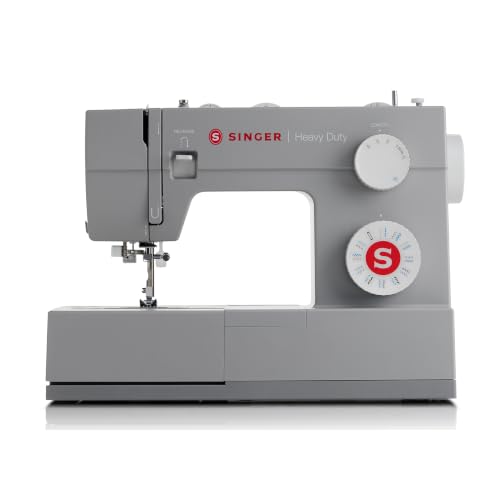 Singer 4423 Singer 4423 | $182.41 | 23 | Not listed | Metal interior frame | Price |
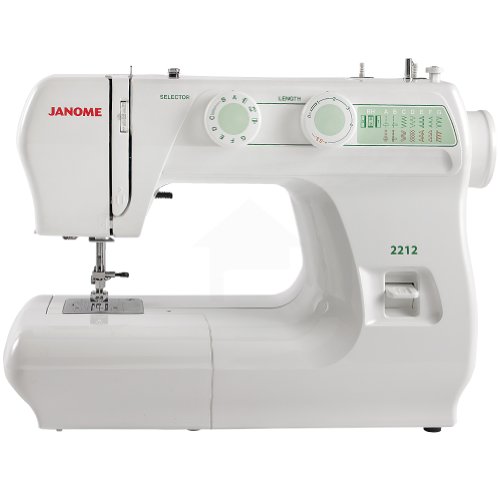 Janome 2212 Janome 2212 | $217.00 | 12 | 4-step | Front-loading bobbin | Price |
 Bernette b33 Bernette b33 | $299.00 | 15 | Not listed | 5 mm width, 2-step foot lift | Price |
 Singer HD500 Classic Singer HD500 Classic | $379.99 | Not listed | One-step | Full metal frame | Price |
 Janome HD1000 Janome HD1000 | $399.00 | 14 | 4-step | Metal working parts | Price |
 Juki HZL-355Z Juki HZL-355Z | $408.49 | Not listed | Automatic one-step | Adjustable foot pressure | Price |
 Janome HD3000 Janome HD3000 | $529.00 | 18 | One-step | Adjustable foot pressure | Price |
 Juki TL-2000Qi Juki TL-2000Qi | $999.00 | Straight only | None | 1,500 SPM | Price |
 Juki DDL-8700 Juki DDL-8700 | $1,099.00 | Straight only | None | 5,500 SPM industrial | Price |
Beginner
Beginner picks: simple and affordable, $140 to $300
Entry mechanical machines use a four-step buttonhole on most models, meaning you turn a dial through four positions to sew each side and end. It is easy after a little practice.
Janome 2212 Mechanical Sewing Machine
$217.00Twelve stitches on two dials, a 4-step buttonhole, a front-loading bobbin and a 5-piece feed dog. It is the mechanical machine sewing teachers most often suggest, because every setting is visible and it rarely surprises you.
Best for: Learning on a classic dial machine
Check price Janome Arctic Crystal Easy-to-Use Sewing Machine
$139.99Janome lists it at 13 pounds, with 15 stitches, a 4-step buttonhole, a free arm, snap-on feet and a darning plate for simple free-motion work. The lightest mechanical pick here for small spaces and classes.
Best for: Small spaces and carrying to class
Check price Singer Heavy Duty 4423 Sewing Machine
$182.41Twenty-three stitches with a metal interior frame, a stainless steel bedplate and up to 1,100 stitches per minute. Choose it if you expect thicker fabric than the Janome 2212 is comfortable with.
Best for: Budget denim and canvas
Check price Bernette b33 Mechanical Sewing Machine
$299.00Fifteen stitches chosen by two dials, a 5 mm stitch width, a semi-automatic needle threader and a two-step presser foot lift, from Bernina's bernette line with dealer support.
Best for: A plain machine with a dealer behind it
Check pricePrices change often, so confirm on Amazon. As an Amazon Associate we earn from qualifying purchases.
Intermediate
Intermediate picks: built to last, $380 to $530
More metal, better feeding and conveniences like one-step buttonholes and foot pressure control, still with no screen.
Janome HD3000 Heavy Duty Sewing Machine with Hard Case
$529.00Eighteen stitches, a one-step buttonhole, adjustable foot pressure, snap-on presser feet, a built-in needle threader and a hard case. It is the most complete dial machine in its price range.
Best for: A buy-once mechanical machine
Check price Janome HD1000 Heavy Duty Sewing Machine
$399.00Fourteen stitches, a 4-step buttonhole, metal working parts and drop feed. It gives up the conveniences of the Janome HD3000 for an even simpler design.
Best for: Maximum simplicity
Check price Singer Heavy Duty 500 Classic Sewing Machine
$379.99A full metal frame, a one-step buttonhole, a built-in needle threader, drop feed, adjustable needle position and a motor Singer rates at 50 percent more power than standard models.
Best for: Heavy fabric in a metal body
Check price Juki HZL-355Z Compact Sewing Machine
$408.49A compact Juki with an automatic needle threader, automatic one-step buttonholes, adjustable foot pressure and a hard shell carrying case, for sewists who take a machine to classes.
Best for: Portability with Juki build
Check pricePrices change often, so confirm on Amazon. As an Amazon Associate we earn from qualifying purchases.
Expert
Expert picks: straight-stitch speed, $1,000 to $1,100
Who should NOT buy this tier: anyone who needs zigzag, buttonholes or stretch stitches. These are straight-stitch-only machines built for speed and stitch quality. They suit quilters, jeans makers and home decor sewists who already own a zigzag machine.
Juki TL-2000Qi Long-Arm Sewing and Quilting Machine
$999.00A semi-industrial straight-stitch machine running up to 1,500 stitches per minute, sold as a quilters package. Its simple mechanical design and speed are why it has been a quilting and piecing favorite for years.
Best for: Fast piecing and straight seams
Check price Juki DDL-8700 Industrial Straight Stitch Sewing Machine
$1,099.00The industrial straight stitcher, rated up to 5,500 stitches per minute with a 5 mm maximum stitch length, sold complete with a 110V clutch motor. Entirely mechanical, and repairable by any industrial sewing machine technician.
Best for: Production-style straight sewing
Check pricePrices change often, so confirm on Amazon. As an Amazon Associate we earn from qualifying purchases.
What is a mechanical sewing machine?
A mechanical sewing machine uses physical dials or levers to select stitches and set stitch length and width. Turning a dial moves a cam or linkage that controls the needle's side-to-side swing. An electric motor still powers the needle, controlled by a foot pedal, but there is no circuit board choosing stitches for you.
By contrast, a computerized machine selects stitches with buttons and a microprocessor. Many so-called mechanical machines today have a few electronic parts, like an LED light, but the stitch mechanism stays mechanical. See computerized vs mechanical sewing machines for the full comparison.
Are mechanical sewing machines better than computerized ones?
They are better in some situations and worse in others. Here is an honest scorecard.
| Situation | Mechanical | Computerized | Edge |
|---|---|---|---|
| Learning how stitches work | Every setting visible on a dial | Defaults set for you | Mechanical |
| Power surges and storms | Little to damage | Circuit board at risk | Mechanical |
| Out-of-warranty repair | Most technicians can adjust it | Board replacement can be costly | Mechanical |
| Buttonholes | Often 4-step, one style | One-step, several styles | Computerized |
| Needle up/down, thread cutter | Rare | Common from mid-range | Computerized |
| Decorative stitches and lettering | A handful | Dozens to hundreds | Computerized |
| Reading the controls | Large dials, but small printed charts | Screens vary; some are small | Depends on the model |
Do mechanical sewing machines last longer?
Often, yes, but build quality matters more than control type. A mechanical machine has fewer parts that fail suddenly, and when something does go wrong, it is usually an adjustment or a replaceable part rather than a circuit board. That is one reason decades-old mechanical machines are still sewing today.
However, low-cost mechanical machines may use plastic gears and lighter frames that wear faster than a well-built computerized machine. Look for metal internal frames or working parts, as on the Janome HD1000 and Singer HD500 Classic, and follow the maintenance steps in our sewing machine maintenance guide.
What is the difference between a 4-step and a one-step buttonhole?
A 4-step buttonhole is sewn in four stages. You turn the dial to sew the first side, then the bar tack, then the second side, then the final bar tack, stopping between each. The Janome 2212 and Janome HD1000 work this way. Length is judged by eye or by marks on the fabric, so matching several buttonholes takes care.
A one-step buttonhole uses a special foot that holds the button, and the machine sews all four stages automatically to the button's size. The Janome HD3000 and Singer HD500 Classic offer one-step buttonholes on mechanical machines. If you sew button-front shirts or cardigans, this feature alone can justify the step up.
Is a mechanical sewing machine easier for people with arthritis or low vision?
It can be, but check the specific model. Large dials are easier to grip and turn than small buttons for some hands, and nothing depends on reading a tiny screen. On the other hand, stiff dials, small printed stitch charts and four-step buttonholes can be harder. Features that help regardless of machine type include an automatic needle threader, like on the Juki HZL-355Z, a drop-in or front-loading bobbin you find comfortable, and bright task lighting.
Our guide to crafting with arthritis covers grips, posture and tools, and the best lamps for sewing help with seeing the needle and stitch chart.
How we chose
We did not test these machines in person. We included machines whose stitch selection is mechanical (dials, levers or cams), then compared manufacturer specifications, owner manuals, frame and working-part materials, and recurring themes in verified owner reviews about durability, ease of use and repairs. Straight-stitch machines are included in the Expert tier because their mechanisms are simple and mechanical, with the limits stated clearly.
Buying tips
- Turn the dials in photos or at a store: stiff or tiny controls matter every session.
- Check whether the buttonhole is one-step or 4-step before buying if you sew garments.
- Oil only where the manual says; many modern machines have sealed points that should not be oiled.
- A metal frame or metal working parts are worth a modest price premium.
- Keep a surge protector anyway if your machine has an LED light or electronic speed control.
Frequently asked questions
What is the best mechanical sewing machine?
The Janome HD3000 is the best mechanical sewing machine for most people, combining dial stitch selection with a one-step buttonhole, adjustable foot pressure, a needle threader and a hard case. The Janome 2212 is the best budget mechanical machine at about $220. For fast straight-stitch piecing, the Juki TL-2000Qi is the top mechanical choice.
Are mechanical sewing machines good for beginners?
Yes. Mechanical machines are often the best way to learn, because you see and set stitch length and width yourself, which builds understanding of how stitches work. They are also less intimidating than menus and screens. The main learning curve is the 4-step buttonhole found on many models, which takes a few practice runs on scrap fabric to master.
Can mechanical sewing machines sew thick fabric?
Many can, especially heavier models with metal frames like the Singer HD500 Classic and Janome HD3000. Use a 100/16 needle, a longer stitch and slow speed over thick seams. Lightweight mechanical machines under $200 are less rigid and may struggle with multiple layers of denim or canvas, so choose a heavier model if thick fabric is a regular part of your sewing.
Do mechanical sewing machines need oiling?
Some do and some do not. Older and industrial mechanical machines need regular oiling at marked points, and the Juki DDL-8700 relies on proper lubrication. Many modern household machines are designed to need little or no user oiling apart from specific spots like the hook race. Always follow the owner manual, since oil in the wrong place attracts lint and can stain fabric.
Is a mechanical sewing machine cheaper to repair?
Generally yes. Most mechanical problems are timing, tension or feed adjustments, or worn parts that a general sewing machine technician can fix. Computerized machines can also need these repairs, plus the risk of a circuit board or display failure, which can be expensive outside the warranty. A yearly or regular cleaning service keeps either type running well.
How we research: we compare manufacturer specifications, owner manuals, published standards and recurring themes in verified owner reviews. We do not test products in person, and this is researched guidance, not professional advice. Follow your machine manual and pattern, and take care with rotary cutters, hot irons and needles. As an Amazon Associate we earn from qualifying purchases.