Best Computerized Sewing Machine (2026): 10 Picks From $230 to $1,760
The best computerized sewing machine for most sewists is the Janome Skyline S5 (about $1,400), with 170 stitches, 91 needle positions, a 9 mm stitch width and an automatic thread cutter. The Janome JW8100 (under $400) is the best mid-priced choice, and the Brother CS7000X is the best value under $300.
A computerized sewing machine uses a circuit board and buttons or a screen to select stitches, instead of mechanical cams and dials. That brings real conveniences, like one-step buttonholes, needle up/down, automatic thread cutting and precise needle positions, and a few new things that can go wrong.
Our top pick is the Janome Skyline S5 because it spends its computer power on features you use every session, not just a big stitch count. For a lower budget, the Janome JW8100 and Brother CS7000X give most of the everyday benefits.
Computerized picks side by side
| Product | Price | Built-in stitches | Standout electronic feature | Best for | Buy |
|---|---|---|---|---|---|
 Brother CP100X Brother CP100X | $229.99 | 100 | 8 auto-size buttonholes | Budget variety | Price |
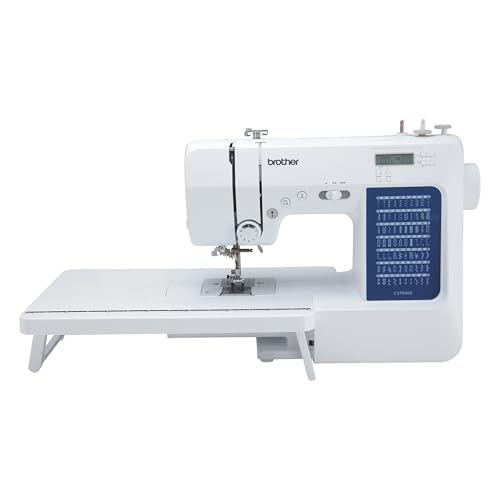 Brother CS7000X Brother CS7000X | $279.99 | 70 | LCD stitch selection, 7 one-step buttonholes | Best value | Price |
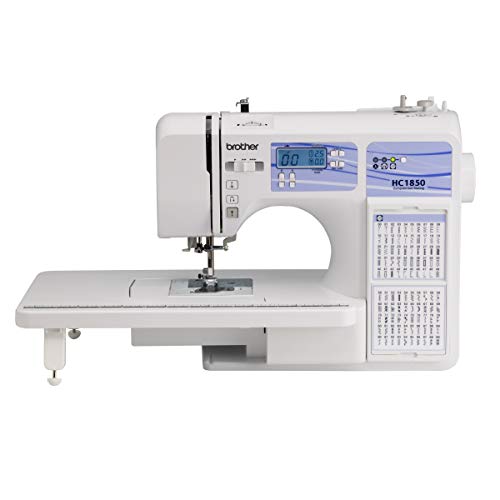 Brother HC1850 Brother HC1850 | $299.99 | 185 | 55 alphanumeric stitches | Monograms on a budget | Price |
 Janome JW8100 Janome JW8100 | $369.00 | 100 | Needle up/down, start/stop | Mid-priced all-rounder | Price |
 Singer Quantum Stylist 9960 Singer Quantum Stylist 9960 | $535.99 | 600 | 13 one-step buttonholes | Decorative stitch fans | Price |
 Juki HZL-HT740 Juki HZL-HT740 | $649.00 | Not listed | Automatic upper and lower trim | Time savers | Price |
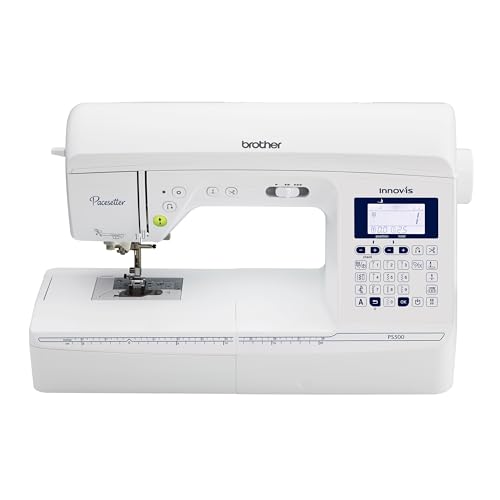 Brother PS500 Brother PS500 | $859.99 | 100 | 4 lettering fonts, stitch combination | Home decor and lettering | Price |
 Janome Skyline S5 Janome Skyline S5 | $1,399.00 | 170 | 91 needle positions, 9 mm width | Best overall | Price |
 Juki HZL-F600 Juki HZL-F600 | $1,499.00 | 255 | LCD selector, auto threader | Big stitch library | Price |
 Juki DX-2000QVP SE Juki DX-2000QVP SE | $1,759.00 | 287 patterns | Auto tension and foot lift | Premium garment sewing | Price |
Beginner
Beginner picks: screens and one-step buttonholes, under $300
Entry computerized machines are the most machine per dollar in sewing. The trade-off is lighter construction and fewer premium conveniences like automatic thread cutting.
Brother CS7000X Computerized Sewing and Quilting Machine
$279.99Seventy stitches, seven one-step buttonholes, a metal frame, a wide table and ten feet with a hard case. The balance of features and price is why it is one of the best-selling computerized machines.
Best for: The best all-round budget pick
Check price Brother CP100X Computerized Sewing and Quilting Machine
$229.99A metal-frame model with 100 stitches, eight auto-size buttonholes, ten feet, a wide table and a hard case, usually for less than the Brother CS7000X. It suits sewists who want more stitch variety from the same starter class.
Best for: More stitches for less
Check price Brother HC1850 Computerized Sewing and Quilting Machine
$299.99A long-running LCD model with 185 stitches, 55 of them alphanumeric, plus eight buttonhole styles. Lettering on a budget is the reason to choose it.
Best for: Names and simple monograms
Check pricePrices change often, so confirm on Amazon. As an Amazon Associate we earn from qualifying purchases.
Intermediate
Intermediate picks: electronics that save time, $370 to $900
Here the computer starts doing chores for you: trimming threads, stopping with the needle down and combining stitches. Build quality and feeding improve too.
Janome JW8100 Computerized Sewing Machine
$369.00One hundred stitches, a 7-piece feed dog, needle up/down and a start/stop button, with an extension table, hard cover and even feed foot included. It is the mid-priced machine that feels most like a step up without a big jump in price.
Best for: A step up from budget Brothers
Check price Juki HZL-HT740 Computerized Sewing Machine
$649.00Automatic upper and lower thread trimming, an automatic needle threader, a metal interior frame and a stainless steel bed plate. The trimmer alone saves minutes on every patchwork or garment session.
Best for: Sewists who hate snipping threads
Check price Singer Quantum Stylist 9960 Computerized Sewing Machine
$535.99Six hundred stitches and 1,172 stitch applications, 13 one-step buttonholes and 13 presser feet. Choose it for decorative stitching; do not choose it for its stitch count alone.
Best for: Decorative stitch lovers
Check price Brother PS500 Pacesetter Computerized Sewing Machine
$859.99A dealer-line Pacesetter with 100 stitches, seven one-step buttonholes, four lettering fonts, stitch combination and 8.3 inches from needle to arm for curtains and quilts.
Best for: Lettering and larger projects
Check pricePrices change often, so confirm on Amazon. As an Amazon Associate we earn from qualifying purchases.
Expert
Expert picks: precision and automation, $1,400 to $1,760
Who should NOT buy this tier: sewists who only mend and hem, and anyone who wants the simplest possible controls. The value here is precision, automation and build quality, which only pays off if you sew often.
Janome Skyline S5 Computerized Sewing Machine
$1,399.00One hundred seventy stitches, 91 needle positions, a 9 mm maximum stitch width, an automatic thread cutter and Janome's Superior Plus 7-piece feed. It balances garment precision and quilting room better than anything else here.
Best for: Serious sewists who do a bit of everything
Check price Juki HZL-F600 Computerized Sewing and Quilting Machine
$1,499.00Juki's full-size Exceed model with 255 stitches covering basic, stretch, decorative, lettering and buttonhole stitches, an LCD selector and an automatic needle threader.
Best for: A large stitch library from Juki
Check price Juki DX-2000QVP SE Computerized Sewing Machine
$1,759.00Box feed, automatic thread tension, automatic presser foot lift and a pivot function, with 287 sewing patterns and four fonts. The automation is aimed at fine fabric and garment precision.
Best for: Garment sewists who want automation
Check pricePrices change often, so confirm on Amazon. As an Amazon Associate we earn from qualifying purchases.
What is a computerized sewing machine?
A computerized sewing machine controls stitch selection, stitch width and length, and needle position electronically. You pick a stitch with a button or touchscreen, and a circuit board sets the needle's side-to-side movement and the feed. Mechanical machines do the same job with cams, gears and dials you turn by hand.
Computerized features commonly include one-step buttonholes, needle up/down, a start/stop button, a speed control, automatic thread cutting and lettering. Some higher-end models add automatic tension and presser foot lift, as on the Juki DX-2000QVP SE.
Is a computerized or mechanical sewing machine better?
Neither is better for everyone. Computerized machines are more convenient and versatile. Mechanical machines are simpler to understand and cheaper to repair. The full breakdown is in our computerized vs mechanical sewing machine comparison.
| Factor | Computerized | Mechanical |
|---|---|---|
| Stitch selection | Buttons or screen, stitch number shown | Dials, stitch shown on a chart |
| Buttonholes | Usually one-step, several styles | Often four-step, one style |
| Needle up/down | Common | Rare |
| Sewing without the pedal | Start/stop button on many models | Pedal only |
| Typical repair risk | Circuit board or display | Mostly mechanical adjustments |
| Power outage or surge sensitivity | Higher; use a surge protector | Lower |
| Example | Janome JW8100 | Janome 2212 |
Which computerized sewing machine features are worth paying for?
Stitch count gets the headline, but the features below change how sewing feels day to day. Here is what each costs you, roughly, and who benefits.
| Feature | What it does | Typically appears around | Worth it for |
|---|---|---|---|
| Needle up/down | Stops with the needle in the fabric for pivoting | $350 and up, e.g. Janome JW8100 | Everyone |
| Automatic thread cutter | Trims threads at the end of a seam | $650 and up, e.g. Juki HZL-HT740 | Quilters, garment sewists |
| Start/stop button | Sew without the foot pedal | $350 and up | Sewists with foot, knee or hip pain |
| Many needle positions | Precise edge stitching and zippers | $1,400, e.g. Janome Skyline S5 (91) | Garment sewists |
| 9 mm stitch width | Wider decorative and satin stitches | $1,400 and up | Decorative and applique work |
| Lettering fonts | Stitch names and labels | $300 and up, e.g. Brother HC1850 | Gift makers |
| Hundreds of stitches | Decorative variety | $230 and up | Only if you use decorative stitches |
How long do computerized sewing machines last?
A well-maintained computerized machine commonly gives many years of service. The mechanical parts, like the hook, feed dogs and motor, wear the same way they do in any machine, and cleaning and oiling as the manual directs keeps them healthy. The extra risk is electronic: a failed circuit board or display can cost a large share of a budget machine's price to replace once it is out of warranty.
To protect it, plug it into a surge protector, keep it covered and away from humidity, and register the warranty. Buying from a brand with a dealer network, such as Janome, Juki or bernette, makes out-of-warranty repairs easier to arrange. Our sewing machine maintenance guide covers the routine.
Readable screens
Small monochrome LCDs can be hard to read from a normal sewing posture, especially in dim light. Look at photos of the display before you buy, and add good task lighting; see the best lighting for sewing.
What is the best computerized sewing machine for quilting?
For quilting, look past stitch count to throat space (the distance from the needle to the machine body), feeding and a thread cutter. The Brother PS500 offers 8.3 inches from needle to arm, and the Janome Skyline S5 combines a roomy body with an automatic thread cutter. Use the throat space calculator to see how much room your quilt sizes need, then compare dedicated options in sewing machines with large throat space.
How we chose
We did not test these machines in person. We compared manufacturer specifications and owner manuals for each machine's electronic features (stitch selection, buttonholes, needle positions, thread cutting, automation), then weighed recurring themes in verified owner reviews about reliability, screen readability and ease of use. We favored models with long sales histories and dealer or manufacturer support over newer models with little owner feedback.
Buying tips
- Use a surge protector for any computerized machine.
- Decide which three features you would use weekly, and buy for those rather than for stitch count.
- Check that software or firmware updates are not required for basic sewing functions.
- Keep the original box for the warranty period in case it needs to ship for service.
- Look for a start/stop button and speed slider if foot pedal use is uncomfortable for you.
Frequently asked questions
What is the best computerized sewing machine for the money?
The Brother CS7000X is the best value computerized machine, with 70 stitches, seven one-step buttonholes, a wide table, ten feet and a hard case for under $300. If you can spend under $400, the Janome JW8100 adds needle up/down, a start/stop button and an even feed foot. For a buy-once machine, the Janome Skyline S5 is our top overall pick.
Are computerized sewing machines harder to use?
Usually they are easier. You press a stitch number and the machine sets a sensible width and length, and one-step buttonholes remove one of the hardest beginner tasks. The learning curve is mostly reading the manual to find menu features. Sewists who dislike screens or have trouble reading small displays may still prefer a mechanical machine with large dials.
Do computerized sewing machines need a surge protector?
Yes, it is a sensible precaution. Computerized machines rely on a circuit board that can be damaged by power surges from storms or electrical faults, and board replacement can be expensive. A basic surge protector strip is inexpensive insurance. Unplug the machine during thunderstorms and when you leave it unused for long stretches.
How many stitches do you really need on a computerized sewing machine?
Most sewists regularly use fewer than 20 stitches: straight, zigzag, stretch, overcast, blind hem, a few buttonholes and a handful of decorative stitches. A 70 or 100 stitch machine covers everything practical. Larger libraries like 600 stitches suit people who love decorative borders and embellishment, but they do not improve basic sewing quality.
Can a computerized sewing machine sew thick fabric?
Many can handle denim hems and a few layers of canvas with a 100/16 needle and a slower speed, but most are built for everyday fabrics rather than heavy materials. Some models reduce power at low speeds or stop to protect the motor. For regular heavy sewing, a heavy duty or semi-industrial machine is the better tool.
Is Janome or Brother better for computerized sewing machines?
Brother leads on features per dollar below $300, with machines like the Brother CS7000X and Brother CP100X. Janome is often preferred from about $350 upward for stitch quality, feeding and dealer support, with the Janome JW8100 and Janome Skyline S5 as popular choices. Our Brother vs Janome comparison covers the differences in depth.
How we research: we compare manufacturer specifications, owner manuals, published standards and recurring themes in verified owner reviews. We do not test products in person, and this is researched guidance, not professional advice. Follow your machine manual and pattern, and take care with rotary cutters, hot irons and needles. As an Amazon Associate we earn from qualifying purchases.