Throat Space Calculator: How Much Throat Space Your Quilt Size Needs
Throat space is the distance from the needle to the machine body. A standard machine with about 7 inches handles baby quilts, 8 to 9 inches suits throws, and 9 to 12 in makes a 90 inch queen far easier. A 106 inch king quilt calls for 15 in or more, or a frame.
Throat space is the distance from the needle to the body of the machine, the room the rolled-up quilt has to squeeze through. Enter how wide your quilts are and how you like to quilt them. The calculator gives a comfortable throat space range and counts how many machines in our comparison table meet it.
Your quilts
Your results
Comfortable throat space
Twin to queen quilts are far easier with an extended arm machine.
Machines in our table with enough room
A table setup works; a frame is optional.
Straight line quilting with a walking foot rolls most of the quilt through the harp on the long center lines, which is where a small throat hurts most.
Machines that handle this quilt comfortably
Baby, crib and wall quilts fit through almost any machine. A good computerized machine with a walking foot and wide table is plenty.
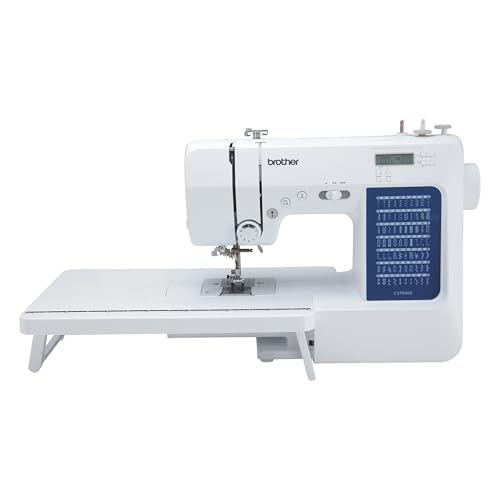
Brother CS7000X Computerized Sewing and Quilting Machine
$279.99Wide extension table, quilt guide and walking-foot friendly, at a beginner price.
Check price
Janome 3160QDC-G Sewing and Quilting Machine
$749.00Janome build quality in a compact computerized machine made with quilters in mind.
Check price
Juki TL-2000Qi Long-Arm Sewing and Quilting Machine
$999.00A straight-stitch workhorse that grows with you into bigger quilts.
Check pricePrices change often, so confirm on Amazon. As an Amazon Associate we earn from qualifying purchases.
Machines with room for throws and lap quilts
At this width a larger harp makes free-motion and straight-line quilting far less of a wrestle.
Janome 3160QDC-G Sewing and Quilting Machine
$749.00Compact and quilter-focused, fine for throws with patient rolling.
Check price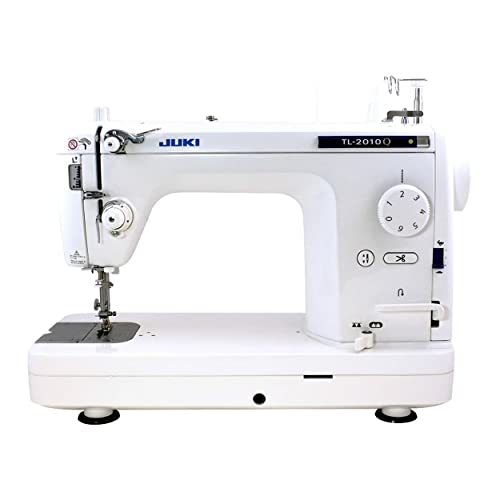
Juki TL-2010Q High-Speed Sewing and Quilting Machine
$1,199.00High-speed straight stitch with a large work area and knee lift.
Check price
Janome HD9 Professional High-Speed Straight Stitch Machine
$1,599.00A professional straight-stitch machine built for long quilting sessions.
Check pricePrices change often, so confirm on Amazon. As an Amazon Associate we earn from qualifying purchases.
Machines built for twin to queen quilts
Twin and queen tops are where an extended arm pays for itself in comfort and time.
Juki TL-2010Q High-Speed Sewing and Quilting Machine
$1,199.00The most popular step up for quilters moving past a standard machine.
Check price
Janome 1600P-QC Straight Stitch Sewing and Quilting Machine
$1,599.00Straight-stitch speed and a heavy frame for big quilts.
Check price
Juki TL-15 Mid-Arm Quilting and Piecing Machine
$1,399.00A midarm with a much bigger throat for queen-size quilting at a table.
Check pricePrices change often, so confirm on Amazon. As an Amazon Associate we earn from qualifying purchases.
Longarms and frames for king-size quilts
King quilts are heavy. A midarm, sit-down longarm or frame system lets the machine do the work instead of your shoulders.

Grace Little Rebel Sewing and Quilting Machine
$2,799.00A midarm with built-in stitch regulation that can sit on a table or a frame.
Check price
Handi Quilter Amara ST 20 Stationary Longarm with Lift Table
$9,495.00A 20 inch sit-down longarm with a lift table: room for king quilts without a frame.
Check price
Grace Qnique 16X Longarm with Q-Zone Queen Frame
$4,849.00A complete longarm and frame system for quilting large tops edge to edge.
Check pricePrices change often, so confirm on Amazon. As an Amazon Associate we earn from qualifying purchases.
How much throat space do you need for quilting?
When you quilt, the stitched part of the quilt has to sit somewhere, and on a sewing machine that is the harp: the open space between the needle and the machine body. For the center lines of a quilt, half its width or more ends up rolled or bunched in that space. The wider the quilt, the more fabric, batting and backing you are forcing through a fixed opening.
The calculator uses four bands based on quilt width, which is the dimension that has to pass through the harp when you quilt across the short way:
- Up to 45 inches wide (baby, crib, wall): 7 inches or more. A standard domestic machine is fine.
- 46 to 65 inches (lap, throw): 8 to 9 inches. Rolling works with some patience.
- 66 to 90 inches (twin to queen): 9 to 12 inches. This is where extended arm quilting machines and midarms earn their price.
- Over 90 inches (king, California king): 15 inches or more, or a frame. Sit-down longarms and frame systems take the weight off your shoulders.
For the default 90 inch queen, the result is 9 to 12 in, and 11 of the 12 machines with a listed throat space in our table meet at least 9 inches. For a 106 inch king the bar rises to 15 inches, and 8 of them clear it.
What throat space does each quilt size need?
Every row uses the same bands as the calculator. Quilt sizes follow our quilt size chart.
| Quilt | Size (in) | Throat space | What to expect |
|---|---|---|---|
| Mini / Wall Hanging | 24 x 24 | 7 in or more | A standard domestic machine handles baby and wall quilts. |
| Baby | 40 x 40 | 7 in or more | A standard domestic machine handles baby and wall quilts. |
| Crib | 36 x 52 | 7 in or more | A standard domestic machine handles baby and wall quilts. |
| Lap | 45 x 60 | 7 in or more | A standard domestic machine handles baby and wall quilts. |
| Throw | 50 x 65 | 8 to 9 in | Throws and lap quilts go through a mid-size harp with some rolling. |
| Twin | 68 x 90 | 9 to 12 in | Twin to queen quilts are far easier with an extended arm machine. |
| Twin XL | 68 x 95 | 9 to 12 in | Twin to queen quilts are far easier with an extended arm machine. |
| Full / Double | 83 x 90 | 9 to 12 in | Twin to queen quilts are far easier with an extended arm machine. |
| Queen | 90 x 95 | 9 to 12 in | Twin to queen quilts are far easier with an extended arm machine. |
| King | 106 x 95 | 15 in or more, or a frame | King quilts are where sit-down longarms, midarms and frame systems earn their keep. |
| California King | 102 x 99 | 15 in or more, or a frame | King quilts are where sit-down longarms, midarms and frame systems earn their keep. |
Which quilting machines have the most throat space?
This table lists every machine in our product registry with a published throat space figure, sorted from smallest to largest. Where a listing gives two numbers, the first is the length to the right of the needle and the second is the height. The last column applies the calculator's bands to each machine's listed length. Many domestic machines list "work space" or "needle-to-arm space" instead, measured differently, so they are left out rather than guessed.
| Product | Price | Throat space | Type | Comfortable for | Buy |
|---|---|---|---|---|---|
 Juki HZL-DX7 Juki HZL-DX7 | See price | 8 in | Sewing machine | Throws and lap quilts | Price |
| Juki TL-15 | $1,399.00 | 9 x 6.75 in | Midarm | Twin to queen quilts | Price |
 Janome MC6650 Janome MC6650 | $2,099.00 | 10 in | Domestic quilting machine | Twin to queen quilts | Price |
| Grace Little Rebel | $2,799.00 | 13 x 8.5 in | Midarm | Twin to queen quilts | Price |
 Janome Quilt Maker 15 Janome Quilt Maker 15 | $4,995.00 | 15 in | Longarm on frame | King quilts and edge to edge on a frame | Price |
 Handi Quilter Moxie + Loft Handi Quilter Moxie + Loft | $5,495.00 | 15 in | Longarm on frame | King quilts and edge to edge on a frame | Price |
| Grace 16X + Q-Zone Hoop | $4,599.00 | 16 in | Longarm on frame | King quilts and edge to edge on a frame | Price |
| Grace 16X + Q-Zone Queen | $4,849.00 | 16 in | Longarm on frame | King quilts and edge to edge on a frame | Price |
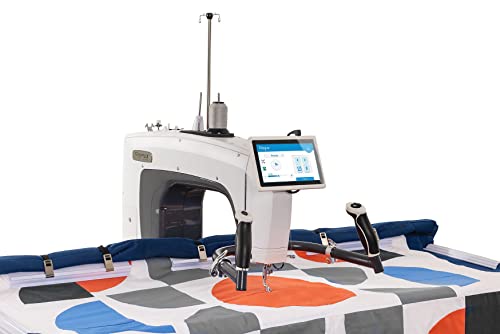 Grace 16X Elite + Cutie Grace 16X Elite + Cutie | $5,499.00 | 16 in | Longarm on frame | King quilts and edge to edge on a frame | Price |
 Handi Quilter Moxie XL + Loft Handi Quilter Moxie XL + Loft | $8,495.00 | 18 in | Longarm on frame | King quilts and edge to edge on a frame | Price |
 Grace 19X Elite + Cutie Grace 19X Elite + Cutie | $10,499.00 | 19 in | Longarm on frame | King quilts and edge to edge on a frame | Price |
| Handi Quilter Amara ST 20 | $9,495.00 | 20 in | Sit-down longarm | King quilts and edge to edge on a frame | Price |
The range runs from 8 in to 20 in. Prices climb steeply with throat space, which is why the right answer is the smallest throat that handles the quilts you actually make, not the biggest you can afford. If you mostly make throws with the occasional queen, a mid-size machine plus patience beats a frame that fills a spare room.
Support matters as much as throat space
Much of the struggle of quilting a big quilt is weight, not width. A large table level with the machine bed, or a sewing cabinet with the machine dropped in flush, keeps the quilt from dragging and makes any throat size feel bigger.
Does quilting style change the throat space you need?
Yes, and the calculator adjusts its advice for each style:
- Straight line quilting. Straight line quilting with a walking foot rolls most of the quilt through the harp on the long center lines, which is where a small throat hurts most.
- Free motion quilting. Free motion quilting moves the quilt in every direction, so the fabric bunched in the harp drags on each stitch. Extra throat space and a large flat table reduce that drag.
- Edge to edge designs. Edge to edge designs on a quilt this wide are usually stitched on a frame, where the machine moves over a stretched quilt and the throat sets how deep each pass can be.
On a frame, throat space works differently. The quilt is stretched between rollers, and the throat depth sets how far each row of stitching can reach before you roll the quilt forward. The usable row is somewhat less than the full throat depth once the hopping foot and handles are accounted for, and exact figures depend on the frame, so check the maker's stated quilting area. A deeper throat means fewer advances, which matters most on large edge to edge quilts.
How do you measure the throat space on your machine?
Raise the presser foot and lower the needle into the needle plate. Lay a ruler flat on the machine bed and measure straight to the right, from the needle to the inside of the machine body where the arm meets the base. That is the throat length most listings quote. For throat height, measure from the bed up to the underside of the arm at its lowest point.
Measure at the bed, not at the edge of an extension table, since a table adds working surface but not harp space. Compare your number with the band for the quilts you want to make. If you are within an inch of the next band, better support and careful rolling may be all you need before buying a new machine.
Midarm, sit-down longarm or frame: which should you choose?
Once your quilts outgrow a domestic machine, there are three paths. A midarm, typically 9 to 13 inches of throat, sits on a table and suits throws to queens. A sit-down longarm, with 16 to 20 inches, stays still while you glide the quilt over a big table, ideal for free motion and custom work on bed quilts. A frame longarm rides over the stretched quilt, which suits edge to edge quilting, kings and higher volume, but needs a room long enough for the frame.
Before spending thousands, compare the cost of sending tops to a service with the longarm cost calculator. Then read our roundups of the best sewing machines with a large throat space and the best sit-down longarm quilting machines, and the sit-down vs frame longarm comparison.
Frequently asked questions
How much throat space do you need for quilting?
It depends on the quilt width. For baby and wall quilts up to 45 inches wide, a standard machine with about 7 inches is enough. Throws up to 65 inches go well with 8 to 9 inches. Twin to queen quilts are much easier with 9 to 12 in, and king quilts over 90 inches wide call for 15 in or more, or a frame. More room always helps with free motion quilting.
What is throat space on a sewing machine?
Throat space, also called harp space, is the open area to the right of the needle between the needle and the body of the machine. When you quilt, the part of the quilt you have already stitched gets bunched into that space. A bigger throat means less fabric crammed into the harp, less drag on the stitches, and less effort from your shoulders.
Can you quilt a queen size quilt on a regular sewing machine?
Yes, many quilters do, especially with straight lines and a walking foot. Start in the center, roll the quilt tightly on both sides, support its weight on a large table so it does not pull, and quilt in sections. A queen at 90 inches wide is much easier with 9 to 12 in of throat space, but patience and good support make a regular machine workable.
Is a 9 inch throat enough for quilting?
For throws, lap quilts and twins, a 9 inch throat is comfortable for most quilters. For queen quilts it is workable with careful rolling, and many quilters finish queens on 9 inch machines. For king quilts or dense free motion work across a big quilt, a 9 inch throat feels crowded, and a 13 inch midarm or a 15 to 20 inch longarm is a real upgrade.
Do I need a frame for edge to edge quilting?
Not for smaller quilts. Edge to edge designs can be stitched on a domestic or sit-down machine by moving the quilt. For queen and king quilts, a frame is much easier: the quilt stays stretched on rollers and you guide the machine across it in rows. The throat space then sets how deep each row can be before you advance the quilt.
Does throat height matter as much as throat length?
Both matter. Throat length, the side-to-side distance, sets how much quilt fits to the right of the needle. Throat height sets how much bulk can pass under the arm. A lofty wool batting in a king quilt needs height as well as length. Some listings give both, like the 9 x 6.75 in listed for one midarm in our table, and some list length only.
How we research: we compare manufacturer specifications, owner manuals, published standards and recurring themes in verified owner reviews. We do not test products in person, and this is researched guidance, not professional advice. Follow your machine manual and pattern, and take care with rotary cutters, hot irons and needles. As an Amazon Associate we earn from qualifying purchases.