Best Sit Down Longarm Quilting Machine (2026): 7 Picks and Sit-Down Alternatives
The best sit down longarm quilting machine is the Handi Quilter Amara ST 20, about $9,495, with a 20 in throat, up to 2,500 stitches per minute, stitch regulation and a height adjustable lift table. For less, the Grace Little Rebel offers a 13 x 8.5 in throat with built-in stitch regulation for about $2,799.
A sit-down longarm is a long-armed quilting machine set into a table: the machine stays still and you move the quilt under the needle with your hands. The Handi Quilter Amara ST 20 is the best example available online, with 20 in of throat space, up to 2,500 stitches per minute and a height adjustable lift table, for about $9,495.
An honest note: very few true sit-down longarms are sold through Amazon; most brands sell them only through dealers. So this list pairs the Amara with the closest sit-down options you can buy online, including a stitch-regulated midarm and straight-stitch machines in drop-in cabinets.
Sit down longarm and sit-down quilting machines at a glance
| Product | Price | Throat space | Max speed | Stitch regulation | Buy |
|---|---|---|---|---|---|
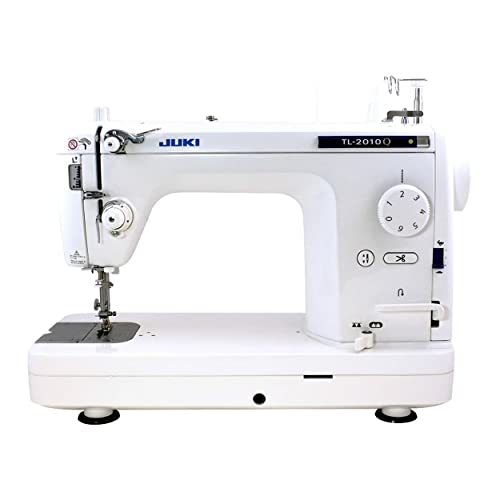 Juki TL-2010Q Juki TL-2010Q | $1,199.00 | Not listed | 1,500 SPM | No | Price |
 Juki TL-15 Juki TL-15 | $1,399.00 | 9 x 6.75 in | 1,500 SPM | No | Price |
 Janome HD9 Janome HD9 | $1,599.00 | Not listed | 1,600 SPM | No | Price |
 Juki TL-18QVP Juki TL-18QVP | $1,899.00 | Not listed | 200 to 1,500 SPM | Not listed | Price |
 Grace Little Rebel Grace Little Rebel | $2,799.00 | 13 x 8.5 in | 1,600 SPM | Built in | Price |
 Kangaroo with Joey Kangaroo with Joey | $2,199.99 | Holds your machine | n/a | n/a | Price |
 Handi Quilter Amara ST 20 Handi Quilter Amara ST 20 | $9,495.00 | 20 in | 2,500 SPM | Precision, Cruise, Manual | Price |
Beginner
Beginner picks: sit-down quilting under $1,600
These are not longarms. They are straight-stitch domestic quilters that many people run as sit-down quilting stations, set flush in a table. For throws and twins, this is the least expensive way to get the sit-down experience.
Juki TL-2010Q High-Speed Sewing and Quilting Machine
$1,199.00A 1,500 SPM straight stitch with an automatic thread trimmer and knee lifter. Dropped into a cabinet so the bed is flush, it is a capable free-motion station for a fraction of longarm cost.
Best for: Sit-down free-motion on a budget
Check price Juki TL-15 Mid-Arm Quilting and Piecing Machine
$1,399.00A 9 x 6.75 in throat, 1,500 SPM, automatic thread trimmer, knee lifter and a 23.25 x 13 in auxiliary table. More room than most domestic machines at a modest price.
Best for: Extra throat room under $1,500
Check price Janome HD9 Professional High-Speed Straight Stitch Machine
$1,599.00A 1,600 SPM straight stitch with adjustable presser foot pressure up to 5 lb and a darning foot and plate bundled, which suits dense free-motion work.
Best for: Dense free-motion quilting
Check pricePrices change often, so confirm on Amazon. As an Amazon Associate we earn from qualifying purchases.
Intermediate
Intermediate picks: midarm and sit-down stations, $1,899 to $2,799
Here you get either stitch regulation or a proper sit-down workstation. Stitch regulation is a sensor that matches stitch length to how fast you move the quilt, so stitches stay even when your hands speed up or slow down.
Grace Little Rebel Sewing and Quilting Machine
$2,799.00A 13 x 8.5 in throat, 1,600 SPM and built-in stitch regulation. Grace includes a table insert for sit-down quilting, and the same machine can later mount on a Grace frame.
Best for: Stitch regulation without longarm pricing
Check price Juki TL-18QVP Haruka Sewing and Quilting Machine
$1,899.00Adjustable speed from 200 to 1,500 SPM, a floating presser foot adjustable from 0 to 2 mm above the fabric, and a feed dog drop lever for free motion.
Best for: Juki fans wanting fine free-motion control
Check price Kangaroo Quilting Storage Sewing Cabinet with Joey Caddy
$2,199.99Turns a domestic quilter into a sit-down station: a hydraulic lift sets the machine flush, and the open top measures 71-1/2 x 40-1/2 in so the quilt is fully supported. Machine weight limit is 55 lb.
Best for: Building a sit-down station around your machine
Check pricePrices change often, so confirm on Amazon. As an Amazon Associate we earn from qualifying purchases.
Expert
Expert pick: a true sit down longarm, about $9,495
Who should NOT buy this tier: quilters who mainly finish throws, anyone who prefers pantograph designs (a frame suits those better), and anyone who has not yet tried free-motion quilting for a few hours. A sit-down longarm rewards people who love moving the quilt by hand and want the largest possible space to do it.
Handi Quilter Amara ST 20 Stationary Longarm with Lift Table
$9,495.00A 20 in throat, up to 2,500 SPM, stitch lengths from 4 to 24 per inch, InSight stitch regulation with Precision, Cruise and Manual modes, and a height adjustable lift table.
Best for: Dedicated free-motion quilters
Check pricePrices change often, so confirm on Amazon. As an Amazon Associate we earn from qualifying purchases.
What is a sit down longarm quilting machine?
A sit-down longarm is a quilting machine with a long arm (typically 16 to 24 in of throat space) mounted in a table. You sit in front of it and guide the quilt with your hands, just like free-motion quilting on a home machine, but with far more room under the arm. The needle does not move across the quilt; the quilt moves under the needle.
A frame longarm works the other way. The quilt is rolled onto rails on a frame, and you move the machine across the stationary quilt using handles, either freehand or following a paper pattern called a pantograph. For a detailed look at the difference, read sit-down vs frame longarm.
| Domestic in cabinet | Sit-down longarm | Frame longarm | |
|---|---|---|---|
| What moves | The quilt | The quilt | The machine |
| Typical throat space | 6 to 11 in | 13 to 20 in | 15 to 19 in |
| Floor space | Sewing table | Large table | Frame length plus walkway |
| Basting needed | Yes | Yes | No, layers roll on rails |
| Pantographs | No | No | Yes |
| Also pieces tops | Yes | No (most models) | No |
| Example | Juki TL-2010Q | Handi Quilter Amara ST 20 | Handi Quilter Moxie + Loft |
| Approximate price | $1,200 plus cabinet | $2,800 to $9,500 | $4,600 to $10,500 |
Is a sit down longarm better than a frame?
Neither is better; they suit different quilters. A sit-down longarm is better if you enjoy free-motion quilting, work in a smaller room, have shoulder or standing limitations, or quilt smaller projects often. The whole machine fits in the footprint of a large table.
A frame is better if you want to avoid basting, quilt many king-size tops, or use pantographs and edge-to-edge designs. The trade-off is space: frames need the frame length plus room to walk around it. Our longarm quilting machine for home roundup covers frame systems and room sizes.
Physically, a sit-down setup means pushing and lifting the quilt's weight. A king quilt with batting can be heavy, and owners of sit-down machines frequently mention that a large, slick table surface and a slider sheet like the Supreme Slider Queen reduce the effort.
Do you need stitch regulation on a sit down long arm?
You do not need it, but most people shopping in this price range want it. Without regulation, stitch length depends entirely on matching hand speed to machine speed, which takes practice. With regulation, a sensor reads fabric movement and adjusts, so tiny and long stitches are much less common.
Both the Grace Little Rebel and the Handi Quilter Amara ST 20 have stitch regulation. The straight-stitch Juki and Janome machines in the beginner tier do not, so you control stitch length with your hands and a speed setting. The free-motion quilting for beginners guide covers practice drills either way.
What is the difference between a midarm and a longarm?
The terms are informal, but midarm usually describes machines with roughly 12 to 15 in of throat space, while longarm describes 16 in and up. The Grace Little Rebel at 13 x 8.5 in is sold as a midarm; the Handi Quilter Amara ST 20 at 20 in is a full longarm. More throat space means fewer re-bunchings of the quilt and larger continuous designs.
A practical test: roll a queen quilt the way it would sit under the arm and measure the bundle. The throat space calculator does that math for your quilt size. For head-to-heads, see midarm vs longarm and Juki TL-15 vs Grace Little Rebel.
Where can you buy a used sit down long arm quilting machine?
Quilt shops and sewing machine dealers are the best source for used and demo sit-down machines, because they typically service the machine and may offer a short warranty. When buying privately, ask for the original purchase date, service records, stitch count if the machine displays one, and whether the manufacturer warranty transfers. Always stitch on the machine before paying.
Weigh a used purchase against new pricing and support. A new Grace Little Rebel costs about $2,799 with full warranty coverage, which often compares well against a used, older longarm with no support.
How we chose
We did not test these machines in person. Picks draw on manufacturer specifications, owner manuals, warranty information, verified live listings and recurring themes in owner reviews and quilting forums. Because few sit-down longarms are sold online, we included the closest purchasable alternatives and labeled them clearly. We only state throat space where the published figure is consistent.
Buying tips
- Measure your table and chair height. Sit-down quilting is far more comfortable with the machine bed near elbow height; adjustable tables help.
- Plan table surface area. The quilt needs support behind and to the left of the machine.
- Ask about bobbin size. Longarms commonly use larger M-class bobbins, meaning fewer bobbin changes.
- Budget for rulers and a ruler base if you want ruler work.
- Check dealer support distance. A longarm is heavy to ship for service.
Frequently asked questions
What is the best sit down long arm quilting machine?
Among machines sold online, the Handi Quilter Amara ST 20 is the best sit-down longarm, with a 20 in throat, up to 2,500 stitches per minute, stitch regulation and a height adjustable lift table, for about $9,495. For a much lower price, the Grace Little Rebel midarm offers a 13 x 8.5 in throat and built-in stitch regulation, and it can later move onto a frame.
How much is a sit down long arm quilting machine?
New sit-down quilting machines range from about $2,800 for a stitch-regulated midarm like the Grace Little Rebel to around $9,500 for the 20 in Handi Quilter Amara ST 20 with its lift table. Dealer-only models from other brands occupy similar ranges. A straight-stitch domestic machine in a drop-in cabinet costs roughly $1,200 to $3,400 as a budget alternative.
Can you do ruler work on a sit down longarm?
Yes. Ruler work is very popular on sit-down machines, because you guide both the ruler and the quilt with your hands on a flat table. Use rulers made for machine quilting, typically 1/4 in thick, and the correct ruler foot for your machine. A larger flat surface around the needle helps keep the ruler steady, so check what bases or extensions your model supports.
Is sit down quilting hard on your shoulders?
It can be, because you push and lift the quilt rather than steering a machine. Owners frequently recommend setting the table so forearms rest level with the bed, using quilting gloves, adding a slippery slider sheet, and supporting the bulk of the quilt on surrounding tables. Height adjustable tables, like the lift table on the Amara ST 20, let you change position during long sessions.
Can a sit down longarm be put on a frame?
Some can. The Grace Little Rebel is designed to work at the table and to mount on Grace quilting frames, which gives a path from sit-down to frame quilting with one machine. Dedicated sit-down longarms such as the Handi Quilter Amara ST 20 are built for table use. Check the manufacturer compatibility list before buying a frame for any machine.
How we research: we compare manufacturer specifications, owner manuals, published standards and recurring themes in verified owner reviews. We do not test products in person, and this is researched guidance, not professional advice. Follow your machine manual and pattern, and take care with rotary cutters, hot irons and needles. As an Amazon Associate we earn from qualifying purchases.