Juki TL-15 vs Grace Little Rebel: Which Midarm Should You Buy?
Choose the Juki TL-15, about $1,399, if you piece and quilt throws and twins at a table: it has a 9 x 6.75 inch throat, trimmer, knee lifter and five feet. Choose the Grace Little Rebel, about $2,799, for built-in stitch regulation, a 13 x 8.5 inch throat and the option to mount it on a frame.
 Juki TL-15 Mid-Arm Quilting and Piecing Machine $1,399.00 Check price on Amazon
  Grace Little Rebel Sewing and Quilting Machine $2,799.00 Check price on Amazon
 The verdict
The Juki TL-15 is the better midarm for quilters who mostly piece and do walking-foot or occasional free-motion quilting at a table, and the Grace Little Rebel is better for quilters who free-motion quilt often and want room to grow onto a frame. The Little Rebel costs twice as much, and you pay for two things: stitch regulation and about 4 in more throat.
Throat space is the distance from the needle to the machine body, and it decides how much rolled quilt fits under the arm. Stitch regulation senses how fast the fabric moves and adjusts needle speed so stitches stay the same length. The Juki TL-15 offers a speed range from 200 to 1,500 SPM but no stitch regulation. The Grace Little Rebel uses an optical encoder for regulation and can be used at a table, as a sit-down quilter, or on a frame.
Juki TL-15 vs Grace Little Rebel: side by side
| Feature | Juki TL-15 | Grace Little Rebel |
|---|---|---|
| Price | About $1,399 | About $2,799 |
| Throat space | 9 x 6.75 in | 13 x 8.5 in |
| Max speed | 1,500 SPM (settable from 200) | 1,600 SPM |
| Stitch regulation | No, speed control only | Built in, optical encoder |
| Thread trimmer | Automatic | Not listed in the specs we verified |
| Knee lifter | Up to 12 mm lift | Not listed in the specs we verified |
| Setups | Table with 23.25 x 13 in auxiliary table | Table, sit-down or frame |
| Included feet | Standard, zipper, even feed, 1/4 in, open toe quilting | Sewing and quilting setups, swap foot and plate |
| Bobbin | L style | M-class |
Is the Juki TL-15 a good midarm for quilting?
Yes, for its price. The Juki TL-15 shares the TL family's straight-stitch feature set in a larger harp. Juki lists an automatic trimmer, knee lifter, needle threader, LED lighting, needle up/down, adjustable presser foot pressure and drop feed for free motion. It includes a standard foot, zipper foot, even feed foot, 1/4 in quilting foot and open toe quilting feet, so it pieces and quilts straight out of the box. It weighs 25.4 lbs and takes HA x 1 or HLx5 needles.
The limit is that 9 in is a modest step up from a large domestic harp, and without stitch regulation your stitch length depends on matching hand speed to machine speed. That is very learnable, but it is the struggle most new free-motion quilters describe.
| Situation | [[juki-tl-15]] | [[grace-little-rebel]] |
|---|---|---|
| Piecing blocks | Excellent, trimmer and 1/4 in foot | Good, swap to the sewing setup |
| Walking-foot straight lines | Excellent with even feed foot | Good |
| Free motion on throws and twins | Good with practice | Easier with stitch regulation |
| Free motion on queens and kings | Possible, a lot of quilt in a 9 in harp | Much easier with 13 in of room |
| Frame quilting later | Not its intended use | Designed to mount on a frame |
| Quilting automation | Not listed | Compatible with Quilter's Creative Touch 6 and QuiltMotion X for domestic machines |
Is the Grace Little Rebel worth the extra money?
It is for quilters who want to finish their own large quilts. Its 13 x 8.5 in throat leaves far more room for a rolled queen, and stitch regulation with regulated and cruise modes keeps stitch length consistent while you learn. Switching from sewing to quilting takes seconds: swap the foot and slide on the quilting plate. On a frame, the control display mounts at the front so you can reach every function.
The honest math: if you quilt a few throws a year, the TL-15 plus a class in free-motion quilting costs far less. If you pay a longarm service several times a year, the longarm cost calculator can show when a Little Rebel pays for itself. The next rung, a 16 in longarm like the Grace 16X Elite + Cutie at about $5,499, is covered in midarm vs longarm.
Choose Juki TL-15 if
- Your budget is closer to $1,400 than $2,800.
- You piece a lot and want a trimmer, knee lifter and 1/4 in foot.
- You quilt throws, baby quilts and twins at a table.
- You are comfortable learning free motion without regulation.
Choose Grace Little Rebel if
- You free-motion quilt often and want stitch regulation.
- You want to finish queen and king quilts yourself.
- You may put the machine on a frame later.
- You are curious about quilting automation software.
Our picks on the throat space ladder
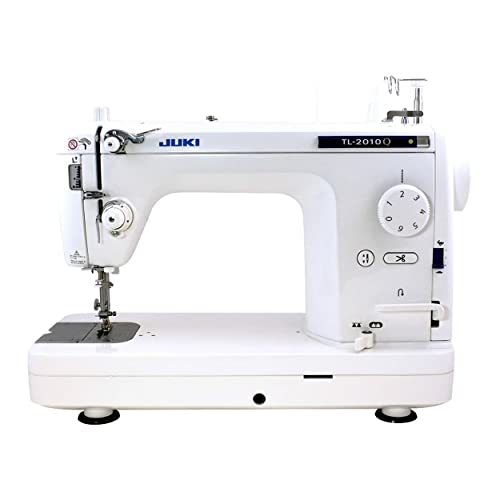
Juki TL-2010Q High-Speed Sewing and Quilting Machine
$1,199.00The domestic-size straight stitch with trimmer and knee lifter for about $1,199.
Check price Juki TL-15 Mid-Arm Quilting and Piecing Machine
$1,399.00A 9 x 6.75 in midarm with five feet for about $1,399.
Check price Grace Little Rebel Sewing and Quilting Machine
$2,799.00A 13 x 8.5 in throat with stitch regulation that works at a table or on a frame.
Check price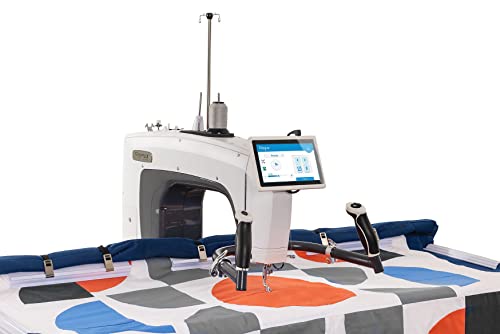
Grace Qnique 16X Elite Longarm Quilting Machine with Cutie Tabletop Frame
$5,499.00A 16 in longarm with a 7 in touchscreen on a tabletop frame.
Check pricePrices change often, so confirm on Amazon. As an Amazon Associate we earn from qualifying purchases.
This comparison is drawn from published specifications, owner manuals and the consensus of verified owner reviews, not side-by-side testing.
Frequently asked questions
Does the Juki TL-15 have stitch regulation?
No. The Juki TL-15 has a microcomputer speed control that lets you set a speed between 200 and 1,500 SPM, which helps you hold a steady pace, but it does not adjust needle speed to how fast you move the quilt. For built-in stitch regulation at the midarm level, the Grace Little Rebel is the step up.
Can the Grace Little Rebel go on a quilting frame?
Yes. Grace describes the Little Rebel as usable at a table, as a sit-down quilter, or mounted on a frame, and its control display moves to the front for frame quilting. Confirm with Grace or a dealer which frame and carriage fit before ordering, and plan for the extra floor space a frame needs.
Can you piece quilts on the Grace Little Rebel?
Yes. It is sold as a sewing and quilting machine with a quick change between setups: swap the foot and slide on the quilting plate. It sews a straight stitch, so plan on another machine for zigzag or buttonholes. Quilters who piece heavily may still prefer a trimmer-equipped machine like the Juki TL-15 for long piecing sessions.
How big a quilt can you quilt on a 9 inch throat?
You can quilt a king on a 9 in throat, but every inch of harp you lack means more quilt bunched under the arm and more repositioning. Many quilters find 9 in comfortable up to twin size and workable for queens. The throat space calculator estimates how much room a rolled quilt of your size needs.
Do the Juki TL-15 and Grace Little Rebel use the same bobbins?
No. Juki lists L style bobbins for the TL-15, while the Little Rebel uses larger M-class bobbins. M-class bobbins hold more thread, which means fewer bobbin changes during long free-motion sessions. Always use the bobbin type named in your manual, since similar-looking bobbins can cause tension problems.
Sources
How we research: we compare manufacturer specifications, owner manuals, published standards and recurring themes in verified owner reviews. We do not test products in person, and this is researched guidance, not professional advice. Follow your machine manual and pattern, and take care with rotary cutters, hot irons and needles. As an Amazon Associate we earn from qualifying purchases.