Best Sewing Machine with Large Throat Space (2026): 9 Picks from 8.3 to 20 Inches
The best sewing machine with a large throat space is the Janome MC6650, about $2,099, with 10 in of throat space and an all-metal seamless flatbed while still sewing every stitch type. For more room, the Grace Little Rebel offers 13 x 8.5 in, and under $900 the Brother PS500 lists 8.3 in needle to arm.
Throat space, sometimes called harp space, is the distance from the needle to the machine body. It is the room you have to push a rolled quilt through. Most basic machines offer about 6 to 7 in; the machines on this page offer more, and each figure below comes from the published specification.
Our top pick is the Janome MC6650 because it pairs 10 in of throat space with a full-featured machine that also sews garments and decorative stitches. If quilting is all you do, a straight-stitch or midarm machine like the Grace Little Rebel buys more inches for the money.
Throat space chart: published measurements
| Product | Price | Published figure | What the figure measures | Stitch type | Buy |
|---|---|---|---|---|---|
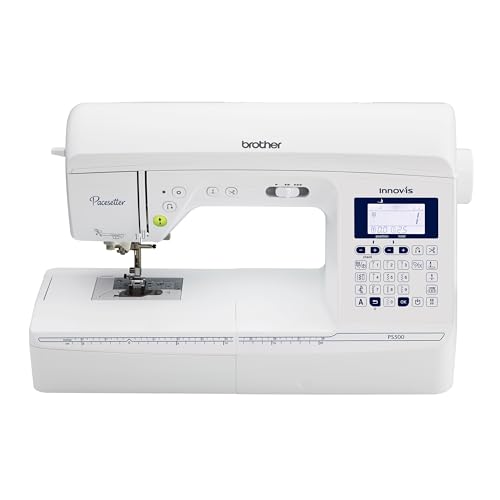 Brother PS500 Brother PS500 | $859.99 | 8.3 in | Needle to arm | Full featured | Price |
 Brother PQ1600S Brother PQ1600S | $899.99 | 5.7 x 8.7 in | Needle-to-arm space | Straight stitch | Price |
 Juki TL-15 Juki TL-15 | $1,399.00 | 9 x 6.75 in | Throat width x height | Straight stitch | Price |
 Janome 1600P-QC Janome 1600P-QC | $1,599.00 | 8.8 x 5.5 in | Workspace | Straight stitch | Price |
 Janome MC6650 Janome MC6650 | $2,099.00 | 10 in | Throat space | Full featured | Price |
 Janome 8200QCP SE Janome 8200QCP SE | $2,099.00 | 11 x 4.7 in | Work space | Full featured | Price |
 Grace Little Rebel Grace Little Rebel | $2,799.00 | 13 x 8.5 in | Throat width x height | Straight stitch, regulated | Price |
 Janome MC9410QC Janome MC9410QC | $3,799.00 | 11 in | Bed space right of needle | Full featured | Price |
 Handi Quilter Amara ST 20 Handi Quilter Amara ST 20 | $9,495.00 | 20 in | Throat space | Sit-down longarm | Price |
Beginner
Beginner picks: more than basic throat space for under $900
These two give you noticeably more room than a typical $300 machine without jumping to $1,400 and up. They suit throws and twin quilts on a home machine.
Brother PS500 Pacesetter Computerized Sewing Machine
$859.99Lists 8.3 in from needle to arm with 100 stitches, seven one-step buttonholes and four lettering fonts. A full-featured machine with extra room at an accessible price.
Best for: One machine for quilting and everything else
Check price Brother PQ1600S High-Speed Straight Stitch Sewing and Quilting Machine
$899.99A straight-stitch quilter at 1,500 SPM with needle-to-arm space listed as 5.7 x 8.7 in and an 11.1 x 23.3 in table. More speed than room, but a clear step up from basic machines.
Best for: Fast piecing plus quilting throws
Check pricePrices change often, so confirm on Amazon. As an Amazon Associate we earn from qualifying purchases.
Intermediate
Intermediate picks: 9 to 11 inches, $1,399 to $2,099
Nine inches and up is where quilting a queen on a home machine becomes realistic rather than a wrestling match. Note that published figures measure different things, so compare like with like.
Juki TL-15 Mid-Arm Quilting and Piecing Machine
$1,399.00A 9 x 6.75 in throat, 1,500 SPM, automatic thread trimmer, 12 mm knee lift and a 23.25 x 13 in auxiliary table. The 6.75 in height gives a rolled quilt room to breathe.
Best for: Straight-stitch quilters who want height
Check price Janome 1600P-QC Straight Stitch Sewing and Quilting Machine
$1,599.00A nearly 9 x 6 in workspace at 1,600 SPM with an automatic thread cutter. Uses HLx5 needles.
Best for: Speed plus a 9 in workspace
Check price Janome Memory Craft 6650 Sewing and Quilting Machine
$2,099.00Ten inches of throat, 1,000 SPM and an all-metal seamless flatbed on a full-featured machine.
Best for: Large throat without losing stitches
Check price Janome Memory Craft Horizon 8200QCP Special Edition
$2,099.00An 11 x 4.7 in work space, 170 stitches, 9 mm width and detachable AcuFeed Flex. Long but low, so it suits wide flat layers more than bulky rolls.
Best for: Long work area and dual feed
Check pricePrices change often, so confirm on Amazon. As an Amazon Associate we earn from qualifying purchases.
Expert
Expert picks: 11 to 20 inches, $2,799 and up
Who should NOT buy this tier: anyone who mainly makes throws, and anyone who needs a single machine for garments on a budget. A 13 or 20 in throat is wonderful for large quilts, but the midarm and longarm here are quilting machines first.
Grace Little Rebel Sewing and Quilting Machine
$2,799.00A 13 x 8.5 in throat with built-in stitch regulation at 1,600 SPM. Works at the table, as a sit-down quilter, or mounted on a Grace frame.
Best for: Most inches per dollar
Check price Janome Horizon Memory Craft 9410QC Sewing and Quilting Machine
$3,799.0011 in of bed space right of the needle, 1,060 SPM, a 5 in touchscreen, and AcuFeed feet plus an extra-wide table bundled. A premium domestic machine with serious room.
Best for: Full-featured domestic quilters
Check price Handi Quilter Amara ST 20 Stationary Longarm with Lift Table
$9,495.00A 20 in throat sit-down longarm with a height adjustable lift table and up to 2,500 SPM.
Best for: Quilting king quilts at the table
Check pricePrices change often, so confirm on Amazon. As an Amazon Associate we earn from qualifying purchases.
How much throat space do you need for quilting?
The answer depends on the size of the quilts you finish, not the ones you piece. When you quilt the center of a quilt, half of it is rolled or bunched inside the arm. The table below gives comfortable ranges based on common quilting practice; quilting in sections or quilt-as-you-go lowers every number.
| Quilt | Typical size | Workable throat space | Comfortable throat space |
|---|---|---|---|
| Baby or crib | 36 x 52 in | 6 in | 7 in or more |
| Throw | 50 x 65 in | 7 in | 8 in or more |
| Twin | 70 x 90 in | 8 in | 9 in or more |
| Queen | 90 x 108 in | 9 in | 11 in or more |
| King | 108 x 108 in and up | 11 in | 13 in or more, or a frame |
Plug your exact quilt dimensions into the throat space calculator, which estimates rolled bulk, and confirm finished dimensions with the quilt size calculator or the quilt size chart.
How is throat space measured on a sewing machine?
Throat width is measured horizontally from the needle to the inside of the machine's vertical column. Throat height is measured from the bed up to the underside of the arm. Both matter: a rolled queen quilt is a thick tube, so a long but low opening can still feel tight.
Manufacturers do not label this consistently. You will see throat space, needle-to-arm space, workspace, work space, bed space right of needle, and sewing bed. Some quote a single number, some width x height. That is why our chart above shows each published label. A "sewing bed" or "flatbed" figure usually describes the total bed length, not the opening, so do not compare it directly with throat width.
Is 9 inch throat space enough for quilting?
For most quilters, yes. Nine inches handles throws and twin quilts comfortably and queen quilts with some patience, especially with good table support around the machine. Machines like the Juki TL-15 at 9 x 6.75 in and the Janome 1600P-QC at 9 x 6 in sit in this range.
If you regularly finish queen or king quilts on a home machine and find the bulk fighting you, the next meaningful jump is to 11 to 13 in. Past that, consider a frame or longarm system: see longarm quilting machines for home and our longarm cost calculator.
Which Janome sewing machine has the largest throat space?
Among the Janome models in our registry with a published opening measurement, the Janome 8200QCP SE lists an 11 x 4.7 in work space and the Janome MC9410QC lists 11 in of bed space right of the needle. The Janome MC6650 lists 10 in of throat space, and the Janome 1600P-QC lists a 9 x 6 in workspace. Janome's frame system, the Janome Quilt Maker 15, has a 15 in throat.
For the flagship Janome Continental M6, Janome highlights a 17.81 in all-metal flatbed; that is bed length, not throat width. Compare Janome with Juki in Juki vs Janome.
Does a large throat sewing machine need a bigger table?
Yes, and it is the most overlooked part of the upgrade. More throat space only helps if the quilt is supported so its weight does not drag on the needle. A flush, drop-in cabinet or a large extension table behind and to the left of the machine is ideal. The Kangaroo with Joey opens to 71-1/2 x 40-1/2 in with a hydraulic lift and a 55 lb machine limit, enough surface to hold a queen quilt while you stitch.
Weigh the machine
Large-throat machines are heavier than basic machines. Check the cabinet lift weight limit against the machine weight before ordering both.
How we chose
We did not test these machines in person. Every throat measurement comes from the specification recorded in our verified product registry, which reflects manufacturer-published figures. Where sources disagreed on a machine's throat space, we left it off this page rather than guess. We also weighed owner-review themes about quilting large projects, feeding, and table support.
Buying tips
- Compare width and height separately; a rolled quilt needs both.
- Read the label on the figure. Throat space, workspace and bed length are not the same measurement.
- Budget for a cabinet or large table so the extra room is usable.
- Check needle systems on straight-stitch machines before stocking up.
- Consider a frame if you want more than 13 in; the cost gap narrows quickly.
Frequently asked questions
What sewing machine has the largest throat space?
Among the machines on this page, the Handi Quilter Amara ST 20 sit-down longarm has the largest throat at 20 in. For domestic-style machines that sit on a sewing table, the Grace Little Rebel offers 13 x 8.5 in, and among full-featured machines the Janome MC6650 lists 10 in of throat space.
What is considered a large throat space on a sewing machine?
Basic household machines typically offer about 6 to 7 in. Anything from 8 in upward is generally considered extended, 9 to 11 in is large for a domestic machine, 12 to 15 in is midarm territory, and 16 in or more is longarm territory. For quilting, the height of the opening matters too, because a rolled quilt is thick.
Is throat space the same as harp space?
Yes. Throat space and harp space both describe the opening between the needle and the machine column. Some manufacturers publish it as a single width, others as width by height, and some use terms like workspace or needle-to-arm space. Bed length or flatbed length is different; it measures the whole sewing surface, not the opening your quilt passes through.
Can I quilt a king size quilt with 10 inches of throat space?
Yes, with good preparation. Ten inches, like the Janome MC6650 offers, can quilt a king if the quilt is well supported on a large table, you roll tightly and quilt from the center out, and you choose designs that do not need long continuous passes. Quilt-as-you-go construction makes it much easier. Many quilters send king quilts to a longarm service instead.
Is a midarm quilting machine worth it over a regular machine?
It is worth it if you finish many twin, queen or king quilts and find a domestic machine limiting. A midarm like the Grace Little Rebel adds throat width, height and stitch regulation, and it can move onto a frame later. It is not worth it if you mostly make throws, because a quality domestic quilter handles those comfortably for less money.
How we research: we compare manufacturer specifications, owner manuals, published standards and recurring themes in verified owner reviews. We do not test products in person, and this is researched guidance, not professional advice. Follow your machine manual and pattern, and take care with rotary cutters, hot irons and needles. As an Amazon Associate we earn from qualifying purchases.