Best Longarm Quilting Machine for Home (2026): 8 Machine and Frame Systems by Room Size
The best longarm quilting machine for home use is the Handi Quilter Moxie with the 8 ft Loft frame, about $5,495: a 15 in throat, 1,800 stitches per minute and three stitch regulation modes. For small rooms, the Grace 16X with Q-Zone Hoop frame costs about $4,599 and fits a compact footprint.
A home longarm is a machine and frame system: the quilt layers roll onto rails, and you glide the machine across them. For most homes, the Handi Quilter Moxie + Loft hits the right balance at about $5,495, with a 15 in throat, 1,800 stitches per minute, Cruise, Precision and Manual stitch regulation, and an 8 ft frame that fits a spare bedroom.
Room size decides more than brand. Measure first, then pick the frame, then the machine. Our table below maps frame styles to room sizes, and the longarm cost calculator shows how many quilts it takes to pay back versus a longarm service.
Home longarm systems at a glance
| Product | Price | Throat space | Frame | Room fit | Buy |
|---|---|---|---|---|---|
 Grace 16X + Q-Zone Hoop Grace 16X + Q-Zone Hoop | $4,599.00 | 16 in | Q-Zone Hoop Frame | Small room | Price |
| Grace 16X + Q-Zone Queen | $4,849.00 | 16 in | Q-Zone Queen, steel rails | Medium room | Price |
 Janome Quilt Maker 15 Janome Quilt Maker 15 | $4,995.00 | 15 in | Frame system | Medium room | Price |
 Handi Quilter Moxie + Loft Handi Quilter Moxie + Loft | $5,495.00 | 15 in | 8 ft HQ Loft Frame | Medium room | Price |
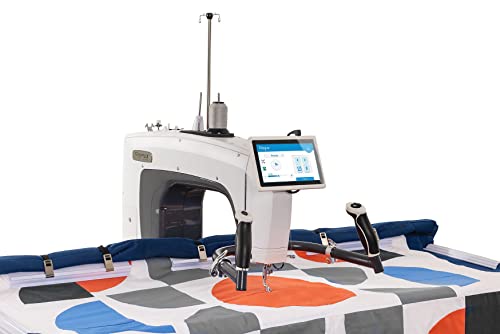 Grace 16X Elite + Cutie Grace 16X Elite + Cutie | $5,499.00 | 16 in | Cutie tabletop frame | Any room with a table | Price |
 Handi Quilter Moxie XL + Loft Handi Quilter Moxie XL + Loft | $8,495.00 | 18 in | 8 ft Loft Frame | Medium room | Price |
 Grace 19X Elite + Cutie Grace 19X Elite + Cutie | $10,499.00 | 19 in | Cutie tabletop frame | Any room with a table | Price |
 Grace Q-Zone Hoop Frame Grace Q-Zone Hoop Frame | $1,799.00 | Your machine | Q-Zone Hoop Frame only | Small room | Price |
Beginner
Beginner picks: frame your own machine or start small, $1,799 to $4,599
These are the least expensive routes into frame quilting. If you already own a straight-stitch quilter, a frame alone may be enough to learn the motion before buying a full longarm.
Grace Q-Zone Hoop Frame
$1,799.00A mostly steel frame with height adjustable legs and leveling feet that accepts domestic machines or a Grace Qnique. It lets a machine you already own quilt in zones.
Best for: Owners of a straight-stitch machine
Check price Grace Qnique 16X Longarm with Q-Zone Hoop Frame
$4,599.00A complete system: 16 in throat, 1,700 SPM, a 2.4 in touchscreen and the compact Q-Zone Hoop Frame. It quilts in zones, so the footprint stays small.
Best for: Small rooms and first longarms
Check pricePrices change often, so confirm on Amazon. As an Amazon Associate we earn from qualifying purchases.
Intermediate
Intermediate picks: full-rail systems, $4,849 to $5,499
Full-rail frames roll the entire quilt, so you quilt edge to edge without re-hooping. This tier is where most home longarm owners land.
Handi Quilter Moxie 15 Longarm with 8 ft HQ Loft Frame
$5,495.00A 15 in throat, 1,800 SPM, Cruise, Precision and Manual regulation, 4 to 18 SPI, and the 8 ft HQ Loft Frame. Handi Quilter has a large dealer and education network.
Best for: Most home quilters
Check price Grace Qnique 16X Longarm with Q-Zone Queen Frame
$4,849.00A 16 in throat and 1,700 SPM on the steel-railed Q-Zone Queen frame, slightly more throat than the Moxie for less money.
Best for: Value on a full-rail frame
Check price Janome Quilt Maker 15 Longarm Quilting Machine
$4,995.00A 15 in throat with Cruise, Precision or Manual stitch regulation, from a brand many quilters already own for piecing.
Best for: Janome loyalists
Check price Grace Qnique 16X Elite Longarm Quilting Machine with Cutie Tabletop Frame
$5,499.00A 16 in throat with a 7 in touchscreen, throat and bobbin lights and a bobbin estimator, on the tabletop Cutie frame that quilts crib to king in zones.
Best for: Rooms without floor space for rails
Check pricePrices change often, so confirm on Amazon. As an Amazon Associate we earn from qualifying purchases.
Expert
Expert picks: 18 and 19 in throats, $8,495 and up
Who should NOT buy this tier: anyone finishing fewer than about ten large quilts a year, or anyone who has not used a longarm before. The extra throat space means fewer advances on big quilts, but a 15 or 16 in machine finishes the same quilts for thousands less.
Handi Quilter Moxie XL Longarm with 8 ft Loft Frame
$8,495.00An 18 in throat on the same 8 ft Loft Frame with three regulation modes. Those 3 extra inches mean larger motifs and fewer advances per quilt.
Best for: High-volume hobby quilters
Check price Grace Qnique 19X Elite Longarm with Cutie Tabletop Frame
$10,499.00A 19 in throat and 7 in full-color touchscreen on the tabletop Cutie frame. Big throat space without a room-length frame.
Best for: Big throat, small footprint
Check pricePrices change often, so confirm on Amazon. As an Amazon Associate we earn from qualifying purchases.
How big of a room do you need for a longarm quilting machine?
The rule of thumb is frame length plus walking room at both ends, and frame depth plus standing room front and back. You walk behind the machine to quilt from the back and in front to load and watch the pattern, so plan space on both sides. The estimates below are planning ranges drawn from common frame sizes and dealer guidance; always check the exact assembled dimensions for your model.
| Frame style | Largest quilt (typical) | Room length | Room depth | Example |
|---|---|---|---|---|
| Tabletop frame | Crib to king in zones | Table plus 2 ft | Table plus 3 ft | Grace 16X Elite + Cutie |
| Hoop frame | King in zones | About 7 to 8 ft | About 6 ft | Grace 16X + Q-Zone Hoop |
| 8 ft rail frame | About queen width | About 11 to 12 ft | About 6 to 7 ft | Handi Quilter Moxie + Loft |
| 10 ft rail frame | King width | About 13 to 14 ft | About 6 to 7 ft | Dealer systems |
| 12 ft rail frame | Oversized king | About 15 to 16 ft | About 7 ft | Dealer systems |
Ceiling height rarely matters, but outlets, lighting and floor levelness do. Rail frames need a flat floor or leveling feet, and bright overhead light across the whole frame length helps you see stitches at the far rail. Check quilt dimensions with the quilt size calculator; a queen top is 90 in or wider once borders are added.
How much is a long arm quilting machine for home use?
Complete home systems in this roundup range from about $4,599 to $10,499. A frame alone for a domestic machine costs about $1,799. Add thread, bobbins, rulers and a ruler base, and budget for delivery, assembly and training if your dealer offers them.
The payback question is simple arithmetic. If a local longarm service charges a per-square-inch rate for edge-to-edge quilting on a queen quilt, multiply that by the number of quilts you finish each year. Our longarm cost calculator does this for you, and the longarm quilting cost guide explains typical service pricing.
Is Handi Quilter or Grace better for a home longarm?
Grace generally delivers more throat space per dollar; the Grace 16X + Q-Zone Queen offers 16 in for less than the 15 in Handi Quilter Moxie + Loft. Grace also sells the widest range of small-footprint frames, including hoop and tabletop styles.
Handi Quilter's strengths are its dealer network, in-person classes and a long record in home longarms, which many owners value more than an extra inch. If a dealer is close to you, that support can outweigh the price gap. Read Handi Quilter vs Grace for the full comparison.
Is a longarm quilting machine worth it for a hobby quilter?
It is worth it when finishing becomes the bottleneck. If you have a stack of quilt tops waiting, or you spend a meaningful amount each year on a longarm service, a home machine pays for itself over several years and removes the wait. It is also worth it physically for some quilters: pushing a heavy king quilt through a domestic machine is hard on shoulders, and frame quilting moves a light machine instead.
It is not worth it if you finish two or three quilts a year and enjoy quilting them on your domestic machine. In that case, a large-throat domestic machine or a sit-down setup may fit better; see sit down longarm quilting machines and sit-down vs frame longarm.
What is stitch regulation on a longarm?
Stitch regulation uses sensors to measure how fast you move the machine and adjusts needle speed to keep stitches the same length. Precision mode stitches only when the machine moves; Cruise mode keeps a low base speed so the needle does not stop at the turn of a curve; Manual lets you control speed yourself. The Moxie, Moxie XL and Janome Quilt Maker 15 list all three modes.
Load the quilt square
Most frame quilting problems trace back to loading. Keep the backing square on the leaders and check tension across the whole width before you start.
How we chose
We did not test these systems in person. We compared manufacturer specifications (throat space, speed, regulation modes and frame type), verified live pricing, warranty terms and dealer support, and recurring themes in owner reviews. Room-size figures are planning estimates, not manufacturer dimensions, and we recommend confirming assembled sizes with the seller.
Buying tips
- Tape out the frame on your floor before buying, including walking space at both ends.
- Ask what is included: delivery, assembly, training, and extra bobbins or rulers change the true cost.
- Buy leaders and a ruler base early; both affect everyday comfort.
- Plan lighting across the full rail length.
- Find the nearest service technician before choosing a brand.
Frequently asked questions
What is the best longarm quilting machine for beginners?
For a beginner at home, a compact complete system is usually best. The Grace 16X with Q-Zone Hoop frame costs about $4,599 and fits a small room, while the Handi Quilter Moxie on the Loft frame costs about $5,495 and adds three stitch regulation modes plus a large dealer education network. Rent longarm time at a quilt shop first to confirm frame quilting suits you.
What size quilt can I make on an 8 foot longarm frame?
An 8 ft frame is 96 in long, and after leaders and clamps it typically handles quilts up to about queen width, roughly 90 in across the rails. The other dimension is not limited, because the quilt rolls onto the take-up rail. For king-size quilts at 120 in wide you generally need a 10 ft or 12 ft frame, or a zone-quilting hoop or tabletop frame.
Can you put a regular sewing machine on a quilting frame?
Yes, many frames accept domestic machines. The Grace Q-Zone Hoop Frame works with domestic machines as well as Grace Qnique longarms, and budget frames like the Flynn Multi-Frame fit most home machines. Throat space limits how much you quilt per pass, so a straight-stitch machine with extra room works best. Check the frame maker compatibility list for your specific model.
How long does it take to learn longarm quilting?
Most owners report being able to finish a simple edge-to-edge or meander quilt within their first few sessions, especially with dealer training. Loading a quilt squarely and setting tension take a few quilts to master. Custom work, ruler work and freehand motifs take months of practice. Starting with pantographs or simple meanders on practice quilts shortens the learning curve considerably.
Do longarm quilting machines hold their value?
Longarms from established brands with active dealer networks tend to resell better than domestic sewing machines, especially when well maintained with service records. Still, expect meaningful depreciation from new pricing, and demand depends on local markets. Buying from a dealer with a trade-in program or buying a well-supported brand gives you more options if you later upgrade or downsize.
How we research: we compare manufacturer specifications, owner manuals, published standards and recurring themes in verified owner reviews. We do not test products in person, and this is researched guidance, not professional advice. Follow your machine manual and pattern, and take care with rotary cutters, hot irons and needles. As an Amazon Associate we earn from qualifying purchases.