Best Quilting Frame (2026): 8 Frames and Machine-and-Frame Kits from $279
The best quilting frame for a home sewing machine is the Grace Q-Zone Hoop Frame, about $1,799: a mostly steel frame with height adjustable legs that accepts domestic machines or a Grace Qnique longarm. On a budget, the Flynn Multi-Frame costs about $279, and hand quilters should look at the Grace Start Right EZ3.
A quilting frame holds the quilt sandwich taut so you do not have to baste it and wrestle it through a machine. For anyone who already owns a good straight-stitch or large-throat machine, the Grace Q-Zone Hoop Frame is the most capable upgrade: a steel frame with leveling feet that quilts in zones, so it fits a normal room.
Frames come in very different types, and the right one depends on whether you quilt by hand, on a home machine, or want a full longarm system. The table below sorts them out before the picks.
Quilting frames at a glance
| Product | Price | Type | Works with | Best for | Buy |
|---|---|---|---|---|---|
 Flynn Multi-Frame Flynn Multi-Frame | $279.00 | Roller frame | Virtually any home machine | Budget machine quilting | Price |
 Grace Mini Quilter Grace Mini Quilter | $299.95 | Small carriage frame | Machines with 8 to 13 in throat | Small quilts, blocks, practice | Price |
 Grace EZ3 Hand Frame Grace EZ3 Hand Frame | $599.95 | Hand quilting frame | Needle and thread | Hand quilters | Price |
 Grace Q-Zone Hoop Frame Grace Q-Zone Hoop Frame | $1,799.00 | Steel zone frame | Domestic machines or Grace Qnique | Framing your own machine | Price |
 Grace 16X + Q-Zone Hoop Grace 16X + Q-Zone Hoop | $4,599.00 | Machine plus zone frame | Included 16 in longarm | Complete small-room system | Price |
| Grace 16X + Q-Zone Queen | $4,849.00 | Machine plus rail frame | Included 16 in longarm | Edge-to-edge quilting | Price |
 Handi Quilter Moxie + Loft Handi Quilter Moxie + Loft | $5,495.00 | Machine plus 8 ft frame | Included 15 in longarm | Most home longarmers | Price |
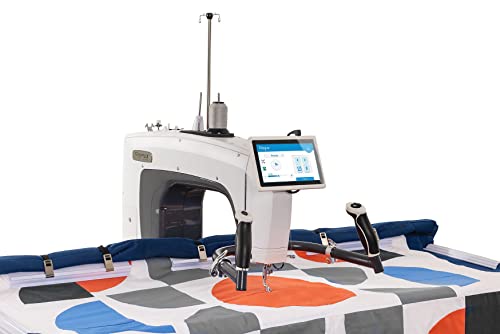 Grace 16X Elite + Cutie Grace 16X Elite + Cutie | $5,499.00 | Machine plus tabletop frame | Included 16 in longarm | Rooms without floor space | Price |
Beginner
Beginner picks: frames under $600
Low-cost frames either help a home machine quilt in rolled sections or hold a quilt for hand quilting. They are ideal for trying frame quilting without committing to a longarm budget.
Flynn Multi-Frame Quilting System
$279.00Two PVC roller pipes, three fiberglass rods, tension ribbons and three muslin leaders that work with virtually any home sewing machine. The quilt rolls so only a section sits under the needle at a time.
Best for: Machine quilting on a tight budget
Check price Grace Mini Quilter Tabletop Hoop Frame
$299.95Fits machines with 8 to 13 in of throat and gives a quilting area up to 11 x 15 in. It is best for blocks, table runners and quilt-as-you-go projects rather than whole bed quilts.
Best for: Practice and small projects
Check price Grace Start-Right EZ3 No-Baste Hand Quilting Frame
$599.95A hand quilting frame in Baltic birch plywood with aluminum rails and three 30-tooth ratchet wheels for adjustable tension. It folds flat for storage, a real plus in smaller homes.
Best for: Hand quilters
Check pricePrices change often, so confirm on Amazon. As an Amazon Associate we earn from qualifying purchases.
Intermediate
Intermediate picks: frame your own machine, about $1,799 plus a machine
A sturdy frame paired with a straight-stitch quilter is the middle path between a domestic machine and a full longarm. The machine should have as much throat space as you can afford, because it sets how much you quilt per zone.
Grace Q-Zone Hoop Frame
$1,799.00Mostly steel with height adjustable legs and leveling feet, and compatible with domestic machines or a Grace Qnique. Quilting in zones keeps the footprint compact.
Best for: Owners of a capable domestic machine
Check price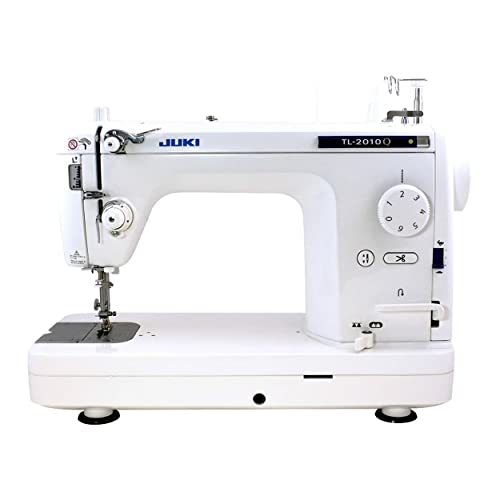
Juki TL-2010Q High-Speed Sewing and Quilting Machine
$1,199.00A 1,500 SPM straight-stitch machine with an automatic thread trimmer, and one of the most common domestic machines quilters pair with frames. Confirm your frame lists it before buying.
Best for: The machine to put on a frame
Check pricePrices change often, so confirm on Amazon. As an Amazon Associate we earn from qualifying purchases.
Expert
Expert picks: complete machine and frame systems, $4,599 to $5,499
Who should NOT buy this tier: anyone quilting mostly throws and baby quilts, or anyone without a dedicated room. A complete longarm system is the right move once finishing large quilts is your bottleneck. For room sizes and more machines, see longarm quilting machines for home.
Grace Qnique 16X Longarm with Q-Zone Queen Frame
$4,849.00A 16 in throat longarm at 1,700 SPM on the steel-railed Q-Zone Queen frame, so the whole quilt rolls for edge-to-edge designs.
Best for: Value full-rail system
Check price Handi Quilter Moxie 15 Longarm with 8 ft HQ Loft Frame
$5,495.00A 15 in throat, 1,800 SPM, Cruise, Precision and Manual stitch regulation, and the 8 ft HQ Loft Frame in one system.
Best for: Stitch regulation and dealer support
Check price Grace Qnique 16X Elite Longarm Quilting Machine with Cutie Tabletop Frame
$5,499.00A 16 in throat machine with a 7 in touchscreen on the lightweight Cutie tabletop frame, which quilts crib to king in zones on an ordinary table.
Best for: Small spaces
Check pricePrices change often, so confirm on Amazon. As an Amazon Associate we earn from qualifying purchases.
What are the different types of quilting frames?
A quilting frame is any structure that holds the three layers of a quilt taut while you stitch. The differences come down to what moves (your hands, the quilt, or a machine) and how much of the quilt is held at once.
| Frame type | How it works | Basting needed | Space | Price range | Example |
|---|---|---|---|---|---|
| Hand quilting frame | Quilt rolls on rails; you stitch by hand | No | Folds flat | $300 to $700 | Grace EZ3 Hand Frame |
| Roller frame for home machine | Quilt rolls around machine; stitch one section | Usually no | Sewing table | $250 to $400 | Flynn Multi-Frame |
| Small carriage frame | Machine moves over a small area | No | Tabletop | $300 to $500 | Grace Mini Quilter |
| Zone or hoop frame | Quilt clamped in zones; machine glides | No | Compact floor | $1,500 to $2,000 | Grace Q-Zone Hoop Frame |
| Full rail frame | Whole quilt rolls between rails; machine glides | No | Frame length plus walkway | $4,500 and up with machine | Handi Quilter Moxie + Loft |
What sewing machine works on a quilting frame?
The best machines for a frame are straight-stitch quilters with a sturdy build and as much throat space as possible. Throat space is the distance from the needle to the machine body, and on a frame it sets how deep each pass can go before you advance the quilt. A machine with 9 in of throat quilts about a 9 in band per advance, minus the space the rolled quilt takes up.
Check three things before pairing a machine and frame: the frame maker's compatibility list, the machine's bed dimensions for the carriage, and whether you need a special foot for frame work. Use the throat space calculator to estimate usable room, and compare machines in sewing machines with large throat space. A roomier choice like the Juki TL-15, at 9 x 6.75 in, gives more usable depth than most home machines.
Is a quilting frame worth it for a home sewing machine?
For many quilters, yes, especially those with shoulder or wrist strain from pushing heavy quilts. On a frame the quilt stays still and a light machine moves, and you skip basting entirely. The trade-offs are small quilting passes on domestic throat space, time spent advancing the quilt, and floor space.
A frame is less worthwhile if you mainly make small quilts, or if you enjoy free-motion quilting at the table. In that case a drop-in cabinet and a large-throat machine may serve better; see sit down longarm quilting machines for that approach.
How do you load a quilt on a longarm quilting frame?
Loading styles vary by frame, but the steps are similar on most rail frames:
- Find the center of the backing and of each canvas leader, and pin or zip the backing to the take-up and backing rails with centers aligned.
- Roll the backing so it is taut but not stretched, keeping the edges square to the rails.
- Lay the batting over the backing, smoothing from the center out.
- Float or pin the quilt top, stitching a basting line across the top edge to hold it straight.
- Attach side clamps for light side tension and check that the layers are flat before quilting.
Backing and batting should be larger than the top on every side. Our quilt backing calculator and batting size calculator add the right margins, and the how to back a quilt guide explains why square backing matters.
Check tension at both ends
Uneven backing tension from side to side is the most common cause of puckers on frames. Press your palm across the whole width before stitching.
How we chose
We did not test these frames in person. We compared manufacturer specifications, compatibility lists, materials, included parts, warranty terms and verified live pricing, plus recurring themes in owner reviews about assembly, stability and ease of loading. Frame types are grouped by how they work so the choice fits your quilting style first and budget second.
Buying tips
- Confirm machine compatibility for any frame that carries a machine, including bed size and weight.
- Measure the room with walkway space before ordering a rail frame.
- Plan wide backing. 108 in wide backing fabric saves seaming on frames.
- Expect assembly time of several hours for steel frames and ask whether a dealer sets it up.
- Buy extra bobbins; frame quilting uses thread quickly.
Frequently asked questions
What is the best quilting frame for a regular sewing machine?
The Grace Q-Zone Hoop Frame is the strongest option for a domestic machine, with a mostly steel build, adjustable legs and compatibility with domestic machines and Grace Qnique longarms, for about $1,799. On a budget, the Flynn Multi-Frame at about $279 works with virtually any home machine by rolling the quilt so only one section is under the needle at a time.
Do you need to baste a quilt on a quilting frame?
No, and that is one of the main reasons quilters buy frames. On rail and zone frames the backing, batting and top are held separately and kept taut, so pins, spray or thread basting are not needed. Many quilters still stitch a straight basting line along the top edge of the quilt top when loading, simply to keep it square as quilting begins.
What is the best frame for hand quilting?
A rolling hand quilting frame keeps the quilt evenly taut and saves your arms. The Grace Start Right EZ3 uses Baltic birch plywood, aluminum rails and three ratchet wheels for adjustable tension, and it folds flat when not in use, for about $600. Hoops and lap frames cost less but require moving and re-tensioning the quilt far more often.
How much space does a quilting frame need?
It depends on the type. Hand quilting frames and roller frames fit in the space of a table, and some fold flat. Zone or hoop frames need a compact floor area of roughly 7 to 8 ft by 6 ft. Full rail frames need the frame length plus about 3 ft for walking at the ends, so an 8 ft frame needs a room around 11 to 12 ft long.
Can I put a Juki TL-2010Q on a quilting frame?
The Juki TL-2010Q is one of the most popular domestic machines for frame quilting, because its straight stitch and sturdy build suit the job. Compatibility depends on the frame and its carriage, so confirm your frame maker lists it and whether an adapter or special foot is needed. Its throat space limits each quilting pass compared with a dedicated longarm.
How we research: we compare manufacturer specifications, owner manuals, published standards and recurring themes in verified owner reviews. We do not test products in person, and this is researched guidance, not professional advice. Follow your machine manual and pattern, and take care with rotary cutters, hot irons and needles. As an Amazon Associate we earn from qualifying purchases.