Quilt Size Calculator: Finished Quilt Size for Any Mattress, Depth and Drop
Quilt width is the mattress width plus two drops, and length is the mattress length plus one drop and any pillow tuck. A 60 x 80 inch queen mattress 12 inches deep with a 15 inch coverlet drop needs a 90 x 95 inch quilt. A floor-length bedspread needs about 104 x 114 inches.
Choose your mattress, measure how deep it is, and decide how far the quilt should hang. The calculator gives the finished quilt size, the closest standard size, and a quick batting, backing and binding summary so you can shop for everything at once.
Your bed
Your results
Finished quilt size
7.5 x 7.9 ft, 229 x 241 cm
Closest standard size
Queen (90 x 95 in)| Drop per side | 15 in |
|---|---|
| Piece the top at | 90 x 95 in |
| Batting package (4 in extra per side) | King (120 x 120 in) |
| Backing, 42 in cotton | 8 1/4 yd |
| Backing, 108 in wide | 2 3/4 yd |
| Binding, 2 1/2 in strips | 11 strips, 7/8 yd |
This drop is shorter than the mattress depth, so the mattress sides will show.
Machines that handle this quilt comfortably
Baby, crib and wall quilts fit through almost any machine. A good computerized machine with a walking foot and wide table is plenty.
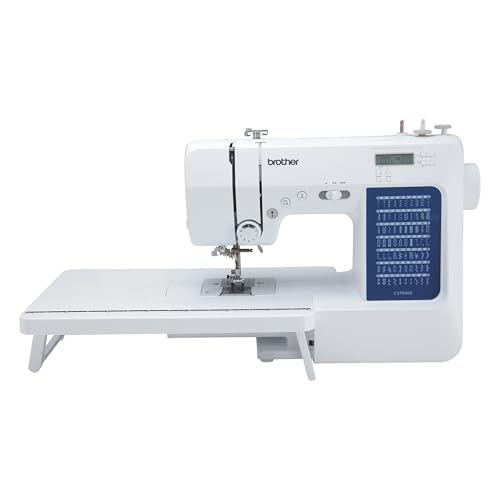
Brother CS7000X Computerized Sewing and Quilting Machine
$279.99Wide extension table, quilt guide and walking-foot friendly, at a beginner price.
Check price
Janome 3160QDC-G Sewing and Quilting Machine
$749.00Janome build quality in a compact computerized machine made with quilters in mind.
Check price
Juki TL-2000Qi Long-Arm Sewing and Quilting Machine
$999.00A straight-stitch workhorse that grows with you into bigger quilts.
Check pricePrices change often, so confirm on Amazon. As an Amazon Associate we earn from qualifying purchases.
Machines with room for throws and lap quilts
At this width a larger harp makes free-motion and straight-line quilting far less of a wrestle.
Janome 3160QDC-G Sewing and Quilting Machine
$749.00Compact and quilter-focused, fine for throws with patient rolling.
Check price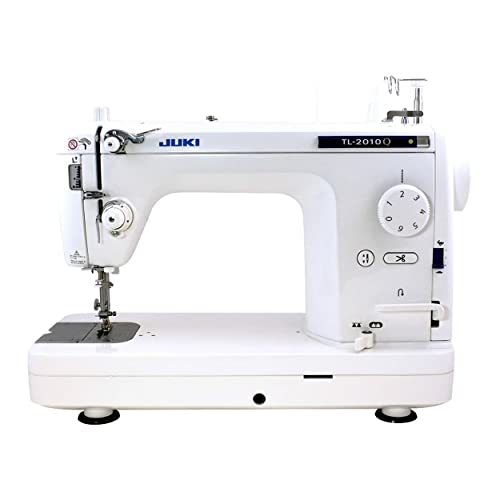
Juki TL-2010Q High-Speed Sewing and Quilting Machine
$1,199.00High-speed straight stitch with a large work area and knee lift.
Check price
Janome HD9 Professional High-Speed Straight Stitch Machine
$1,599.00A professional straight-stitch machine built for long quilting sessions.
Check pricePrices change often, so confirm on Amazon. As an Amazon Associate we earn from qualifying purchases.
Machines built for twin to queen quilts
Twin and queen tops are where an extended arm pays for itself in comfort and time.
Juki TL-2010Q High-Speed Sewing and Quilting Machine
$1,199.00The most popular step up for quilters moving past a standard machine.
Check price
Janome 1600P-QC Straight Stitch Sewing and Quilting Machine
$1,599.00Straight-stitch speed and a heavy frame for big quilts.
Check price
Juki TL-15 Mid-Arm Quilting and Piecing Machine
$1,399.00A midarm with a much bigger throat for queen-size quilting at a table.
Check pricePrices change often, so confirm on Amazon. As an Amazon Associate we earn from qualifying purchases.
Longarms and frames for king-size quilts
King quilts are heavy. A midarm, sit-down longarm or frame system lets the machine do the work instead of your shoulders.

Grace Little Rebel Sewing and Quilting Machine
$2,799.00A midarm with built-in stitch regulation that can sit on a table or a frame.
Check price
Handi Quilter Amara ST 20 Stationary Longarm with Lift Table
$9,495.00A 20 inch sit-down longarm with a lift table: room for king quilts without a frame.
Check price
Grace Qnique 16X Longarm with Q-Zone Queen Frame
$4,849.00A complete longarm and frame system for quilting large tops edge to edge.
Check pricePrices change often, so confirm on Amazon. As an Amazon Associate we earn from qualifying purchases.
How do you calculate quilt size for a bed?
A bed quilt is sized from the mattress, not from a chart. Three measurements do all the work: the mattress width, the mattress length, and the drop, which is how far the quilt hangs down from the top edge of the mattress. A pillow tuck is optional.
- Pick the drop. For a coverlet, this calculator uses the mattress depth plus 3 inches, so the quilt covers the mattress sides and just overlaps a bed skirt. A 12 inch deep mattress gets a 15 inch drop.
- Width: mattress width plus two drops. The quilt hangs down both sides. For a queen: 60 + 2 x 15 = 90 inches.
- Length: mattress length plus one drop, plus any pillow tuck. The head of the quilt stops at the headboard, so only the foot gets a drop. For a queen: 80 + 15 = 95 inches.
- Add shrinkage if it matters. Divide by the fraction left after shrinking. A 4 percent shrink means piecing the top at about 94 x 99 inches so it washes down to 90 x 95.
The same rule gives a floor-length bedspread. With 22 inches from the mattress top to the floor and a 12 inch pillow tuck, the queen becomes 60 + 2 x 22 = 104 inches wide and 80 + 22 + 12 = 114 inches long. That is 14 inches wider and 19 inches longer than the coverlet, which matters when you plan fabric, batting and quilting time.
What size quilt do I need for each mattress size?
Every row below comes from the calculator with a 12 inch mattress. The coverlet column matches the coverlet convention in our quilt size chart; the bedspread column assumes 22 inches to the floor and a 12 inch pillow tuck. Mattress dimensions follow the mattress size chart.
| Mattress | Mattress (in) | Coverlet | Comforter | Bedspread |
|---|---|---|---|---|
| Twin | 38 x 75 | 68 x 90 | 62 x 87 | 82 x 109 |
| Twin XL | 38 x 80 | 68 x 95 | 62 x 92 | 82 x 114 |
| Full | 53 x 75 | 83 x 90 | 77 x 87 | 97 x 109 |
| Queen | 60 x 80 | 90 x 95 | 84 x 92 | 104 x 114 |
| King | 76 x 80 | 106 x 95 | 100 x 92 | 120 x 114 |
| California King | 72 x 84 | 102 x 99 | 96 x 96 | 116 x 118 |
Crib quilts are sized differently because they should stay out of an infant sleep space; see the crib quilt size page for nursery sizes. A split king uses two twin XL mattresses side by side and is quilted as a king.
How far should a quilt hang over the side of the bed?
Drop is a style choice, and it changes the size more than the mattress does. Published drop ranges for each style are below, along with what the calculator produces for a queen mattress 12 inches deep.
| Style | Typical drop | Pillow tuck | Queen result | What it looks like |
|---|---|---|---|---|
| Coverlet | 12 to 15 in | None | 90 x 95 | Covers the mattress top and sides and just overlaps a bed skirt. Pillows sit on top. Most modern quilt charts use this style. |
| Comforter / Duvet style | 10 to 15 in | None | 84 x 92 | Similar drop to a coverlet, usually loftier. Shows the bed skirt or box spring below. |
| Bedspread | 20 to 24 in | 10 to 15 in | 104 x 114 | Reaches to or near the floor and tucks over the pillows. The drop equals the height from mattress top to floor, so measure your bed. |
For a bedspread, the drop is simply the height from the top of the mattress to the floor, so measure your own bed. Tall platform frames and deep mattresses can push that past 24 inches. For a coverlet, the goal is to hide the mattress edge, which is why the calculator ties the drop to the mattress depth rather than using one number for every bed.
How does mattress depth change the quilt size?
Mattress depth is not part of any US size standard. Many adult mattresses are 8 to 14 inches deep, and pillow-top or hybrid mattresses can be 16 inches or more. Each extra inch of depth adds two inches to the width of a coverlet and one inch to its length.
| Mattress depth | Drop | Quilt size (in) | Closest standard size |
|---|---|---|---|
| 8 in | 11 in | 82 x 91 | Full / Double |
| 10 in | 13 in | 86 x 93 | Full / Double |
| 12 in | 15 in | 90 x 95 | Queen |
| 14 in | 17 in | 94 x 97 | Queen |
| 16 in | 19 in | 98 x 99 | California King |
This is the most common reason a store-bought queen quilt looks skimpy on a new bed. A 16 inch pillow-top needs a 98 x 99 inch coverlet, which is wider than a 90 inch queen quilt and closer to a king. If you are making a quilt as a gift, ask for the mattress depth, or plan a generous drop.
Measure with the bedding on
Put the fitted sheet and any mattress topper on before you measure depth. A 2 inch topper adds 4 inches to the width a coverlet needs to cover the sides.
Should you make a quilt bigger to allow for shrinkage?
Cotton quilts commonly shrink about 3 to 5 percent in the first wash; add 2 to 3 in if an exact finished size matters. Cotton batting and unwashed cotton fabric shrink the most, and many quilters like the soft crinkle that results. If the finished size matters, for example a bedspread that should just touch the floor, choose a 3 or 5 percent allowance in the calculator. It divides the target size by the fraction left after shrinking and rounds up to the next half inch, so the "Piece the top at" line tells you the size to aim for before quilting.
Quilting itself also draws a quilt in. Dense free motion quilting can take up more than an inch across a bed quilt, while widely spaced straight lines take up very little. The allowance is a planning margin, not a promise, so check your batting package for its published shrinkage.
What size batting, backing and binding go with the quilt?
Once you know the quilt size, everything else follows. The results panel sizes batting and backing with 4 inches extra per side, a common longarm allowance. That is why a 90 x 95 inch queen quilt shows a king batting package: a 90 x 108 inch queen batt is only 90 inches wide, which leaves no margin on a 90 inch quilt. For exact numbers with your own overage, use the batting size calculator, the quilt backing calculator and the quilt binding calculator.
Size also decides how you will quilt it. A throw at 50 inches wide rolls through most home machines. A queen at 90 inches wide is a lot of fabric to push through a standard harp, and a king at 106 inches is where many quilters either send the top to a longarmer or move up to a machine with more throat space. The throat space calculator shows what each width really needs.
Frequently asked questions
What size quilt do I need for a queen bed?
A queen mattress measures 60 x 80 inches. For a coverlet that hangs 15 inches down the sides and foot of a 12 inch deep mattress, make the quilt 90 x 95 inches. For a floor-length bedspread with a 22 inch drop and 12 inches to tuck over the pillows, plan on 104 x 114 inches. Deeper pillow-top mattresses need more drop.
How much should a quilt hang over the side of the bed?
A coverlet usually hangs 12 to 15 inches, enough to cover the mattress sides and just overlap a bed skirt. A comforter-style quilt reaches about the bottom of the mattress. A bedspread drops 20 to 24 inches, close to the floor. Measure from the top edge of your mattress to where you want the quilt to stop, and use that as the drop.
Do I add the drop to the head of the bed?
No. The head of the quilt usually sits at the headboard, so the length gets one drop for the foot, not two. If the quilt will tuck under and fold back over the pillows, add a pillow tuck of 10 to 15 inches to the length. A queen bedspread with a 12 inch tuck is 12 inches longer than one that stops at the pillows.
How much bigger should I make a quilt to allow for shrinkage?
Cotton quilts commonly shrink about 3 to 5 percent in the first wash, especially with cotton batting. To finish at 90 x 95 inches after a 4 percent shrink, piece the top at about 94 x 99 inches. If you prewash fabric and use low-shrink polyester batting, you can skip the allowance.
What size is a king quilt?
A king mattress is 76 x 80 inches. With the same 15 inch coverlet drop used for a 12 inch deep mattress, a king quilt is 106 x 95 inches. Published king quilt charts range from about 104 x 95 up to 120 x 110 inches, so measure your own bed, especially if the mattress is deeper than 12 inches.
Are quilt sizes standardized?
No. Quilt sizes are not standardized. Published charts differ by several inches; sizes vary by maker and pattern. This calculator uses a clear rule instead of a chart: mattress size plus the drop you want. That is why it can answer for a deep pillow-top, a daybed or a bed with a tall frame, where a generic queen quilt size would come up short.
How we research: we compare manufacturer specifications, owner manuals, published standards and recurring themes in verified owner reviews. We do not test products in person, and this is researched guidance, not professional advice. Follow your machine manual and pattern, and take care with rotary cutters, hot irons and needles. As an Amazon Associate we earn from qualifying purchases.