Quilt Binding Calculator: Strips and Yardage for Straight Grain or Bias Binding
Add the four sides of the quilt plus 12 inches, divide by the length of one strip, and multiply by the strip width. A 90 x 95 inch queen quilt needs 11 strips 2 1/2 inches wide from 42 inch cotton, which is 7/8 yard. Continuous bias binding starts from a 36 inch square.
Binding is the narrow strip that wraps and finishes the edges of a quilt. Enter your quilt size and strip width to get the number of strips to cut and the yardage to buy, or switch to bias binding for the size of the square to start from.
Your quilt edge
Your results
Fabric for binding
Cut 11 strips 2 1/2 in wide
| Perimeter | 370 in |
|---|---|
| Binding needed with extra | 382 in (32 ft) |
| Straight grain | 11 strips, 7/8 yd |
| Bias: start with a square | 36 x 36 in, 1 yd |
Machines that make binding a big quilt easier
Stitching 30 feet of binding through a bed quilt goes faster on a machine with room to the right of the needle and a knee lift to free your hands.

Juki TL-2000Qi Long-Arm Sewing and Quilting Machine
$999.00A fast straight-stitch machine with a large work area for sewing binding to big quilts.
Check price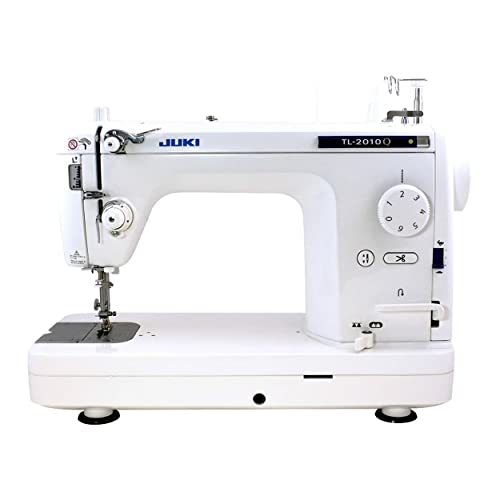
Juki TL-2010Q High-Speed Sewing and Quilting Machine
$1,199.00Adds an automatic thread trimmer and a knee lifter with up to 12 mm of lift, handy at every corner.
Check price
Janome HD9 Professional High-Speed Straight Stitch Machine
$1,599.00A professional straight-stitch machine with adjustable presser foot pressure up to 5 lb for thick binding seams.
Check pricePrices change often, so confirm on Amazon. As an Amazon Associate we earn from qualifying purchases.
Binding tools for smaller quilts
For a throw or baby quilt, accurate strips and clips instead of pins make binding quick and tidy.
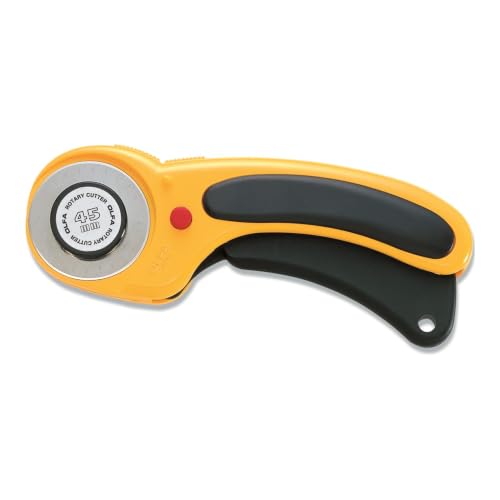
Olfa 45mm Ergonomic Squeeze-Handle Rotary Cutter RTY-2/DX
$19.69A 45 mm squeeze-trigger cutter with a self-retracting blade for cutting binding strips.
Check price
Creative Grids Quilt Ruler 6-1/2 x 24-1/2 in Rectangle CGR24
$39.99A non-slip 6 1/2 x 24 1/2 in ruler with 1/8 in markings for exact strip widths.
Check price
Clover Wonder Clips (50 Pack)
$16.95Fifty clips hold folded binding in place for hand or machine finishing without pins.
Check pricePrices change often, so confirm on Amazon. As an Amazon Associate we earn from qualifying purchases.
How do you calculate how much binding a quilt needs?
Binding length is the distance around the quilt plus a little extra for turning corners and joining the ends. Yardage then depends on how you cut it. For straight grain binding, strips are cut across the width of fabric and joined end to end with diagonal seams.
- Find the perimeter. Add all four sides: 2 x (90 + 95) = 370 inches for a queen.
- Add the extra. 370 + 12 = 382 inches of binding.
- Find the usable length of one strip. A strip from 42 inch cotton is about 40 inches long after trimming selvages, and each diagonal join uses roughly one strip width. At 2 1/2 inches wide, each strip adds about 40 minus 2 1/2 = 37.5 inches.
- Count strips and round up. 382 / 37.5 = 10.19, so cut 11 strips.
- Convert to yards. 11 strips x 2 1/2 inches = 27.5 inches of fabric, which rounds up to 7/8 yard.
Bias binding uses an area method instead. A square of fabric with side s holds about s x s / strip width inches of continuous bias. Solve for s with the length you need: the square root of 382 x 2 1/2 = 955 is about 30.9, and the calculator adds two strip widths for the diagonal ends, so start with a 36 inch square, 1 yard of fabric.
How many binding strips does each quilt size need?
Every row uses 2 1/2 inch strips, 12 inches of extra and 40 inches of usable width. Each size links to a page with step-by-step binding instructions for that quilt.
| Quilt | Size (in) | Perimeter | Strips | Straight grain | Bias square |
|---|---|---|---|---|---|
| Baby | 40 x 40 | 160 in | 5 | 3/8 yd | 26 in (3/4 yd) |
| Crib | 36 x 52 | 176 in | 6 | 1/2 yd | 27 in (3/4 yd) |
| Lap | 45 x 60 | 210 in | 6 | 1/2 yd | 29 in (7/8 yd) |
| Throw | 50 x 65 | 230 in | 7 | 1/2 yd | 30 in (7/8 yd) |
| Twin | 68 x 90 | 316 in | 9 | 5/8 yd | 34 in (1 yd) |
| Twin XL | 68 x 95 | 326 in | 10 | 3/4 yd | 35 in (1 yd) |
| Full / Double | 83 x 90 | 346 in | 10 | 3/4 yd | 35 in (1 yd) |
| Queen | 90 x 95 | 370 in | 11 | 7/8 yd | 36 in (1 yd) |
| King | 106 x 95 | 402 in | 12 | 7/8 yd | 38 in (1 1/8 yd) |
| California King | 102 x 99 | 402 in | 12 | 7/8 yd | 38 in (1 1/8 yd) |
What width should you cut quilt binding strips?
Strip width sets how wide the binding looks on the front and how snugly it wraps the batting. Wider strips need a little more fabric but are more forgiving to sew. Here is the same 90 x 95 inch queen at five common widths.
| Strip width | Strips | Straight grain yardage | Bias square | Often used for |
|---|---|---|---|---|
| 2 in | 11 | 5/8 yd | 32 in | Mini quilts, very thin batting |
| 2 1/4 in | 11 | 3/4 yd | 34 in | Thin cotton batting, a crisp narrow edge |
| 2 1/2 in | 11 | 7/8 yd | 36 in | Most cotton and 80/20 bed quilts |
| 2 3/4 in | 11 | 7/8 yd | 38 in | Loftier batting, a fuller edge |
| 3 in | 11 | 1 yd | 40 in | Wool or high-loft batting |
The widths above describe double-fold binding, where the strip is folded in half lengthwise before sewing. Single-fold binding uses strips about half as wide and is less common on bed quilts because it has only one layer at the edge, which is where a quilt wears first.
Cut one strip, then test
Before cutting every strip, fold one in half, pin it along a corner of the quilt sandwich and check that the fold wraps to the back and covers the stitching line. If it looks tight, go up 1/4 inch.
Is straight grain or bias binding better?
Straight grain binding is cut across the width of fabric, which has a little stretch, and it is the standard for quilts with straight edges. It is quick to cut, easy to join, and uses slightly less fabric than bias on most sizes. Bias binding is cut at 45 degrees to the threads. It stretches and curves smoothly, so it is the only good choice for scalloped, rounded or curved edges.
Bias also wears differently. On straight grain binding, a single thread runs along the entire fold, and when that thread wears through on a well-used bed quilt, the fold splits along its length. On bias binding, the threads cross the fold at an angle, spreading wear across many threads. That is why many quilters choose bias for heirloom quilts even when the edges are straight. Stripes and plaids cut on the bias also make an eye-catching candy-stripe edge.
Should you sew binding by hand or by machine?
Almost everyone attaches binding to the front of the quilt by machine. The difference is the finish on the back. Hand finishing gives an invisible edge and is relaxing work in a comfortable chair with good light. Machine finishing is much faster and stronger for quilts that will be washed often, like baby and picnic quilts.
Size is where machine choice shows up. Binding a throw is easy on any machine. Binding a queen means guiding roughly 32 feet of edge while the weight of the whole quilt hangs off the table. A machine with a larger work area to the right of the needle and a knee lift, which raises the presser foot so both hands stay on the quilt at every corner, makes that job far more pleasant. For backing and batting, use the quilt backing calculator and the batting size calculator, and see our step-by-step guide to binding a quilt.
Frequently asked questions
How many binding strips do I need for a queen quilt?
A 90 x 95 inch queen has a 370 inch perimeter. Add 12 inches for corners and the final join to get 382 inches. Each 42 inch strip gives about 37.5 usable inches after trimming selvages and the diagonal seam, so you need 11 strips. At 2 1/2 inches wide that is 7/8 yard of fabric.
What width should binding strips be?
2 1/2 inches is the most common width for double-fold binding on cotton quilts with medium batting. Many quilters prefer 2 1/4 inches for a narrower, snugger edge on thin cotton batting, and 2 3/4 to 3 inches for wool or high-loft batting. On a queen, dropping to 2 1/4 inch strips needs 11 strips and 3/4 yard.
When should I use bias binding instead of straight grain?
Use bias binding whenever the quilt has curved or scalloped edges, since bias stretches smoothly around curves. Many quilters also prefer bias for heirloom and heavily used bed quilts because the threads cross the fold at an angle, so wear is spread out instead of along one thread. For straight edges, straight grain binding is faster and uses slightly less fabric.
How much extra binding do I need for corners?
About 10 to 12 inches beyond the perimeter covers four mitered corners and the overlap needed to join the two ends. This calculator uses 12 inches by default. If you join the ends with a diagonal seam or like a long tail to work with, raise it to 15 or 18. Running short at the last corner is far worse than a few inches left over.
How much binding does a king quilt need?
A 106 x 95 inch king quilt has a 402 inch perimeter and needs 414 inches of binding with the extra. That is 12 strips 2 1/2 inches wide, or 7/8 yards of 42 inch cotton. A 50 x 65 inch throw, by comparison, needs only 7 strips and 1/2 yard.
How we research: we compare manufacturer specifications, owner manuals, published standards and recurring themes in verified owner reviews. We do not test products in person, and this is researched guidance, not professional advice. Follow your machine manual and pattern, and take care with rotary cutters, hot irons and needles. As an Amazon Associate we earn from qualifying purchases.