Best Sewing Machine for Quilting (2026): 11 Picks from $749 to $4,699
The best sewing machine for quilting for most people is the Juki TL-2010Q, about $1,199. It is a straight-stitch machine that runs at 1,500 stitches per minute with an automatic thread trimmer and a knee lifter. Budget quilters should look at the Janome 3160QDC-G near $749, and anyone wanting decorative stitches too should step up to a Janome Skyline S6.
For piecing and quilting, the Juki TL-2010Q is the machine most quilters grow into and keep. At about $1,199 it gives you a fast, industrial-style straight stitch, an automatic thread trimmer and a knee lifter that frees both hands to steer the quilt.
It is not the only good answer. If you also sew clothes or want decorative stitches, a combo machine like the Janome Skyline S6 AE makes more sense. If your budget stops near $750, the Janome 3160QDC-G is a capable first quilting machine. Below are 11 picks in three tiers, plus how to choose between straight-stitch and full-feature machines.
Which sewing machine is best for quilting? The picks at a glance
| Product | Price | Stitch type | Max speed | Best for | Buy |
|---|---|---|---|---|---|
 Janome 3160QDC-G Janome 3160QDC-G | $749.00 | Utility and decorative | Not listed | First quilting machine | Price |
 Janome 4120QDC-G Janome 4120QDC-G | $849.00 | 120 built-in stitches | Not listed | Beginners who want stitches | Price |
 Brother PQ1600S Brother PQ1600S | $899.99 | Straight stitch only | 1,500 SPM | Budget straight-stitch | Price |
 Juki TL-2000Qi Juki TL-2000Qi | $999.00 | Straight stitch only | 1,500 SPM | Value Juki | Price |
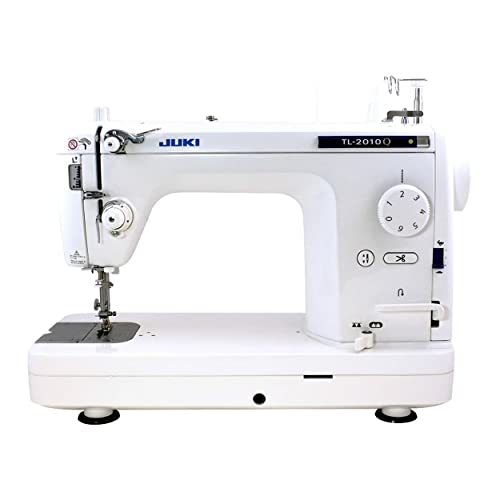 Juki TL-2010Q Juki TL-2010Q | $1,199.00 | Straight stitch only | 1,500 SPM | Most quilters | Price |
 Janome HD9 Janome HD9 | $1,599.00 | Straight stitch only | 1,600 SPM | Thick layers, heavy use | Price |
 Janome 1600P-QC Janome 1600P-QC | $1,599.00 | Straight stitch only | 1,600 SPM | Speed and a nearly 9 x 6 in workspace | Price |
 Janome Skyline S6 AE Janome Skyline S6 AE | $2,099.00 | 196 built-in stitches | Not listed | Quilting plus garments | Price |
 Janome MC6650 Janome MC6650 | $2,099.00 | Utility and decorative | 1,000 SPM | 10 in throat space | Price |
 Janome MC9410QC Janome MC9410QC | $3,799.00 | Utility and decorative | 1,060 SPM | Big bed, touchscreen | Price |
 Janome Continental M6 Janome Continental M6 | $4,699.00 | 400 built-in stitches | 1,300 SPM | Performance ceiling | Price |
Beginner
Beginner picks: quilting machines under $1,000
These three cost under $1,000 and handle piecing, binding and walking-foot quilting on throws and twin quilts. The two Janomes still sew zigzag and decorative stitches; the Brother is a pure straight-stitch quilter.
Janome 3160QDC-G Sewing and Quilting Machine
$749.00Janome built it for new quilters: the Superior Plus Feed System helps layers move evenly, and the automatic thread cutter saves hundreds of snips per quilt. The bundled extension table and quilt kit mean you can start the day it arrives.
Best for: A first quilt-focused machine
Check price Janome 4120QDC-G Computerized Quilting and Sewing Machine
$849.00Same quilting-friendly platform with 120 stitches and pattern memory, useful for decorative binding, applique and labels. Worth the extra $100 only if you will actually use the stitch library.
Best for: Applique and decorative stitching
Check price Brother PQ1600S High-Speed Straight Stitch Sewing and Quilting Machine
$899.99A straight-stitch machine at 1,500 stitches per minute with 5.7 x 8.7 in of needle-to-arm space and an 11.1 x 23.3 in table included. Owners frequently mention the crisp straight seam and the speed, and note it cannot sew a zigzag.
Best for: Pure piecing and quilting on a budget
Check pricePrices change often, so confirm on Amazon. As an Amazon Associate we earn from qualifying purchases.
Intermediate
Intermediate picks: straight-stitch quilters from $999 to $1,599
This is the sweet spot for most quilters. Straight-stitch machines use a single-needle hole and a strong motor, so quarter-inch seams stay precise and thick quilt sandwiches feed without fuss. The trade-off: no zigzag, no buttonholes.
Juki TL-2000Qi Long-Arm Sewing and Quilting Machine
$999.00The lower-priced sibling of our top pick with the same 1,500 SPM straight stitch. You give up the automatic thread trimmer, so budget about $200 less and a pair of snips at the machine.
Best for: Quilters who want Juki speed for less
Check price Juki TL-2010Q High-Speed Sewing and Quilting Machine
$1,199.00The automatic thread trimmer and knee lifter with up to 12 mm lift are the two features you use on every seam. Owner reviews consistently praise how it handles a full quilt sandwich for walking-foot and free-motion work.
Best for: Most quilters, piecing through quilting
Check price Janome HD9 Professional High-Speed Straight Stitch Machine
$1,599.00A 1,600 SPM straight-stitch machine with presser foot pressure up to 5 lb, bundled with an even feed foot, a darning foot and plate, and an extra large extension table. The adjustable pressure helps with thick batting and flannel.
Best for: Thick quilts and heavy fabrics
Check price Janome 1600P-QC Straight Stitch Sewing and Quilting Machine
$1,599.00Fast at 1,600 SPM with a workspace Janome describes as nearly 9 x 6 in and an automatic thread cutter. It uses HLx5 needles, so buy the right needle system when you stock up.
Best for: Quilters who want more room at speed
Check pricePrices change often, so confirm on Amazon. As an Amazon Associate we earn from qualifying purchases.
Expert
Expert picks: combo machines with big beds, $2,099 and up
These machines quilt well and also sew everything else, with dual feed, wide stitch widths and long flatbeds. Who should NOT buy this tier: if you only piece and quilt, a $1,199 straight-stitch machine gives you the quilting comfort for a fraction of the price. Spend here only if you also sew garments, bags or decorative work.
Janome Skyline S6 Anniversary Edition Sewing and Quilting Machine
$2,099.00AcuFeed Flex built in, 196 stitches, 9 mm stitch width, and an extra-wide extension table plus knee lifter in the box. The cleanest all-rounder here for quilters who also sew clothes.
Best for: Quilting plus garment sewing
Check price Janome Memory Craft 6650 Sewing and Quilting Machine
$2,099.00A 10 in throat space and all-metal seamless flatbed at 1,000 SPM. The extra harp room matters when you quilt a queen on a home machine.
Best for: Quilting larger tops on a home machine
Check price Janome Horizon Memory Craft 9410QC Sewing and Quilting Machine
$3,799.0011 in of bed space right of the needle, a 5 in color touchscreen, and AcuFeed standard and open-toe feet plus an HP foot and plate bundled. A premium domestic quilting machine without going to a longarm.
Best for: Serious domestic quilters
Check price Janome Continental M6 Flatbed Quilting and Sewing Machine
$4,699.00A 17.81 in all-metal seamless flatbed, 400 stitches and 1,300 SPM. This is Janome's performance ceiling for a domestic machine, priced accordingly.
Best for: Quilters who want the best domestic machine
Check pricePrices change often, so confirm on Amazon. As an Amazon Associate we earn from qualifying purchases.
What is a good sewing machine for quilting?
A good sewing machine for quilting does three jobs well: it sews an accurate quarter-inch seam for piecing, it feeds a thick sandwich of top, batting and backing evenly, and it gives you enough room to push the bulk of the quilt through the arm.
Throat space is the distance from the needle to the machine body on the right side. More throat space means less wrestling. Feed is the second factor: a walking foot or a built-in dual feed like Janome AcuFeed moves the top and bottom layers together so the backing does not pucker.
The features that matter most, in order: a straight stitch that stays straight at speed, an automatic thread cutter, a knee lifter or presser foot pivot, a large extension table, adjustable presser foot pressure, and a needle-down setting. Hundreds of decorative stitches matter far less for quilting than people expect.
| Task | Straight-stitch quilter | Computerized combo | What to look for |
|---|---|---|---|
| Piecing blocks | Excellent, single-hole plate | Very good with straight-stitch plate | 1/4 in foot, needle-down |
| Walking-foot quilting | Excellent | Excellent with dual feed | Even feed foot or AcuFeed |
| Free-motion quilting | Excellent, strong motor | Good | Drop feed dogs, darning foot, speed control |
| Applique and satin stitch | Not possible | Excellent | Zigzag, 7 to 9 mm width |
| Binding by machine | Straight stitch only | Straight or decorative | Walking foot, knee lifter |
| Garments and buttonholes | Not possible | Excellent | One-step buttonhole |
How much throat space do you need for quilting?
For baby quilts and throws, the 6 to 7 in harp on a basic machine works if you quilt in sections. For twin and larger, 8 to 10 in makes the job noticeably easier, and queen or king quilts on a home machine really benefit from 10 in or more, like the Janome MC6650 and its 10 in throat.
Throat height matters as much as width, because a rolled quilt is a tube, not a flat sheet. Run your quilt dimensions through the throat space calculator to see how much room the rolled bulk needs, and check your finished size with the quilt size calculator first. For the full list of roomy machines, see our sewing machines with large throat space.
Is a straight stitch sewing machine better for quilting?
For piecing and quilting alone, yes. A straight-stitch machine uses a needle plate with a small round hole, so thin fabric cannot be pushed down into the plate and seams stay precise. The motor and mechanism are built for one job, which is why the Juki TL-2010Q, Janome HD9 and Janome 1600P-QC reach 1,500 to 1,600 stitches per minute.
The catch is obvious once you need it: no zigzag, no buttonholes, no satin-stitch applique. Many quilters own two machines, a straight-stitch quilter plus an inexpensive computerized machine such as the Brother CS7000X for everything else. That pair often costs less than one high-end combo. If the head-to-head matters, read Juki TL-2010Q vs Janome HD9 and quilting machine vs sewing machine.
Can you quilt a king size quilt on a regular sewing machine?
Yes, with patience and good support. The keys are a large table surface around the machine so the quilt never hangs and drags, a walking foot, and quilting in sections from the center out. A drop-in sewing cabinet like the Kangaroo with Joey puts the machine bed flush with the tabletop, which owners describe as the single biggest comfort upgrade for large quilts.
If you finish more than a few large quilts a year, a frame or longarm starts to make financial sense. Our longarm cost calculator compares paying a longarm service against buying a machine, and the longarm quilting machines for home roundup covers the options.
Quilt-as-you-go
Quilting blocks or rows separately and joining them afterward lets any machine finish a king quilt with only a few layers under the needle at a time.
Juki vs Janome: which quilting machine brand should you buy?
Both are respected Japanese brands with strong dealer support. Juki is best known for straight-stitch quilters descended from its industrial line, like the Juki TL-2000Qi and Juki TL-2010Q. Janome covers more ground, from the Janome 3160QDC-G beginner quilter through straight-stitch machines and wide-bed computerized models up to the Janome Continental M6.
Choose Juki if you want a focused, fast straight-stitch machine at a lower price. Choose Janome if you want a single machine that quilts and does everything else, or a specific feature like AcuFeed. More detail in Juki vs Janome and Janome 1600P vs Juki TL-2010Q.
How we chose
We did not test these machines in person. Picks are built from manufacturer specifications, owner manuals, warranty terms, pricing on verified live listings, and recurring themes across verified owner reviews. We weighted features that matter to quilters (straight-stitch quality, feed, throat space, thread cutting, knee lifters and extension tables) over stitch counts, and we left throat space out wherever the published figures we found disagreed.
Buying tips
- Buy for the quilts you make most. Throws and baby quilts do not need a $2,000 machine; queen bed quilts on a home machine benefit from 9 in or more of throat space.
- Check the needle system. Some straight-stitch machines use HLx5 or industrial-style needles rather than standard household needles.
- Budget for a table. A flat, wide surface around the machine matters as much as the machine for large quilts.
- Keep a second machine for zigzag if you choose a straight-stitch quilter.
- Read the warranty terms and whether they require purchase from an authorized seller.
Frequently asked questions
What is the best sewing machine for quilting for beginners?
The Janome 3160QDC-G is a strong first quilting machine at about $749. It includes an extension table, hard cover and a bonus quilt kit, and it keeps zigzag and decorative stitches, so a beginner can also sew bags and simple projects. If you want a pure quilter, the Brother PQ1600S straight-stitch machine sits just under $900 and is very fast for piecing.
Is the Juki TL-2010Q worth the money?
For quilters who mainly piece and quilt, yes. At about $1,199 the Juki TL-2010Q offers a 1,500 stitches per minute straight stitch, an automatic thread trimmer and a knee lifter with up to 12 mm of lift. Those features save time on every seam. It is not worth it if you need zigzag or buttonholes, because it only sews a straight stitch.
Do I need a special machine to quilt?
No. Any sewing machine that sews a reliable straight stitch can piece and quilt, especially with a walking foot. Quilting-focused machines simply make it easier with more throat space, stronger feeding, automatic thread cutting and large extension tables. Many people quilt their first few projects on a basic machine and upgrade once they know what size quilts they make.
What stitches per minute is good for quilting?
For piecing, speed is rarely the limit; control matters more. For free-motion quilting, a higher top speed helps you keep a consistent stitch length while moving the quilt quickly. Straight-stitch quilters reach 1,500 to 1,600 stitches per minute, while most computerized combo machines top out around 1,000 to 1,300. A speed slider that caps the top speed is useful when learning.
Should I buy a quilting machine or a longarm?
Buy a quilting sewing machine first. You need one to piece quilt tops anyway, and it can finish smaller quilts. A longarm makes sense once you finish several large quilts a year or are paying a longarm service regularly. Longarm systems start around $4,600 with a frame and need a dedicated room, so compare the cost with our longarm cost calculator before buying.
Which is better for quilting, Brother or Janome?
Both make good quilting machines at different price points. Brother is strongest under $1,000, with inexpensive computerized machines and the PQ1600S straight-stitch quilter. Janome offers a wider quilting range, from the 3160QDC-G through straight-stitch machines like the HD9 and 1600P to large-bed models such as the MC9410QC. For large quilts on a home machine, Janome has more options.
How we research: we compare manufacturer specifications, owner manuals, published standards and recurring themes in verified owner reviews. We do not test products in person, and this is researched guidance, not professional advice. Follow your machine manual and pattern, and take care with rotary cutters, hot irons and needles. As an Amazon Associate we earn from qualifying purchases.