Baby Quilt Size: Dimensions in Inches, Backing, Batting and Blocks
A baby quilt is typically 40 x 40 inches (3.3 x 3.3 feet), with published sizes from 30 x 30 to 40 x 50 inches. It is used for play mat, tummy time, stroller, gift. Plan 2 3/4 yards of backing, 5 binding strips and a throw batting.
A baby quilt is not tied to a mattress, so the right size depends on how it will be used: play mat, tummy time, stroller, gift. Most patterns land near 40 x 40 inches.
| Typical finished size | 40 x 40 in (3.3 x 3.3 ft) |
|---|---|
| Published size range | 30 x 30 to 40 x 50 in |
| Quilt top area | 11.1 sq ft |
| Backing, 42 in cotton | 2 3/4 yd (2 panels) |
| Backing, 108 in wide | 1 3/8 yd |
| Binding (2 1/2 in strips) | 5 strips, 3/8 yd |
| Batting to cut | 48 x 48 in (Throw package) |
| Comfortable throat space | 7 in or more |
How many blocks do you need for a baby quilt?
Divide the quilt width and length by the finished block size and round to the nearest whole block. The table assumes no sashing or border, so the finished top is close to, but not exactly, 40 x 40 inches.
| Finished block | Across x down | Total blocks | Top size (in) |
|---|---|---|---|
| 6 in | 7 x 7 | 49 | 42 x 42 |
| 8 in | 5 x 5 | 25 | 40 x 40 |
| 10 in | 4 x 4 | 16 | 40 x 40 |
| 12 in | 3 x 3 | 9 | 36 x 36 |
| 14 in | 3 x 3 | 9 | 42 x 42 |
| 16 in | 3 x 3 | 9 | 48 x 48 |
Want fewer blocks? Add a border. A 6 inch border on all four sides removes 12 inches from each dimension of the block area. Try it in the blocks needed calculator, or see quilt block sizes for cutting sizes.
How much fabric does a baby quilt need for backing, binding and batting?
These are the finishing materials for a 40 x 40 inch top, using 4 inches of extra backing and batting per side and 2 1/2 inch double-fold binding cut across 42 inch cotton.
- Backing: 2 3/4 yards of 42 inch cotton (2 panels, vertical seams), or 1 3/8 yards of 108 inch wide backing. Full detail on the baby backing page.
- Binding: 5 strips at 2 1/2 inches, 172 inches in total, 3/8 yards. See the baby binding page.
- Batting: 48 x 48 inches, so a Throw package (60 x 60 in) covers it. Compare types in the batting size chart.
What machine do you need to quilt a baby quilt?
A standard domestic machine handles baby and wall quilts. Throat space, the distance from the needle to the machine body, decides how much quilt you can bunch to the right of the needle. For a quilt 40 inches wide, look for 7 in or more.
Machines that handle this quilt comfortably
Baby, crib and wall quilts fit through almost any machine. A good computerized machine with a walking foot and wide table is plenty.
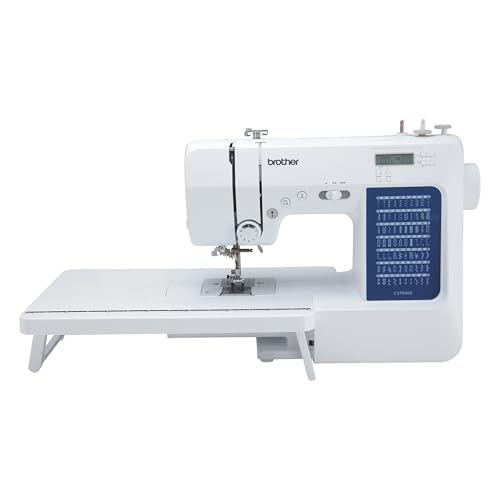
Brother CS7000X Computerized Sewing and Quilting Machine
$279.99Wide extension table, quilt guide and walking-foot friendly, at a beginner price.
Check price
Janome 3160QDC-G Sewing and Quilting Machine
$749.00Janome build quality in a compact computerized machine made with quilters in mind.
Check price
Juki TL-2000Qi Long-Arm Sewing and Quilting Machine
$999.00A straight-stitch workhorse that grows with you into bigger quilts.
Check pricePrices change often, so confirm on Amazon. As an Amazon Associate we earn from qualifying purchases.
Measure before you cut
Quilt size charts disagree by several inches. Measure your actual mattress and the drop you like on an existing blanket, then adjust. It is easier to add a border than to unpick one.
Supplies for a baby quilt
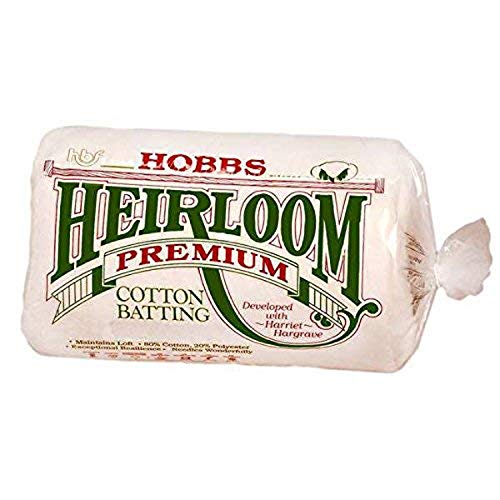
Hobbs Heirloom 80/20 Cotton/Poly Batting, Queen
$28.99An 80/20 blend that packages in sizes that suit smaller quilts with room to spare.
Check price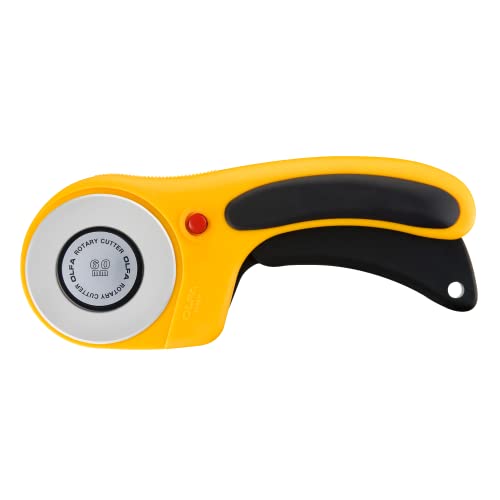
Olfa 60mm Ergonomic Squeeze-Handle Rotary Cutter RTY-3/DX
$26.49A 60 mm rotary cutter slices through layered fabric for faster cutting.
Check price
Creative Grids 12-1/2 x 24-1/2 Rectangle Quilt Ruler
$55.99A long, grippy ruler for cutting borders and binding strips accurately.
Check pricePrices change often, so confirm on Amazon. As an Amazon Associate we earn from qualifying purchases.
How does a baby quilt compare with other sizes?
| Quilt | Typical size (in) | Common use |
|---|---|---|
| Baby | 40 x 40 | Play mat, tummy time, stroller, gift |
| Mini / Wall Hanging | 24 x 24 | Wall decor, table topper, skill practice, swaps |
| Crib | 36 x 52 | Nursery decor, toddler bed; keep soft bedding out of an infant sleep space per safe-sleep guidance |
| Lap | 45 x 60 | Chair or wheelchair lap cover, reading |
| Throw | 50 x 65 | Couch, foot of bed, picnic |
| Twin | 68 x 90 | Twin bed coverlet, bunk bed, daybed |
| Twin XL | 68 x 95 | Dorm bed coverlet |
| Full / Double | 83 x 90 | Full bed coverlet |
| Queen | 90 x 95 | Queen bed coverlet |
| King | 106 x 95 | King or split king bed coverlet |
| California King | 102 x 99 | California king bed coverlet |
Frequently asked questions
How big is a baby quilt in feet?
A baby quilt of 40 x 40 inches is about 3.3 x 3.3 feet. Quilt sizes are not standardized, so patterns and shops list anything from 30 x 30 to 40 x 50 inches. Pick the size that suits how the quilt will be used rather than a fixed rule.
How much fabric do I need for the back of a baby quilt?
With 4 inches of extra backing on every side, a 40 x 40 inch baby quilt needs a 48 x 48 inch backing. That is 2 3/4 yards of 42 inch quilting cotton sewn as 2 panels with vertical seams, or 1 3/8 yards of 108 inch wide backing. Longarm quilters may ask for 6 inches per side, so check first.
What size batting do I need for a baby quilt?
Cut batting about 4 inches larger than the top on every side, so a baby quilt needs roughly 48 x 48 inches. The smallest standard package that covers it is Throw batting at 60 x 60 inches. Package sizes vary slightly by brand, so compare the label before you buy.
How many 12 inch blocks do I need for a baby quilt?
Without sashing or borders, a baby quilt near 40 x 40 inches takes 3 blocks across and 3 down, 9 blocks in total, for a finished top of 36 x 36 inches. Adding a border lets you use fewer blocks and still reach the size you want. The blocks-needed calculator works out sashing and borders for you.
How much binding does a baby quilt need?
A 40 x 40 inch quilt has a perimeter of 160 inches. Adding 12 inches for mitered corners and the final join, you need about 172 inches of binding, which is 5 strips cut 2 1/2 inches wide across 42 inch fabric, or 3/8 yards of fabric.
Can I quilt a baby quilt on a regular sewing machine?
A standard domestic machine handles baby and wall quilts. For a quilt 40 inches wide, a throat space of 7 in or more makes the job comfortable. A standard machine with a 6 to 7 inch harp can still quilt it with careful rolling and straight lines, but free-motion work on a big quilt is far easier with more space. Many quilters also send large tops to a longarm service.
How we research: we compare manufacturer specifications, owner manuals, published standards and recurring themes in verified owner reviews. We do not test products in person, and this is researched guidance, not professional advice. Follow your machine manual and pattern, and take care with rotary cutters, hot irons and needles. As an Amazon Associate we earn from qualifying purchases.