Best Knitting Needles for Socks (2026): 8 Picks for DPNs, Circulars and Magic Loop
The best knitting needles for socks depend on method. For a do-everything set, the ChiaoGoo Twist Shorties, about $117, give 2 and 3 inch steel tips in US 0 to 3 with short cables. To start cheaply, a 9 inch ChiaoGoo Red circular in US 1 costs about $14. Most fingering weight sock yarn uses US 1 to 2 needles.
If you knit socks regularly, the ChiaoGoo Twist Shorties Red is the set to own. For about $117 it gives you 2 and 3 inch stainless steel tips in US 0, 1, 1.5, 2, 2.5 and 3 with 5, 6 and 8 inch cables, which covers nearly every sock size without juggling double points. To try sock knitting for under $15, a ChiaoGoo Red 9 in Circular (US 1) does the job on its own.
Socks are knit in the round at a small circumference, usually 7 to 9 inches around. That is too small for a regular 16 inch circular, which is why sock knitters use one of three tools: double-pointed needles (DPNs), very short circulars, or a long circular with the magic loop technique.
Sock needles at a glance
| Product | Price | Method | Sizes | Material | Buy |
|---|---|---|---|---|---|
 Clover Takumi 7 in DPNs (US 1) Clover Takumi 7 in DPNs (US 1) | $11.01 | Double points, 7 in, 5 pack | US 1 | Bamboo | Price |
 ChiaoGoo Red 9 in Circular (US 1) ChiaoGoo Red 9 in Circular (US 1) | $13.99 | 9 in circular | US 1 | Stainless steel | Price |
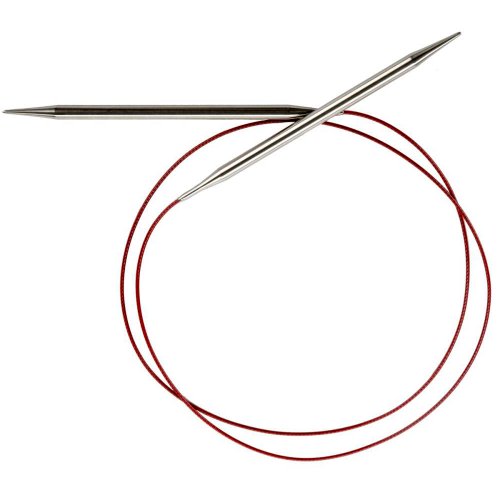 ChiaoGoo Red Lace 40 in (US 1.5) ChiaoGoo Red Lace 40 in (US 1.5) | $13.74 | Magic loop, 40 in | US 1.5 | Stainless steel | Price |
 ChiaoGoo Red Lace DPN Set ChiaoGoo Red Lace DPN Set | $74.89 | Double points, 6 in | US 0 to 3 | Stainless steel | Price |
 ChiaoGoo Twist Shorties Red ChiaoGoo Twist Shorties Red | $117.20 | Short interchangeable | US 0 to 3 | Stainless steel | Price |
 HiyaHiya Flyers Sock Set HiyaHiya Flyers Sock Set | $119.91 | Sock set, 8 in | US 1 to 2.5 | Sharp tips | Price |
 KB Fine Gauge Sock Loom KB Fine Gauge Sock Loom | $16.99 | Sock loom | Fine gauge, DK or thinner | Hardwood | Price |
Beginner
Beginner picks: your first pair of socks, under $20
Pick one method and one size, usually US 1 or 1.5 for fingering weight sock yarn. If you are unsure which method will suit you, the 9 inch circular is the least fiddly for most first-time sock knitters.
ChiaoGoo Stainless Steel Red Circular Knitting Needle, 9-Inch, US 1 (2.25 mm)
$13.99A 9 inch stainless steel fixed circular in US 1 for about $14. The short length is just right for sock circumference, and steel will not bend in this small size.
Best for: Least fiddly start
Check price Clover Takumi Bamboo 7-Inch Double Point Knitting Needles, US 1 (2.25 mm), 5 Pack
$11.01Five 7 inch bamboo double points in US 1, about $11. Bamboo grips the yarn so DPNs are less likely to slide out of stitches, the most common beginner complaint. Handle gently; small bamboo can bend.
Best for: Traditional DPN method
Check price ChiaoGoo SS Red Lace Circular Knitting Needle, 40-Inch (100 cm), US 1.5 (2.5 mm)
$13.74A 40 inch stainless steel circular in US 1.5, about $14, for the magic loop method. The long cable also lets you knit both socks at the same time.
Best for: Magic loop and two at a time
Check price Authentic Knitting Board Fine Gauge Wooden Sock Loom
$16.99Not a needle at all: a hardwood sock loom, about $17, that adjusts to any sock size with a wing nut and slider. For people who find tiny needles hard on their hands or eyes.
Best for: Knitting socks without needles
Check pricePrices change often, so confirm on Amazon. As an Amazon Associate we earn from qualifying purchases.
Intermediate
Intermediate pick: a full DPN size run, about $75
Once you know you like DPNs, a steel set in every sock size saves buying pairs one at a time as patterns change.
ChiaoGoo Twist Red Lace Double Point Needle Set, 6 inch, US 0 to 3
$74.89Stainless steel 6 inch double points in US 0, 1, 1.5, 2, 2.5 and 3, model 6600, about $75. Six inches suits sock circumferences and steel stays straight in fine sizes that bamboo cannot manage.
Best for: DPN loyalists
Check pricePrices change often, so confirm on Amazon. As an Amazon Associate we earn from qualifying purchases.
Expert
Expert picks: short interchangeables, specialty sets and a sock tube machine
Who should not buy this tier: anyone who has not finished a first pair. Sock knitters develop strong method preferences, and it is common to learn you dislike one approach after a single sock.
ChiaoGoo Twist Shorties Red Lace Interchangeable Set, 2 and 3 inch tips, US 0 to 3
$117.20Model 7230-M gives 2 and 3 inch tips in US 0 to 3 with 5, 6 and 8 inch cables. Pair a 3 inch tip with the 8 inch cable for a very short circular in any size, or use a longer Small connector cable for magic loop.
Best for: Frequent sock knitters
Check price HiyaHiya Flyers Flexible Double-Pointed Needles, Sock Set
$119.91A sock set with sharp tips in US 1, 1.5, 2 and 2.5 (2.25 to 3 mm) at 8 inches, about $120. Sharp points help with twisted stitches and tight decreases at the heel and toe.
Best for: Textured sock patterns
Check price
addi Express Professional Knitting Machine, 22 needles
$95.75A 22-needle crank machine that makes 4 to 6 inch circular tubes, about $96. It knits the leg and foot tube quickly, but heels and toes still need hand work, so think of it as a speed tool for tube sections.
Best for: Fast sock tubes
Check pricePrices change often, so confirm on Amazon. As an Amazon Associate we earn from qualifying purchases.
What size knitting needles for socks?
Most sock yarn is fingering weight (#1 super fine), knit on US 0 to 2 (2 to 2.75 mm). Socks are knit tighter than the ball band suggests, because a firm fabric wears longer at the heel and toe.
| Sock yarn | Typical needle | Metric | Stitches around (adult) |
|---|---|---|---|
| Fingering (sock) weight | US 1 to 2 | 2.25 to 2.75 mm | 56 to 72 |
| Fine fingering, lace-like | US 0 to 1 | 2 to 2.25 mm | 64 to 80 |
| Sport weight | US 2 to 4 | 2.75 to 3.5 mm | 48 to 60 |
| DK weight | US 3 to 5 | 3.25 to 3.75 mm | 40 to 52 |
| Worsted (boot socks) | US 5 to 7 | 3.75 to 4.5 mm | 36 to 44 |
Stitch counts depend on your gauge and foot circumference. Use the knitting gauge calculator with a swatch knit in the round, and the cast on calculator for your exact number. The needle size chart converts US to metric.
DPNs, 9 inch circulars or magic loop: what is best for socks?
All three make identical socks. The difference is comfort and habit.
| Method | Pros | Cons | Try with |
|---|---|---|---|
| Double points (DPNs) | Traditional, easy to divide stitches for heels | Needles slide out, ladders at joins | Takumi DPNs |
| 9 inch circular | Nothing to drop, quick to learn | Tight at the smallest sizes for some hands | ChiaoGoo 9 in |
| Magic loop, 32 to 40 in | One needle for any circumference, two at a time | Pulling the loop through takes practice | ChiaoGoo 40 in |
| Short interchangeables | Every size, choose tip and cable length | Highest cost | Twist Shorties |
What are the best knitting needles for magic loop socks?
Magic loop needs a long, very flexible cable, usually 32 to 40 inches, so you can pull a loop of cable out between stitches. The ChiaoGoo Red Lace 40 in (US 1.5) has the long cable and small size the technique needs. Interchangeable sets work too; check that the set includes small tip sizes, since many standard sets like our interchangeable needle picks start at US 2 or 4.
Are bamboo or metal needles better for socks?
For US 0 to 1.5, metal is usually better because thin bamboo and wood can bend or snap with firm sock tension. Bamboo is fine for US 2 and up, and many knitters like its grip on slippery superwash sock yarn. Carbon fiber and steel are both strong in small sizes. Sharp steel tips, like the HiyaHiya Flyers Sock Set, help with cabled and twisted-stitch patterns.
Can a knitting machine or loom make socks?
A 22-needle crank machine like the addi Express Pro 22 can knit the tube of a sock in minutes, and some knitters add an afterthought heel by hand. It cannot shape a heel turn on its own. A sock loom, like the KB Fine Gauge Sock Loom, can make a complete sock with a shaped heel using loom techniques. See best knitting machines and best knitting looms for the full picture.
Tiny stitches need good light
Fingering weight on US 1 needles is hard to read in dim light, especially dark colorways. A magnifier lamp or a bright daylight lamp beside your chair makes picking up gusset stitches much easier.
How we chose
We did not test these needles in person. We compared manufacturer specifications (sizes, lengths, materials, cable lengths, model numbers), verified listings, and recurring themes in verified owner reviews about bending in small sizes, stitches sliding off DPNs, cable stiffness and tip sharpness. We organized picks by method because that choice matters more than brand for sock knitting.
Buying tips
- Start with US 1 or 1.5 for fingering weight sock yarn.
- Choose a method first: DPNs, 9 inch circular, or magic loop.
- Use metal for US 0 to 1.5; small bamboo can bend.
- Buy 32 to 40 inch cables for magic loop.
- Swatch in the round. Sock gauge often differs from flat swatches.
- Get good light before your first heel turn.
Frequently asked questions
What size needles should I use for my first pair of socks?
For standard fingering weight sock yarn, start with US 1 (2.25 mm) or US 1.5 (2.5 mm) needles. Those sizes give the firm fabric socks need to wear well. If small needles feel too fiddly, knit your first pair in DK weight yarn on US 3 to 4 needles, which works up faster and makes a thicker house sock.
Are DPNs or circular needles better for socks?
Neither is better for the finished sock; it is about comfort. Double-pointed needles are traditional and make dividing stitches for the heel simple, but they can slide out. A 9 inch circular has nothing to drop and many beginners find it easiest. Magic loop on a long circular lets one needle handle any size and both socks at once.
How long should sock knitting needles be?
Double-pointed needles for socks are usually 5 to 8 inches long, with 6 inches a popular middle length. Fixed circulars for socks are about 9 inches total. For magic loop, choose a 32 to 40 inch circular. Shorter needles are easier in small hands and at small circumferences, while longer DPNs hold more stitches for larger feet.
Can I use interchangeable needles for socks?
Standard interchangeable sets usually have 4 to 5 inch tips and start at US 2 or larger, which is too long and too big for most sock knitting. Short sets like the ChiaoGoo Twist Shorties are made for it, with 2 and 3 inch tips in US 0 to 3 and short cables. Some knitters also use a long cable from a standard set for magic loop.
Why do my DPNs keep falling out?
Slippery metal needles, slippery superwash yarn and too few stitches per needle all make DPNs slide out. Try bamboo DPNs, which grip yarn better, or place a point protector on the ends you are not using. Keeping at least 15 or so stitches per needle and knitting more firmly at the corners also helps reduce laddering where needles meet.
How we research: we compare manufacturer specifications, owner manuals, published standards and recurring themes in verified owner reviews. We do not test products in person, and this is researched guidance, not professional advice. Follow your machine manual and pattern, and take care with rotary cutters, hot irons and needles. As an Amazon Associate we earn from qualifying purchases.