Craft Project Time Calculator: Quilts, Blankets, Cross Stitch and Embroidery
Divide the size of the project by your pace, add finishing time, then divide by the hours you craft each week. A throw quilt of 30 blocks at 45 minutes each plus 10 hours of quilting and binding is 33 hours, about 7 weeks at 5 hours a week. Paces are editable assumptions.
Choose a project, enter its size, and set your pace. Every pace here is an editable assumption, not a standard: stitch for an hour the way you normally do, count what you finished, and type in your own number for the most honest estimate.
Your project and pace
Your results
Time to finish
33 hours at 5 hours a week
| Main work | 23 hours |
|---|---|
| Finishing and setup | 10 hours |
| Total | 33 hours |
| At a 50 percent faster pace | 25 hours, about 5 weeks |
Finish quilts faster
Cutting and quilting are the slowest parts of most quilts. A die cutter and a larger quilting machine shorten both.

AccuQuilt GO! Big Electric Fabric Cutter Starter Set
$699.99An electric die cutter that cuts up to 6 layers of fabric per pass.
Check price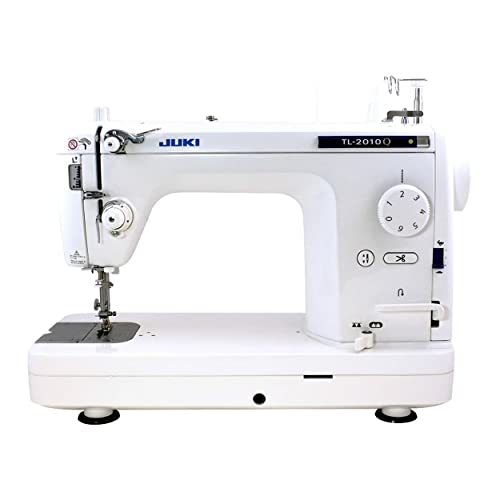
Juki TL-2010Q High-Speed Sewing and Quilting Machine
$1,199.00High-speed straight stitch with a large work area for piecing and quilting.
Check price
Grace Little Rebel Sewing and Quilting Machine
$2,799.00A midarm with stitch regulation for quilting tops in far fewer sessions.
Check pricePrices change often, so confirm on Amazon. As an Amazon Associate we earn from qualifying purchases.
Knit plain sections faster
A circular knitting machine turns hours of stockinette tubes and panels into minutes.

addi Express Kingsize Knitting Machine, 46 needles
$157.12A 46-needle circular knitting machine for hats, tubes and blanket panels.
Check price
SENTRO 48-Needle Knitting Machine with Row Counter
$50.32A budget 48-needle knitting machine with a row counter.
Check price
Stanwood Needlecraft 10 oz Metal Ball Winder and Amish Style Swift Bundle
$121.95Wind hanks into cakes quickly before a long project.
Check pricePrices change often, so confirm on Amazon. As an Amazon Associate we earn from qualifying purchases.
Crochet longer, comfortably
Speed comes from comfort on long projects: an ergonomic hook, good light and a supportive chair.

Tulip Etimo Rose Crochet Hook Set
$109.99Cushioned-grip hooks in a full set of sizes.
Check price
Daylight Company Slimline 4 LED Floor Lamp
$224.99A daylight floor lamp that reaches over your chair.
Check price
Arrow H7013B Adjustable Height Hydraulic Sewing Chair
$399.99An adjustable-height chair with under-seat storage.
Check pricePrices change often, so confirm on Amazon. As an Amazon Associate we earn from qualifying purchases.
Stitch with both hands free
A floor stand holds your hoop or frame so you can stitch two-handed, and a magnifier lamp cuts eye strain.
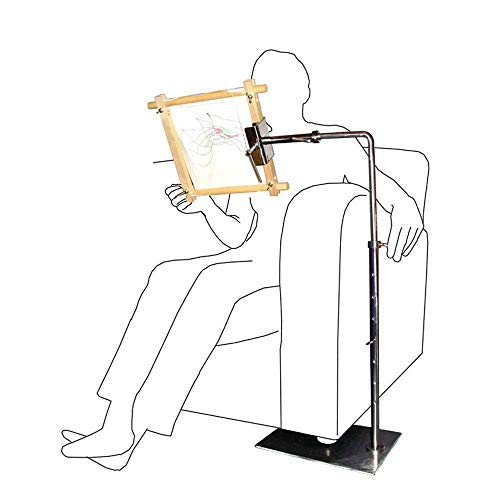
Lowery Workstand with Side Clamp
$229.97A heavy, adjustable workstand that holds frames and hoops steady.
Check price
Daylight Company Magnificent Pro Magnifying Lamp
$197.99A magnifying floor lamp for high fabric counts.
Check price
EZ Stitch American Dream Products Needlework Floor Stand
$469.00A solid red oak floor stand for scroll frames from 24 to 48 inches.
Check pricePrices change often, so confirm on Amazon. As an Amazon Associate we earn from qualifying purchases.
Run embroidery orders faster
For repeat designs, more needles and higher speed mean less time watching the machine.
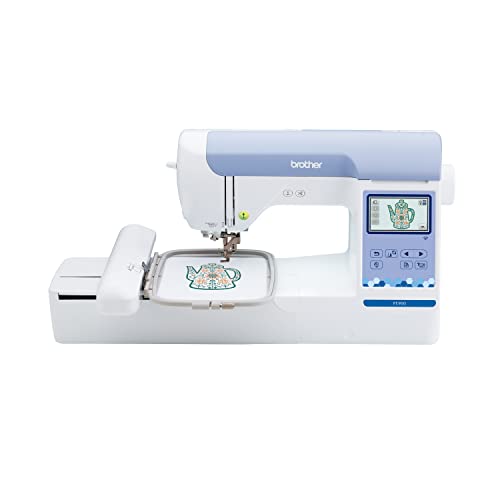
Brother PE900 Embroidery Machine
$1,179.99A 5 x 7 inch single-needle embroidery machine for small runs.
Check price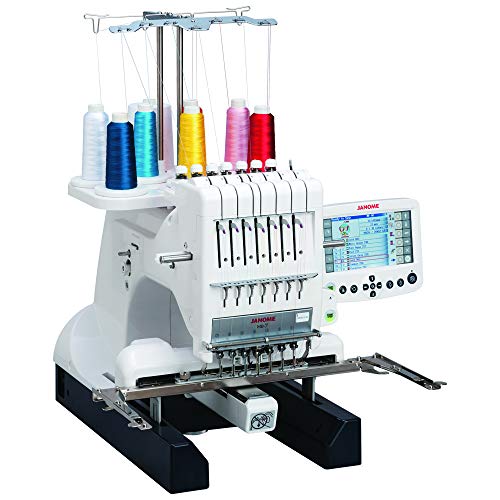
Janome MB-7 Seven-Needle Embroidery Machine
$5,999.00Seven needles and automatic color changes.
Check price
Ricoma EM-1010 10-Needle Embroidery Machine
$4,499.00A 10-needle machine aimed at home embroidery businesses.
Check pricePrices change often, so confirm on Amazon. As an Amazon Associate we earn from qualifying purchases.
How do you estimate how long a craft project will take?
Every craft project, whatever the medium, breaks down into the same two parts: repetitive work that scales with the size of the project, and one-time work that does not. A quilt has blocks to piece and then a single round of quilting and binding. A blanket has yards of yarn to work and then weaving in ends and blocking. A cross stitch has thousands of stitches and then backstitching and framing.
The calculator uses one formula for all of them:
Total hours = (project size / pace) + finishing hours, and weeks = total hours / hours per week, rounded up.
Only the units change. Quilts use minutes per block, blankets use yards per hour, cross stitch uses stitches per hour, and machine embroidery uses the machine's stitches per minute. For the default throw quilt:
- Blocks: 30 blocks x 45 minutes = 1350 minutes, or 23 hours.
- Finishing: add 10 hours for basting, quilting and binding: 33 hours in total.
- Weeks: 32.5 hours / 5 hours a week = 6.5, which rounds up to about 7 weeks.
The "How many to make" field multiplies everything, finishing included, which suits a set of matching baby quilts or an embroidery order. The faster pace row divides only the main work by 1.5, because finishing steps such as binding and blocking rarely speed up with a new tool. It is a quick way to see whether faster equipment or a simpler pattern would change your finish time by weeks or only by a few hours.
The calculator deliberately gives a number of weeks rather than a calendar date. Crafting time rarely runs on a schedule, and "about seven weeks" is easier to plan around for a birthday gift or the holiday gifting season than a precise day.
How long does it take to make a quilt by size?
This table uses 12 inch finished blocks at the calculator's assumed 45 minutes each, with quilting and binding scaled by area from 10 hours for a 50 x 65 inch throw. Quilt sizes follow our quilt size chart. Treat it as a starting estimate: a simple nine-patch may take 20 minutes a block, while a detailed star can take two hours.
| Quilt | Size (in) | Blocks | Quilting and binding | Total hours | Weeks |
|---|---|---|---|---|---|
| Baby | 40 x 40 | 16 (4 x 4) | 5 hr | 17 | about 4 weeks |
| Lap | 45 x 60 | 20 (4 x 5) | 8.5 hr | 23.5 | about 5 weeks |
| Throw | 50 x 65 | 30 (5 x 6) | 10 hr | 32.5 | about 7 weeks |
| Twin | 68 x 90 | 48 (6 x 8) | 19 hr | 55 | about 11 weeks |
| Full / Double | 83 x 90 | 56 (7 x 8) | 23 hr | 65 | about 13 weeks |
| Queen | 90 x 95 | 64 (8 x 8) | 26.5 hr | 74.5 | about 15 weeks |
| King | 106 x 95 | 72 (9 x 8) | 31 hr | 85 | about 17 weeks |
Block counts round up to cover the full size, so larger quilts may trim a partial row or add a border instead. The blocks needed calculator gives exact layouts with sashing and borders.
How long does it take to knit or crochet a blanket?
Yarn yardage is the best measure of a blanket's size because it captures width, length, yarn weight and stitch pattern in one number. The paces below are assumptions for worsted weight yarn: 40 yards per hour for knitting and 60 yards per hour for crochet. Crochet usually moves through yarn faster because taller stitches use more yarn each. The yardages are examples; use the blanket yarn calculator for your blanket's real figure.
| Blanket | Yards | Knit at 40 yd/hr | Crochet at 60 yd/hr | Crochet, weeks at 5 hr |
|---|---|---|---|---|
| Baby blanket | 800 | 20 hr | 13.3 hr | about 3 weeks |
| Throw | 1,500 | 37.5 hr | 25 hr | about 5 weeks |
| Twin | 2,500 | 62.5 hr | 41.7 hr | about 9 weeks |
| Queen | 3,500 | 87.5 hr | 58.3 hr | about 12 weeks |
Pace also depends on the stitch. Garter stitch and single crochet are slower per yard than stockinette in the round or double crochet, and colorwork, cables and textured patterns slow everyone down. If you want to test yourself, knit or crochet for one hour, then weigh the yarn you used and convert grams to yards using the ball band.
How long does cross stitch take?
Cross stitch time depends on the number of full stitches, which is printed on most charts or can be estimated as design width x height in stitches, minus the unstitched background. Fabric count does not change the number of stitches in a design, but higher counts are slower to see and stitch, and confetti stitches, single stitches of a color scattered across the chart, slow the pace much more than big blocks of one color.
| Full stitches | 100 per hour | 150 per hour | 200 per hour |
|---|---|---|---|
| 5,000 | 50 hr (about 10 weeks) | 33.3 hr (about 7 weeks) | 25 hr (about 5 weeks) |
| 10,000 | 100 hr (about 20 weeks) | 66.7 hr (about 14 weeks) | 50 hr (about 10 weeks) |
| 20,000 | 200 hr (about 40 weeks) | 133.3 hr (about 27 weeks) | 100 hr (about 20 weeks) |
| 40,000 | 400 hr (about 80 weeks) | 266.7 hr (about 54 weeks) | 200 hr (about 40 weeks) |
| 80,000 | 800 hr (about 160 weeks) | 533.3 hr (about 107 weeks) | 400 hr (about 80 weeks) |
Weeks assume 5 hours of stitching a week. A large full-coverage design can be a multi-year project at that rate, which is part of the pleasure for many stitchers. Plan the fabric with the cross stitch fabric calculator before you start.
How long does a machine embroidery order take?
Machine embroidery time is mostly the machine's: stitch count divided by speed. The operator's time goes into hooping, changing thread colors on a single-needle machine, and trimming jump stitches. The table assumes an 8,000 stitch left chest design with 15 minutes per piece for hooping, color changes and trims.
| Pieces | At 650 stitches per minute | At 1,000 stitches per minute |
|---|---|---|
| 12 | 5.5 hours | 4.6 hours |
| 24 | 11 hours | 9.2 hours |
| 48 | 22 hours | 18 hours |
The handling time per piece matters more than raw speed on small designs, which is why multi-needle machines with automatic color changes save so much on orders. To turn those hours into a price, use the handmade pricing calculator.
Time yourself once, plan forever
Set a timer for one normal hour on your next project and count blocks, yards or stitches finished. Write the number inside your project notebook. After two or three projects you will have paces that make every estimate here your own.
What equipment helps you finish projects sooner?
Speed usually comes from removing friction rather than working faster. For quilters, precise cutting and a larger harp shorten the two slowest stages; the Juki TL-2010Q is a popular straight-stitch step up with a large work area. Knitters can hand plain stockinette sections to a circular knitting machine such as the addi Express Kingsize. Needleworkers gain the most from holding the work steady and seeing it clearly: a floor stand like the Lowery Workstand frees both hands for stab stitching, and a daylight lamp such as the Daylight Slimline 4 floor lamp helps with dark fabrics and small counts in the evening.
Frequently asked questions
How long does it take to make a quilt?
A throw quilt of 30 pieced 12 inch blocks at about 45 minutes each, plus 10 hours to quilt and bind, takes roughly 33 hours. At 5 hours a week that is about 7 weeks. Simple blocks from precuts go much faster, and complex blocks with many small pieces can take several hours each, so time one block and use your own pace.
How long does it take to crochet a blanket?
It depends on yardage and your speed. At an assumed 60 yards of worsted yarn per hour, a 1,500 yard throw takes about 25 hours of crochet plus 3 hours of finishing, or about 6 weeks at 5 hours a week. Larger full and queen blankets can use 3,000 yards or more and take well over 50 hours.
How many cross stitches can you do in an hour?
Stitchers commonly report somewhere around 100 to 200 full cross stitches per hour, depending on fabric count, color changes and whether the pattern is confetti-heavy. At 150 stitches an hour, a 20,000 stitch design is about 133 hours of stitching. Count your own stitches for an hour of normal work and enter that pace for a better estimate.
Is knitting a blanket slower than crocheting one?
Usually, yes. Knit stitches are smaller and use less yarn each, so the same yardage takes more stitches. With this calculator's assumed paces of 40 yards per hour for knitting and 60 for crochet, a 1,500 yard blanket takes about 41 hours to knit and 28 hours to crochet, including finishing. A fast knitter or a knitting machine changes that picture.
How long does machine embroidery take?
Divide the stitch count by the machine speed. A 20,000 stitch design at 650 stitches per minute runs about 30 minutes, plus hooping, color changes and trims. For an order of 24 shirts that adds up to about 18 hours. Multi-needle machines run faster and change colors automatically, which is where business embroiderers save the most time.
How can I finish craft projects faster?
Measure your real pace first, then attack the slowest step. Quilters save the most time with accurate precutting and faster quilting on a larger machine. Knitters can use a circular knitting machine for plain tubes and panels. Cross stitchers gain speed from a floor stand that holds the work, freeing both hands, and from strong daylight lighting that reduces eye strain and mistakes.
How we research: we compare manufacturer specifications, owner manuals, published standards and recurring themes in verified owner reviews. We do not test products in person, and this is researched guidance, not professional advice. Follow your machine manual and pattern, and take care with rotary cutters, hot irons and needles. As an Amazon Associate we earn from qualifying purchases.