Seam Allowance Calculator: Finished Size to Cut Size and Back
Add the seam allowance to every seamed edge: cut size = finished size + 2 x allowance. A 10 x 12 inch finished piece with 5/8 inch seams is cut 11 1/4 x 13 1/4 inches. Sewing a 5/8 inch pattern at 1/2 inch moves each seam out 1/8 inch and makes a 4-seam garment 1 inch bigger around.
Enter a finished size to get the size to cut, or a cut size to see what it finishes at. The second part shows what happens to fit when you sew a pattern at a different seam allowance than it was drafted for.
Your pieces and seams
Your results
Cut your piece
5/8 in allowance is about 15.9 mm per edge
| Cut piece finishes at | 10 x 12 in |
|---|---|
| Each seam line moves | 1/8 in outward |
| Each seam changes width | +1/4 in |
| Circumference changes | +1 in |
To keep the pattern's size, trim 1/8 in from each seamed edge before sewing.
Machines for garment seams
Consistent 1/2 and 5/8 inch seams come from even feeding and a clearly marked needle plate.

Juki HZL-G120 Computerized Sewing Machine
$819.00Box feed for precise seams on slippery and fine garment fabrics.
Check price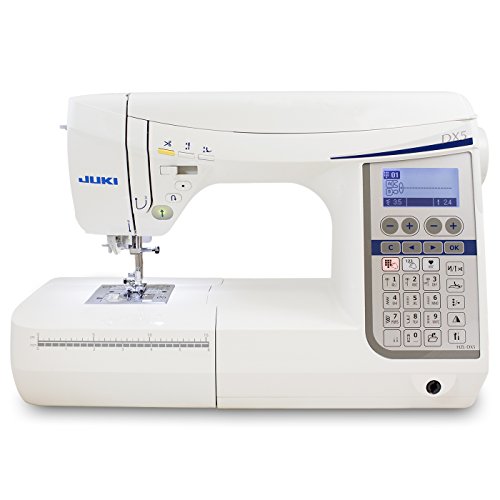
Juki HZL-DX5 Computerized Sewing Machine
$1,099.00Adjustable foot pressure and an automatic needle threader.
Check price
Juki Pearl Line MO-654DE Serger
$599.00A serger that trims and finishes the allowance in one pass.
Check pricePrices change often, so confirm on Amazon. As an Amazon Associate we earn from qualifying purchases.
Sergers and coverstitch for 3/8 inch and 1 cm seams
Knit and indie patterns drafted with narrow allowances are made for overlock seams.
Juki Pearl Line MO-654DE Serger
$599.00A 2, 3 or 4 thread serger with a widely owned reputation among garment sewists.
Check price
Brother 1034D Serger
$284.99A 3 or 4 thread serger with a metal frame at a starter price.
Check price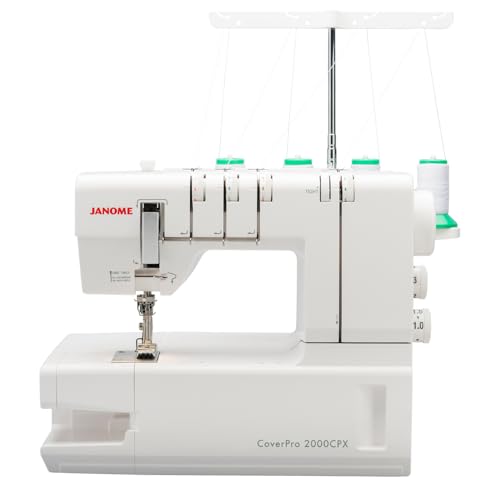
Janome CoverPro 2000CPX Coverstitch Machine
$799.00Coverstitch hems to finish serged knit garments.
Check pricePrices change often, so confirm on Amazon. As an Amazon Associate we earn from qualifying purchases.
Machines for an accurate 1/4 inch seam
Quilt blocks finish at size when the 1/4 inch seam is consistent. A straight-stitch quilting machine and a 1/4 inch foot help.

Janome 3160QDC-G Sewing and Quilting Machine
$749.00A compact quilter-focused machine with a quarter inch seam foot.
Check price
Juki TL-2000Qi Long-Arm Sewing and Quilting Machine
$999.00A straight-stitch machine for precise piecing and bigger quilts.
Check price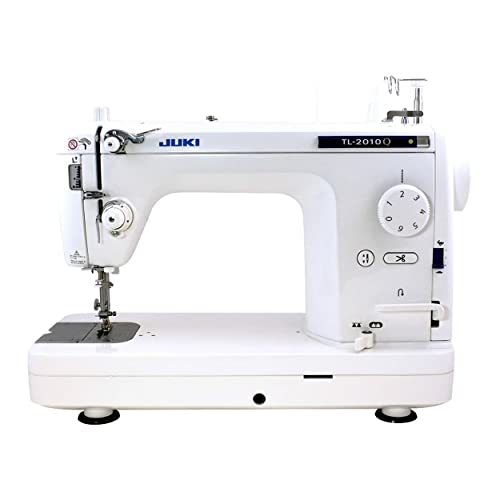
Juki TL-2010Q High-Speed Sewing and Quilting Machine
$1,199.00High-speed straight stitch with a large work area and knee lift.
Check pricePrices change often, so confirm on Amazon. As an Amazon Associate we earn from qualifying purchases.
How do you calculate seam allowance?
Seam allowance is the strip of fabric between the cut edge and the stitching line. The finished size of a piece is measured at the stitching lines; the cut size includes the allowance on every edge that gets sewn. The whole calculation is one line:
Cut size = finished size + (number of seamed edges x seam allowance)
Most pieces are seamed on two opposite edges in each direction, so the calculator adds the allowance twice to width and twice to length. For the default example, a piece that should finish at 10 x 12 inches with 5/8 inch seams:
- Width: 10 + 2 x 5/8 = 11 1/4 inches.
- Length: 12 + 2 x 5/8 = 13 1/4 inches.
- Going back: subtract instead. A piece cut at 11 1/4 x 13 1/4 inches finishes at 10 x 12 inches.
If an edge is hemmed, bound, placed on a fold or left raw, change the count for that edge. A pocket with a folded top and seams on three sides gets the allowance on three edges and a hem allowance on the fourth. Quilters use the same math with 1/4 inch: a 2 inch finished square is cut 2 1/2 inches, which is why so many quilt patterns call for 2 1/2 inch strips.
What are the standard seam allowances?
The allowance a pattern uses is a design choice, and the reference data below shows where each is common. The cut size column shows what a 10 inch finished square becomes with each allowance, so you can see how much the choice matters on a real piece.
| Allowance | Inches | mm | 10 in finished, cut | Common uses | Notes |
|---|---|---|---|---|---|
| 1/4 in | 0.25 | 6.35 | 10 1/2 in | Quilt piecing (standard), Doll clothes and small crafts, Curved seams in some patterns | Use a 1/4 in presser foot; a scant 1/4 in helps blocks finish at size. |
| 3/8 in | 0.375 | 9.53 | 10 3/4 in | Many knit and indie patterns, Serger or overlock seams, Bags | Common serger stitch width setting; check the pattern. |
| 1/2 in | 0.5 | 12.7 | 11 in | Many indie garment patterns, Home decor, Pillows and cushions, Bags | Popular middle ground; easy to press open. |
| 5/8 in | 0.625 | 15.88 | 11 1/4 in | US commercial garment patterns (Simplicity, McCall's, Butterick, Vogue), Fitting room to let out | Standard for major US pattern companies; about the same as 1.5 cm. |
| 1 cm | 0.39 | 10 | 10 3/4 in | Many European and indie patterns, Knits, Children's clothing | Close to 3/8 in. |
| 1.5 cm | 0.59 | 15 | 11 3/16 in | UK and European commercial garment patterns | Close to 5/8 in. Some patterns include no seam allowance at all; read the instructions. |
For a printable version with more detail, see the seam allowance chart. When a pattern does not state its allowance, look for a line inside the cutting line on the pattern tissue, or check the instructions for "seam allowances included".
What happens when you change the seam allowance on a pattern?
Sewing a smaller allowance than the pattern was drafted with moves the stitching line toward the cut edge, which makes the finished piece bigger. Sewing a larger allowance makes it smaller. The change is small on one seam but it happens on both pieces at every seam, and garments have several seams around the body.
The math, using the default values: a 5/8 inch pattern sewn at 1/2 inch moves each stitching line out by 1/8 inch. Each seam joins two pieces, so each seam adds 1/4 inch to the width. With 4 vertical seams around the body, such as two side seams plus a center back and a center front seam, the garment grows by 1 inch in circumference. Going the other way, a 1/4 inch quilting-style allowance sewn at 1/2 inch across four seams shrinks a piece by 2 inches.
| Pattern drafted at | Sewn at 1/4 in | Sewn at 3/8 in | Sewn at 1/2 in | Sewn at 5/8 in |
|---|---|---|---|---|
| 1/4 in | no change | -1 in | -2 in | -3 in |
| 3/8 in | +1 in | no change | -1 in | -2 in |
| 1/2 in | +2 in | +1 in | no change | -1 in |
| 5/8 in | +3 in | +2 in | +1 in | no change |
| 1 cm | +1 1/8 in | +1/8 in | -7/8 in | -1 7/8 in |
| 1.5 cm | +2 3/4 in | +1 3/4 in | +3/4 in | -1/4 in |
This is also a simple fitting tool. Letting side seams out from 5/8 to 3/8 inch buys you an inch of room across four seams, and taking them in to 7/8 inch removes an inch. Only vertical seams change circumference; shoulder and waist seams change length instead.
Sew a scant quarter inch for quilt blocks
When a seam is pressed to one side, the fold uses a thread or two of width. Quilters sew a scant 1/4 inch, just inside the line, so blocks finish at size. Test with three 2 1/2 inch strips: sewn together and pressed, the middle strip should measure exactly 2 inches wide.
How much does a small seam allowance error change a quilt block?
Quilt piecing is where tiny errors become visible, because a block may have a dozen seams in a row. A seam that is 1/16 inch too wide costs 1/8 inch per seam, and a seam 1/8 inch too wide costs 1/4 inch per seam.
| Seams in the row | 1/16 in too wide | 1/8 in too wide |
|---|---|---|
| 2 | -1/4 in | -1/2 in |
| 4 | -1/2 in | -1 in |
| 8 | -1 in | -2 in |
| 12 | -1 1/2 in | -3 in |
| 16 | -2 in | -4 in |
That is why a consistent seam matters more than a perfect one. A machine with a dedicated 1/4 inch foot and a straight-stitch needle plate, such as the Juki TL-2000Qi, makes it easier to repeat the same seam hundreds of times. Garment sewists get the same benefit from a well-marked needle plate and a machine that feeds evenly, like the Juki HZL-G120 with its box feed. If you finish seams with a serger, the Juki MO-654DE trims to its stitch width as it sews, so plan narrower allowances or guide the extra past the knife.
How do you add seam allowance to a pattern without one?
Many European magazine patterns, some vintage patterns and most self-drafted blocks are printed at the stitching line with no allowance included. Adding it is simple but worth doing carefully, because the allowance you choose becomes part of every later measurement.
- Choose the allowance for each edge. Side and shoulder seams usually get the same allowance throughout, often 5/8 inch or 1.5 cm for wovens and 3/8 inch or 1 cm for knits. Necklines and armholes that will be faced are often given a narrower 1/4 or 3/8 inch so they turn smoothly. Hems get a separate, deeper allowance, commonly 1 to 2 inches.
- Mark a parallel line. Trace the pattern onto paper and draw a second line outside each stitching line at your chosen distance. A clear ruler with 1/8 inch markings or a double tracing wheel keeps the distance even around curves.
- Walk the seams. Lay matching seam lines against each other to be sure they are the same length before cutting fabric, and add notches at the same points on both pieces.
- Write it on the pattern. Label each piece with the allowance you used, so the next time you use it you can trust the cut size from this calculator.
Changing to a 1/2 inch allowance on the default piece would make it 11 x 13 inches to cut, a small but useful saving on every piece of a big home decor project.
Frequently asked questions
How do you add seam allowance to a measurement?
Add the allowance once for each edge that will be sewn. A piece seamed on both sides gets the allowance twice, so a 10 inch finished width with 5/8 inch seams is cut 11 1/4 inches wide. An edge that will be hemmed, folded or bound needs its own hem allowance instead. To go from a cut piece back to finished size, subtract the allowance for each seamed edge.
What is the standard seam allowance?
It depends on what you sew. Major US commercial garment patterns use 5/8 inch, many indie and European patterns use 1 cm or 1.5 cm, home decor and bags often use 1/2 inch, and quilt piecing uses 1/4 inch. Always check the pattern instructions, because some patterns, especially many European magazine patterns, include no seam allowance at all and expect you to add it.
What happens if I sew a 5/8 inch pattern with a 1/2 inch seam?
Each seam line moves 1/8 inch outward, so every seam adds 1/4 inch to the finished width. A bodice with side seams, a center back seam and princess lines can easily have four or more vertical seams, which makes it 1 inch or more bigger around. To sew a 5/8 inch pattern at 1/2 inch without changing the size, trim 1/8 inch from each seamed edge first.
Why is my quilt block too small?
Usually the seam allowance is a thread or two too wide. Each 1/16 inch extra on a 1/4 inch seam removes 1/8 inch from the block, and it adds up across a row: eight seams at that error lose 1 inch. Sew a scant 1/4 inch, a thread narrower than the line, because the fold of fabric over the seam uses a little width too.
Is 1.5 cm the same as 5/8 inch?
Close, but not exact. 1.5 cm is about 0.59 inch and 5/8 inch is 0.625 inch, a difference of about 1 mm per seam. That rarely matters on one seam, but across four vertical seams it adds up to roughly 1/4 inch of circumference. Likewise 1 cm is about 0.39 inch, a hair more than 3/8 inch. Stitch plates marked in both units make either easy to follow.
What seam allowance does a serger use?
A 4-thread serger typically trims and stitches a seam around 3/8 inch wide, which is why many knit patterns are drafted with 3/8 inch or 1 cm allowances. When serging a pattern with 5/8 inch allowances, line the fabric edge up so the knife trims away the extra and the needle sits on the seam line. Check your serger manual for its stitch width range.
How we research: we compare manufacturer specifications, owner manuals, published standards and recurring themes in verified owner reviews. We do not test products in person, and this is researched guidance, not professional advice. Follow your machine manual and pattern, and take care with rotary cutters, hot irons and needles. As an Amazon Associate we earn from qualifying purchases.