Juki vs Brother Sewing Machines: Juki HZL-DX5 vs Brother PS500
Choose Juki if you sew garments seriously or quilt: the Juki HZL-DX5 costs about $1,099 with an automatic threader, one-step buttonhole, adjustable foot pressure and a slide-off free arm. Choose Brother for more features for less: the Brother PS500 costs about $860 with 100 stitches, 4 fonts and 8.3 in from needle to arm.
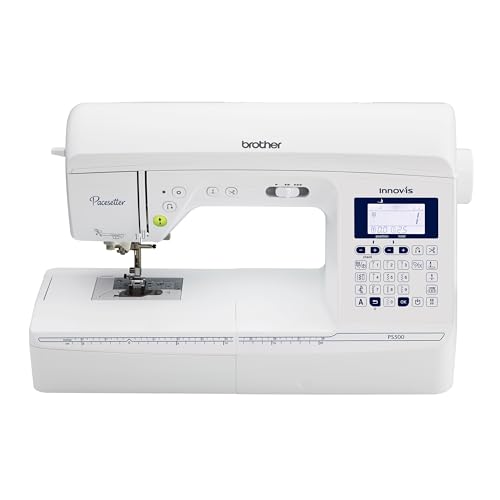 Brother PS500 Pacesetter Computerized Sewing Machine $859.99 Check price on Amazon
 The verdict
Juki is the better brand for sewists who care about stitch precision, fabric control and straight-stitch speed, and Brother is the better brand for sewists who want the most features, embroidery options and value. At the $900 to $1,100 level, the Brother PS500 gives you more stitches and more room, while the Juki HZL-DX5 gives you finer fabric handling.
Juki's reputation comes from industrial machines found in garment factories, and its home line leans into practical sewing rather than stitch counts. Brother is the largest name in home sewing and embroidery, with the widest range under $1,500. If you are not sure which camp you are in, you are probably a Brother customer, and that is not an insult.
Juki vs Brother: side by side
| Feature | Juki | Brother |
|---|---|---|
| Representative model | Juki HZL-DX5 | Brother PS500 |
| Price | About $1,099 | About $860 |
| Built-in stitches | See current listing | 100 |
| Buttonholes | Automatic one-step | 7 one-step styles |
| Needle threader | Automatic | Not listed in the specs we verified |
| Presser foot pressure | Adjustable | Not listed in the specs we verified |
| Room to the right of the needle | Not listed in the specs we verified | 8.3 in needle to arm |
| Free arm | Yes, slide-off bed | Not listed in the specs we verified |
| Brand strength | Garment precision, straight-stitch quilters, sergers | Features per dollar, embroidery, air-threading sergers |
Is Juki better than Brother?
Juki is better at a narrower set of jobs. Its straight-stitch quilters, like the Juki TL-2010Q, run at 1,500 SPM with a knee lifter and automatic trimmer, and its DX garment line is built around fabric control. The Juki HZL-DX5 adds adjustable presser foot pressure and a slide-off bed that turns into a free arm for sleeves and cuffs, which is exactly what a garment sewist reaches for.
Brother is better at breadth. The Brother PS500 gives you 100 stitches, 7 buttonhole styles, 4 lettering fonts and 8.3 in from needle to arm for about $240 less. Brother also sells the most popular home embroidery machines and air-threading sergers. Owners of both brands report few reliability problems at this price level, so choose by the work you do.
| Machine type | Juki pick | Brother pick | Better brand for most |
|---|---|---|---|
| Everyday sewing under $500 | Juki HZL-355Z (auto threader, hard case) | Brother CS7000X (70 stitches, 10 feet) | Brother |
| Garment sewing $800 to $1,100 | Juki HZL-DX5 | Brother PS500 | Juki for fit work, Brother for variety |
| Straight-stitch quilting | Juki TL-2010Q (1,500 SPM) | Brother PQ1600S (1,500 SPM) | Juki, trimmer and knee lifter |
| Serger | Juki MO-654DE (2, 3 or 4 thread) | Brother 1034D (3 or 4 thread) | Brother on price, Juki as step-up |
| Air-threading serger | Juki MO-1000 | Brother AIR1800 | Brother on price |
| Embroidery | None on Amazon | Brother SE2000 (5 x 7 in combo) | Brother |
Are Juki sewing machines good for beginners?
Yes, if the beginner is committed. The Juki HZL-355Z is a mechanical Juki with an automatic needle threader, automatic one-step buttonhole, adjustable foot pressure and a hard case for about $408. It is simple and well made, but it offers fewer conveniences per dollar than a Brother CS7000X at about $280.
The honest advice: a beginner who wants to sew clothes that fit, and who already takes classes or follows patterns, will appreciate a Juki. A beginner who wants to try sewing, mix in crafts and maybe embroidery later should start with Brother. See best sewing machines for beginners and best sewing machines for clothes.
Juki HZL-DX5 vs Brother PS500: which is better for garment sewing?
For fitted garments in slippery or stretchy fabric, the Juki HZL-DX5, because adjustable pressure and a free arm matter more than 100 stitches. For home decor, bags, costume sewing and projects where decorative stitches and lettering add value, the Brother PS500. If you want Juki's box feed system for the most even fabric handling, the step-up is the Juki DX-2000QVP SE at about $1,759. Before cutting, the garment fabric calculator helps you buy the right yardage.
Choose Juki if
- You sew fitted garments, knits and slippery fabrics.
- You want adjustable presser foot pressure and a free arm for sleeves.
- You also want a fast straight-stitch quilter or a step-up serger from one brand.
- You value precision over stitch count.
Choose Brother if
- You want 100 stitches, lettering and 8.3 in of arm room for less money.
- You sew crafts, home decor and quilts as much as garments.
- You may add an embroidery machine later.
- You want an air-threading serger at a lower price.
Our picks from each brand

Juki HZL-355Z Compact Sewing Machine
$408.49A mechanical Juki with auto threader and one-step buttonhole for about $408.
Check price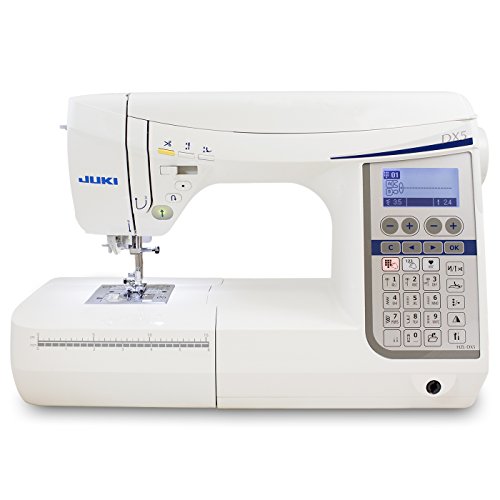
Juki HZL-DX5 Computerized Sewing Machine
$1,099.00Garment control with adjustable pressure and a slide-off free arm.
Check price
Juki DX-2000QVP SE Computerized Sewing Machine
$1,759.00The step-up with box feed, 287 sewing patterns and automatic thread tension.
Check price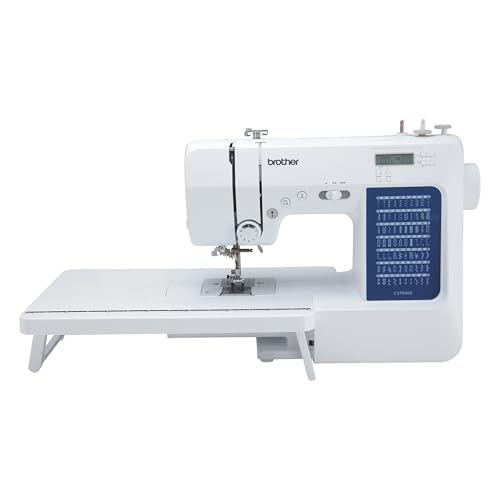
Brother CS7000X Computerized Sewing and Quilting Machine
$279.99The best value starter with 70 stitches, 10 feet, wide table and hard case.
Check price Brother PS500 Pacesetter Computerized Sewing Machine
$859.99100 stitches, 4 fonts and 8.3 in from needle to arm for about $860.
Check price
Brother SE2000 Sewing and Embroidery Machine
$1,469.99Brother's sew-and-embroider combo with a 5 x 7 in field and wireless transfer.
Check pricePrices change often, so confirm on Amazon. As an Amazon Associate we earn from qualifying purchases.
This comparison is drawn from published specifications, owner manuals and the consensus of verified owner reviews, not side-by-side testing.
Frequently asked questions
Is Juki a good sewing machine brand?
Yes. Juki is one of the most respected names in industrial sewing, and its home machines carry that focus on stitch quality and fabric handling. Quilters prize the TL-2010Q straight-stitch machine, and garment sewists like the DX series. Juki's range on Amazon is smaller than Brother's, and it offers no home embroidery machines there.
Why are Juki machines more expensive than Brother?
Juki builds fewer, more specialized home machines and prices them against dealer-line competitors, while Brother sells in huge volume through mass retailers. You pay Juki for fabric control and focused mechanisms rather than extra stitches. At similar prices, such as the Brother PS500 and Juki HZL-DX5, expect Brother to list more features and Juki to emphasize handling.
Which is better for quilting, Juki or Brother?
For dedicated quilting, Juki. The Juki TL-2010Q adds an automatic thread trimmer and knee lifter to a 1,500 SPM straight stitch. Brother's PQ1600S matches the speed for about $300 less and includes a large table, which is a reasonable budget choice. Both are straight-stitch only, so neither sews zigzag or buttonholes.
Does Juki make embroidery machines?
Juki is known for sewing machines, sergers and industrial equipment, and there is no Juki home embroidery machine in our Amazon-verified listings. If you want to sew and embroider at home, Brother is the stronger choice, with combos like the SE700 and SE2000. Many sewists pair a Juki sewing machine with a separate Brother embroidery machine.
Is a Juki serger better than a Brother serger?
The Juki MO-654DE is a common step-up from the Brother 1034D, offering 2, 3 or 4 thread options at about $599 versus about $285. Owner reviews praise both for reliability. The Brother is the better value for a first serger; the Juki appeals to sewists who want a sturdier feel and 2-thread capability for light fabrics.
How we research: we compare manufacturer specifications, owner manuals, published standards and recurring themes in verified owner reviews. We do not test products in person, and this is researched guidance, not professional advice. Follow your machine manual and pattern, and take care with rotary cutters, hot irons and needles. As an Amazon Associate we earn from qualifying purchases.