Best Sewing Machine for Intermediate Sewers (2026): 10 Upgrade Picks
The best sewing machine for intermediate sewers is the Brother PS500 Pacesetter (about $860), with 8.3 inches from needle to arm, 100 stitches, seven one-step buttonholes and four lettering fonts. Garment sewists should look at the box feed Juki HZL-G120, and quilters who want a knee lifter and built-in AcuFeed should step up to the Janome Skyline S6.
An intermediate sewist does not need a better machine in general. You need one that fixes the specific thing your current machine cannot do: fit a quilt, feed silk evenly, trim threads, or free your hands with a knee lifter. That is how this page is organized.
Our overall pick is the Brother PS500, a dealer-line Pacesetter with generous room to the right of the needle and a strong stitch set for garments and decor. If fabric feeding is your frustration, the Juki HZL-G120 is the better upgrade, and if you quilt seriously, the Janome Skyline S6 AE is the long-term machine.
Upgrade picks at a glance
| Product | Price | Upgrade it delivers | Best for | Buy |
|---|---|---|---|---|
 Janome HD3000 Janome HD3000 | $529.00 | Sturdier build, adjustable foot pressure | Heavier fabric | Price |
 Juki HZL-HT740 Juki HZL-HT740 | $649.00 | Automatic upper and lower thread trimming | Saving time | Price |
 Janome 3160QDC-G Janome 3160QDC-G | $749.00 | Superior Plus feed, auto thread cutter | Patchwork and small quilts | Price |
 Juki HZL-G120 Juki HZL-G120 | $819.00 | Box feed | Fine garment fabric | Price |
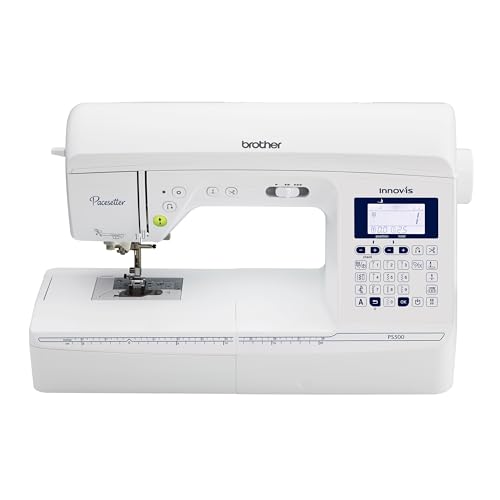 Brother PS500 Brother PS500 | $859.99 | 8.3 in needle to arm, 4 fonts | Best overall upgrade | Price |
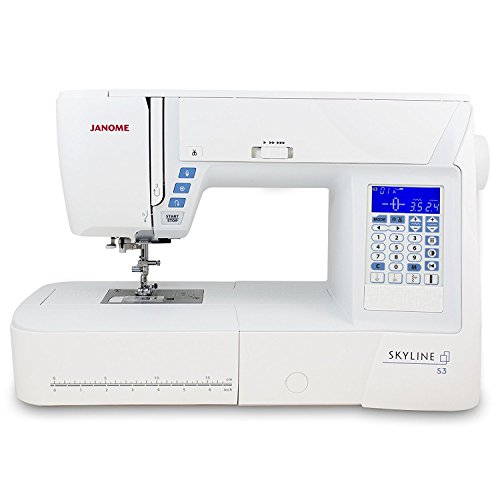 Janome Skyline S3 Janome Skyline S3 | $899.00 | Full-size Skyline body | All-round sewing | Price |
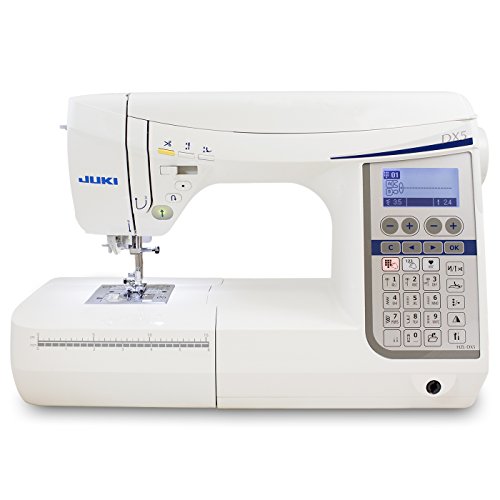 Juki HZL-DX5 Juki HZL-DX5 | $1,099.00 | Slide-off bed free arm, foot pressure | Garments and knits | Price |
 Janome Skyline S5 Janome Skyline S5 | $1,399.00 | 91 needle positions, 9 mm width | Precision | Price |
 Janome Skyline S6 AE Janome Skyline S6 AE | $2,099.00 | Built-in AcuFeed Flex, knee lifter, 8.3 in bed | Serious quilting | Price |
Beginner
First upgrade picks: fix one frustration, $530 to $750
These are for sewists whose starter machine mostly works but has one recurring problem. Each solves a different one.
Janome HD3000 Heavy Duty Sewing Machine with Hard Case
$529.00If your budget machine skips on denim or creeps on canvas, adjustable foot pressure and a sturdier build are the fix. Eighteen well-chosen stitches and a one-step buttonhole cover everyday work.
Best for: Outgrowing a lightweight machine on thick fabric
Check price Juki HZL-HT740 Computerized Sewing Machine
$649.00Automatic upper and lower thread trimming, an automatic needle threader, a metal interior frame and 6.4 inches from needle to body. If you sew many short seams, the trimmer changes your pace.
Best for: Sewists who hate snipping threads
Check price Janome 3160QDC-G Sewing and Quilting Machine
$749.00Janome's Superior Plus Feed System, an automatic thread cutter and a speed control slider, bundled with an extension table, hard cover and a quilt kit. It is the first upgrade for sewists drifting toward patchwork.
Best for: Moving into patchwork
Check pricePrices change often, so confirm on Amazon. As an Amazon Associate we earn from qualifying purchases.
Intermediate
Intermediate picks: the true upgrade, $820 to $900
This is where machines start to feel different to sew on: more room, better feeding and more thoughtful features.
Brother PS500 Pacesetter Computerized Sewing Machine
$859.99An 8.3 inch needle-to-arm space handles curtains, bags and throw quilts, and 100 stitches, seven one-step buttonholes, four lettering fonts and stitch combination give garment and decor sewists real range.
Best for: A well-rounded step up
Check price Juki HZL-G120 Computerized Sewing Machine
$819.00Box feed keeps the feed dogs flat against fabric longer, which reduces shifting and puckering on rayon, lawn and knits. Eight buttonhole types suit sewists who make shirts and dresses.
Best for: Garment sewists fighting puckers
Check price Janome Skyline S3 Computerized Sewing Machine
$899.00The entry to Janome's Skyline series, with 120 stitches, seven one-step buttonholes and a built-in alphabet in a full-size 19 by 12 by 9 inch body.
Best for: A full-size machine from a dealer brand
Check price
Janome Sewist 780DC Computerized Sewing Machine
$899.00An automatic thread cutter, stitch elongation for decorative work and a 7-piece feed dog, with 80 stitches including 20 direct-select stitches you can reach without scrolling.
Best for: Quick stitch access
Check pricePrices change often, so confirm on Amazon. As an Amazon Associate we earn from qualifying purchases.
Expert
Expert picks: the last machine you buy, $1,100 to $2,100
Who should NOT buy this tier: anyone whose current machine is not holding them back. If your projects are turning out well and you cannot name a feature you miss, spend on fabric, a serger or a better iron instead. These are for sewists who sew several times a week and know exactly why they are upgrading.
Janome Skyline S6 Anniversary Edition Sewing and Quilting Machine
$2,099.00Built-in AcuFeed Flex feeds quilt layers evenly without a bulky attachment, and a knee lifter, 8.3 inch sewing bed, 196 stitches and a 9 mm width round it out. An extra-wide extension table with printed rulers is included.
Best for: Quilters and layered projects
Check price Janome Skyline S5 Computerized Sewing Machine
$1,399.00Ninety-one needle positions, a 9 mm maximum stitch width, an automatic thread cutter and 170 stitches. The precision suits garment sewists who topstitch, edge stitch and set zippers often.
Best for: Precise garment work
Check price Juki HZL-DX5 Computerized Sewing Machine
$1,099.00A slide-off bed for free-arm work on cuffs and collars, adjustable foot pressure for knits, an automatic needle threader and automatic one-step buttonholes, from Juki's DX series.
Best for: Dressmakers who sew knits and wovens
Check pricePrices change often, so confirm on Amazon. As an Amazon Associate we earn from qualifying purchases.
What sewing machine should you upgrade to?
Start from the problem, not the price tag. Match the thing that frustrates you to the feature that fixes it.
| If your current machine... | The feature you need | Upgrade pick |
|---|---|---|
| Skips stitches or stalls on denim and canvas | Sturdier frame, adjustable foot pressure | Janome HD3000 |
| Puckers lightweight or slippery fabric | Box feed or improved feed dogs | Juki HZL-G120 |
| Leaves you snipping threads constantly | Automatic thread trimmer | Juki HZL-HT740 |
| Cannot fit a throw or twin quilt comfortably | More room right of the needle | Brother PS500 |
| Shifts quilt layers even with a walking foot | Built-in dual feed, knee lifter | Janome Skyline S6 AE |
| Makes wobbly topstitching near edges | Many needle positions | Janome Skyline S5 |
| Makes hemming sleeves awkward | Free arm or slide-off bed | Juki HZL-DX5 |
What features does an intermediate sewer need?
By the intermediate stage, most sewists benefit from a short list of workflow features more than from additional stitches:
- Needle up/down. Pivot at corners without the fabric shifting.
- Automatic thread cutter. Saves real time over a long project.
- Knee lifter. A lever you press with your knee to raise the presser foot, leaving both hands on the work. Found on the Janome Skyline S6 AE.
- Adjustable foot pressure. Tunes feeding for knits, quilts and heavy fabric.
- Throat space. The distance from the needle to the machine body, which decides how easily a quilt or curtain moves through.
- Wider stitches. A 9 mm maximum width makes satin stitches and applique bolder.
Measure what you need with the throat space calculator before paying for more room than you will use.
How much should you spend on a sewing machine upgrade?
A useful rule: upgrade to a machine that costs at least twice what your first machine did. A jump from a $250 machine to a $400 machine often feels like more of the same, while a move into the $800 to $1,500 range usually brings a clear change in feeding, workspace and features.
If you sew weekly for many years, the math is kind: a $1,400 machine used 150 sessions a year for ten years costs under a dollar a session. If you sew a few times a season, a $650 machine with the one feature you miss is the smarter spend.
Keep your old machine
Many sewists keep their starter machine as a backup, a class machine, or a dedicated setup for a twin needle or heavy thread. A starter machine rarely resells for much, so it may be worth more to you on a shelf.
Should you buy a sewing machine from a dealer or online?
Both work. Online prices are often lower, returns are simple, and a machine like the Brother PS500 or Juki HZL-G120 ships ready to sew. Dealers add value that matters more as the price rises: guided lessons on your specific machine, service without shipping it away, and sometimes trade-in credit.
For a machine above about $1,000, ask whether your local dealer services machines bought elsewhere and what that costs. For a first upgrade in the $600 range, buying online and learning from the manual and the brand's videos is usually fine.
Is it better to upgrade your sewing machine or buy a serger?
If you sew garments, especially knits, and your current machine sews a good straight stitch, a serger will probably change your results more than a new sewing machine. A serger trims and finishes seams in one pass and sews stretchy seams that hold up in the wash. If you quilt, or your current machine is the source of the frustration, upgrade the machine first.
Compare the two tools in serger vs sewing machine, and browse the best sergers if that is your next step.
How we chose
We did not test these machines in person. We selected machines that deliver a clear, specific improvement over typical starter models, based on manufacturer specifications and owner manuals (feed systems, workspace, trimming, knee lifters, needle positions), plus recurring themes in verified owner reviews from sewists who upgraded. We grouped them by the problem they solve so the choice follows your projects, not the price.
Buying tips
- Write down the three things your current machine does badly before you shop.
- Bring your own fabric to any dealer demo, especially the fabric that gives you trouble.
- Check whether presser feet from your old machine fit; many brands use snap-on low-shank feet.
- Look at bobbin type and availability; buy spare bobbins for the new machine up front.
- Budget for a good sewing table and chair; a bigger machine needs a stable, correctly sized surface.
Frequently asked questions
What is a good sewing machine for an intermediate sewer?
The Brother PS500 Pacesetter is a strong all-round choice, with 8.3 inches from needle to arm, 100 stitches, seven one-step buttonholes and four lettering fonts. Garment sewists who fight puckered seams should look at the box feed Juki HZL-G120. Quilters ready for a long-term machine should consider the Janome Skyline S6, with built-in AcuFeed Flex and a knee lifter.
When should you upgrade your sewing machine?
Upgrade when your machine limits the projects you want to make, not just because time has passed. Common signs are skipped stitches on heavier fabric, puckering on lightweight fabric, not enough room for quilts, or spending more time fighting the machine than sewing. If your machine only needs cleaning, a new needle or a professional service, try that first.
Is a knee lifter worth it on a sewing machine?
For quilters and anyone who pivots often, yes. A knee lifter raises the presser foot when you push a lever with your knee, so both hands stay on the fabric while you turn a corner or reposition a quilt. It takes a few sessions to get used to. Garment sewists who mostly sew long straight seams may use it less.
Should an intermediate sewer buy a sewing and embroidery combo machine?
Only if you are genuinely interested in machine embroidery. Combo machines add hoops, designs and software, but at the same price a sewing-only machine usually offers more workspace and better sewing features. If embroidery is a strong interest, a combo can save space; if it is a maybe, buy the better sewing machine and add a separate embroidery machine later.
Is Juki or Janome better for intermediate sewers?
Both are excellent. Juki is known for garment sewing precision, box feed on models like the Juki HZL-G120 and industrial-derived straight stitch machines. Janome offers a wide mid-range lineup with strong feed systems and quilting features, such as AcuFeed Flex on the Janome Skyline S6. Choose based on whether you mostly sew garments or quilts, and on local dealer support.
How we research: we compare manufacturer specifications, owner manuals, published standards and recurring themes in verified owner reviews. We do not test products in person, and this is researched guidance, not professional advice. Follow your machine manual and pattern, and take care with rotary cutters, hot irons and needles. As an Amazon Associate we earn from qualifying purchases.