Best Cutting Machine for Fabric (2026): 9 Picks, ScanNCut, Cricut Maker and AccuQuilt
The best cutting machine for fabric is the Brother ScanNCut SDX325, about $900, because it scans fabric to fussy-cut printed motifs, includes 140 quilt patterns and has a Thin Fabric Auto Blade. For the most versatile cutter, choose the Cricut Maker 4 (about $300). For cutting many identical quilt pieces at once, an AccuQuilt die cutter is faster.
For sewists and quilters who cut fabric more than paper or vinyl, the Brother SDX325 at about $900 is our top pick. Its built-in scanner reads fabric, so you can cut neatly around a printed flower or animal, it works without a computer, and its 140 quilt patterns and Thin Fabric Auto Blade are aimed squarely at quilting cotton.
There are really three kinds of fabric cutter, and the right one depends on your projects. Digital blade cutters like the ScanNCut and Cricut Maker 4 cut any shape one layer at a time. Die cutters like the AccuQuilt GO! Big cut up to six layers of the same shape with one pass. The section below helps you pick the type before the model.
Fabric cutting machines at a glance
| Product | Price | Type | Layers per cut | Best for | Buy |
|---|---|---|---|---|---|
 AccuQuilt GO! Me AccuQuilt GO! Me | $106.99 | Manual die cutter, 6 in width | Up to 6 cotton | Small shapes, trying die cutting | Price |
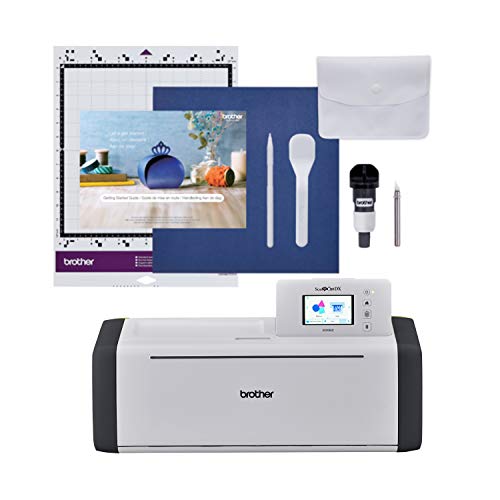 Brother SDX85C Brother SDX85C | $299.10 | Scanning blade cutter | 1 | Applique on a budget | Price |
 Silhouette Cameo 5 Alpha Silhouette Cameo 5 Alpha | $299.00 | Blade cutter, up to 3 mm | 1 | Fabric plus vinyl and paper | Price |
 Cricut Maker 4 Cricut Maker 4 | $299.99 | Rotary blade cutter | 1 | Most versatile | Price |
 AccuQuilt GO! Bolt AccuQuilt GO! Bolt | $399.99 | Electric die cutter | Up to 6 cotton | Quilt shapes without cranking | Price |
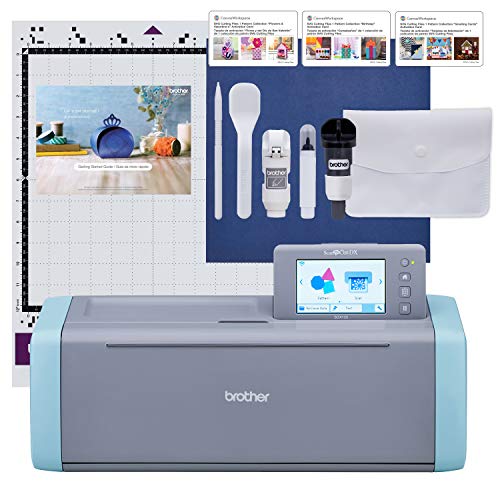 Brother SDX125E Brother SDX125E | $449.99 | Scanning blade cutter | 1 | Quilters on a mid budget | Price |
 AccuQuilt GO! Big AccuQuilt GO! Big | $699.99 | Electric die cutter, 14 x 16 in dies | Up to 6 | Large quilt pieces in batches | Price |
 Brother SDX325 Brother SDX325 | $899.99 | Scanning blade cutter | 1 | Fussy cuts and quilt patterns | Price |
 AccuQuilt GO! Big Qubed AccuQuilt GO! Big Qubed | $2,999.99 | Electric die cutter bundle | Up to 6 | Complete block system | Price |
Beginner
Beginner fabric cutters: about $100 to $300
Low-cost ways to stop hand-cutting small shapes and applique pieces.
Brother ScanNCut SDX85C Cutting Machine
$299.10The entry ScanNCut with a built-in scanner, 251 designs and an auto blade that senses material up to 3 mm. You can draw a shape on paper, scan it and cut it from fabric.
Best for: Applique on a budget
Check price AccuQuilt GO! Me Fabric Cutter Starter Set
$106.99An 8.5 lb manual die cutter that cuts up to 6 layers of cotton through a 6 in opening, with a starter mat and triangle dies. A cheap way to see if die cutting suits you.
Best for: Trying die cutting
Check price Silhouette Cameo 5 Alpha Cutting Machine
$299.00A quiet blade cutter for vinyl, paper and fabric up to 3 mm thick, with cutting speeds up to 300 mm/s. Best when fabric is one of several materials you cut.
Best for: Mixed materials
Check pricePrices change often, so confirm on Amazon. As an Amazon Associate we earn from qualifying purchases.
Intermediate
Intermediate fabric cutters: about $300 to $450
The sweet spot for sewists who cut fabric weekly. Choose a Cricut for versatility, a ScanNCut for scanning, or an electric AccuQuilt for repeat shapes.
Cricut Maker 4 Smart Cutting Machine
$299.99The current Cricut Maker, up to 2x faster than the Maker 3, with tool support that includes a rotary blade for cutting fabric. Design Space is widely considered easy to learn.
Best for: Most versatile
Check price Brother ScanNCut SDX125E Cutting Machine
$449.99682 designs including 100 quilt patterns, 9 fonts and a 5 in touchscreen. Most of the SDX325 fabric workflow for about half the price.
Best for: Quilters on a budget
Check price AccuQuilt GO! Bolt Electric Fabric Cutter Starter Set
$399.99An electric cutter that uses the full range of GO! system dies and mats, so you cut stacks of identical shapes without turning a crank.
Best for: Easier on the hands
Check pricePrices change often, so confirm on Amazon. As an Amazon Associate we earn from qualifying purchases.
Expert
Expert fabric cutters: about $700 to $3,000
These are for quilters and applique makers who cut a lot. If you make one or two quilts a year, skip this tier: a sharp rotary cutter, mat and ruler are faster to set up for small jobs, and an intermediate machine covers the shapes that are hard to cut by hand.
Brother ScanNCut DX SDX325 Cutting Machine
$899.991,303 designs including 140 quilt patterns, 17 fonts, a Thin Fabric Auto Blade, blade sensing up to 3 mm and wireless. The most complete fabric workflow in a digital cutter.
Best for: Fussy cutting and applique
Check price AccuQuilt GO! Big Electric Fabric Cutter Starter Set
$699.99One-button electric die cutter that accepts all GO! dies plus large 14 x 16 in GO! Big dies, cutting up to 6 layers. Ideal for batches of squares, strips and triangles.
Best for: Batch quilt cutting
Check price AccuQuilt GO! Big Qubed Starter Pack
$2,999.99A complete system: the GO! Big cutter plus Qube sets for 6 to 16 in blocks, a 2-1/2 in strip cutter, mats and a pattern book. For quilters who want every common block size ready.
Best for: Complete block library
Check pricePrices change often, so confirm on Amazon. As an Amazon Associate we earn from qualifying purchases.
What type of cutting machine is best for fabric?
Pick the type by what you cut most. A die cutter presses fabric against a steel blade shaped like the finished piece, cutting several layers identically. A digital cutter moves a small blade to cut any shape you design or scan, one layer at a time. A rotary blade on the Cricut Maker rolls through fabric like a rotary cutter, which helps on unbacked cotton.
| Type | How it cuts | Layers | Custom shapes | Best for | Examples |
|---|---|---|---|---|---|
| Die cutter | Roller presses fabric onto a steel-rule die | Up to 6 cotton | Only shapes you own dies for | Quilt squares, strips, triangles in quantity | AccuQuilt GO! Big, AccuQuilt GO! Me |
| Scanning blade cutter | Fine blade, scans fabric and drawings | 1 | Any shape, including scanned motifs | Fussy cuts, applique, quilt patterns | Brother SDX325, Brother SDX125E |
| Rotary blade cutter | Small rotary wheel on a gripping mat | 1 | Any shape from software | Applique, sewing patterns, felt | Cricut Maker 4, Cricut Maker 3 Bundle |
| Blade cutter for mixed materials | Fine blade, fabric usually backed | 1 | Any shape from software | Crafters who mostly cut vinyl and paper | Silhouette Cameo 5 Alpha |
Our guide on how to choose a cutting machine for fabric goes further, and AccuQuilt vs Cricut Maker compares the two most common choices directly.
Can a Cricut cut fabric without backing?
The Cricut Maker line can. The Cricut Maker 4 and Cricut Maker 3 Bundle use a rotary blade on a fabric gripping mat to cut unbacked cotton, felt and similar fabrics. Cricut's Explore machines, such as the Cricut Explore 5 Bundle, are generally limited to fabric that has a stabilizer or fusible backing, and the Cricut Joy Xtra is built mainly for vinyl, iron-on and paper. If fabric is a big part of why you want a Cricut, buy a Maker. See Cricut Maker vs Explore.
Is a ScanNCut or Cricut better for fabric?
For quilters and applique makers, the ScanNCut usually wins; for crafters who cut many materials, the Cricut usually wins. The ScanNCut scans fabric and paper directly on the machine, so you can cut around a printed motif or trace a hand-drawn template without a computer. The Cricut Maker needs its design software on a computer or phone, but offers a larger tool range for engraving, debossing and thicker craft materials. Full details in Cricut vs Brother ScanNCut and our best Brother ScanNCut roundup.
Is an AccuQuilt worth it for quilting?
An AccuQuilt is worth it if you cut lots of the same shapes: charm squares, binding strips, half-square triangles and block sets. Because it cuts up to six layers in one pass and each die yields identical pieces, owners frequently report big time savings on large quilts and less strain than long rotary cutting sessions. It is less useful if every project uses new shapes, because each shape requires buying its die. The AccuQuilt GO vs GO Big comparison covers which cutter to choose, and our best fabric cutting machine for quilting roundup focuses on quilters only.
How do you prepare fabric for a cutting machine?
- Press first. Wrinkles cause uneven cuts on every machine type.
- Back it if needed. For applique, fuse a paper-backed fusible web before cutting; it stops fraying and gives blade cutters a stable surface.
- Use the right mat. Fabric mats grip without distorting the weave; keep them clean and replace when they stop holding.
- Mind the grain. Place fabric straight on the mat so pieces are cut on grain.
- Add seam allowance. Digital cutters cut exactly what you draw. Add a 1/4 in allowance for piecing; see the seam allowance calculator.
- Stack carefully for dies. Keep layers flat and within the die's rated capacity.
How we chose
We did not test these machines in person. Picks are based on manufacturer specifications (blade types, capacity, built-in patterns, die compatibility), owner manuals, current Amazon pricing and recurring themes in verified owner reviews from quilters and sewists. We favored machines that cut fabric as a core feature rather than an afterthought.
Buying tips
- Decide between die cutting (many identical layers) and digital cutting (any shape, one layer) first.
- Budget for fabric mats, replacement blades and fusible web on digital cutters.
- Budget for dies on AccuQuilt; the cutter is only the start.
- If your hands tire from rotary cutting, an electric die cutter reduces strain.
- Keep a rotary cutter for quick straight cuts; see best rotary cutters.
Frequently asked questions
What is the best cutting machine for fabric?
The Brother ScanNCut SDX325 is the best fabric-focused cutting machine, with a built-in scanner for fussy cutting, 140 quilt patterns and a Thin Fabric Auto Blade for about $900. The Cricut Maker 4 is the most versatile option at about $300 thanks to its rotary blade support, and the AccuQuilt GO! Big is fastest for cutting many identical quilt pieces.
Can a Cricut Maker cut quilt pieces?
Yes. The Cricut Maker can cut quilt pieces from unbacked cotton using its rotary blade and a fabric gripping mat, one layer at a time, and its software can add a seam allowance around shapes. It is excellent for applique and unusual shapes. For dozens of identical squares or triangles, a die cutter like the AccuQuilt is faster because it cuts several layers at once.
How many layers of fabric can a cutting machine cut?
Digital cutters such as the Cricut Maker and Brother ScanNCut cut one layer at a time. AccuQuilt die cutters are the multi-layer option: the GO! and GO! Big cut up to six layers of cotton, while the smaller GO! Baby is rated for up to four. Staying within the rated layer count keeps cuts accurate and protects the dies.
Do you need to stabilize fabric before cutting it on a machine?
It depends on the machine and project. The Cricut Maker rotary blade cuts many unbacked fabrics. Blade cutters like the ScanNCut and Silhouette give cleaner results on thin or loosely woven fabric when it is backed or on a high-tack mat. For applique, fusing a paper-backed fusible web before cutting is standard practice on every machine because it prevents fraying.
Is a fabric cutting machine better than a rotary cutter?
They do different jobs. A rotary cutter with a ruler and mat is quickest for straight strips and a few squares, and it costs far less. A cutting machine shines for curves, applique, fussy cuts and repetitive shapes, and it can reduce hand and wrist strain for people who cut for long sessions. Most quilters who buy a machine keep their rotary cutter too.
Can a ScanNCut cut felt and thicker fabrics?
The ScanNCut auto blade senses material thickness up to 3 mm, which covers felt, craft foam, cardstock and many fabrics. Very thick or spongy materials can compress and cut unevenly, so test on a scrap first. For thick materials in quantity, a die cutter often does a cleaner job, and for leather or wood the Cricut Maker line supports specialty tools.
How we research: we compare manufacturer specifications, owner manuals, published standards and recurring themes in verified owner reviews. We do not test products in person, and this is researched guidance, not professional advice. Follow your machine manual and pattern, and take care with rotary cutters, hot irons and needles. As an Amazon Associate we earn from qualifying purchases.