Best Quilt Batting (2026): 8 Cotton, Blend and Wool Batts by Size and Loft
The best quilt batting for most quilters is Hobbs Heirloom 80/20, about $29 for a 90 x 108 in queen. The 80% cotton, 20% polyester blend has about 1/8 in loft and 3 to 5% shrinkage. For warm, light bed quilts, choose Quilters Dream Wool; for longarm volume, a Warm and Natural 40 yd roll.
Batting is the middle layer of a quilt, and it decides how the finished quilt feels, drapes, washes and shows your quilting. For most bed quilts and throws, Hobbs Heirloom 80/20 Queen is the reliable answer: cotton softness with a little polyester for durability, a thin 1/8 in loft that is easy to quilt on a home machine, and a modest price.
The right batt also depends on how far apart your quilting lines are. Every batting has a maximum quilting distance, and exceeding it can let fibers shift and bunch after washing. We list those limits where the manufacturer publishes them.
Quilt batting at a glance
| Product | Price | Size | Fiber | Quilting distance or loft | Buy |
|---|---|---|---|---|---|
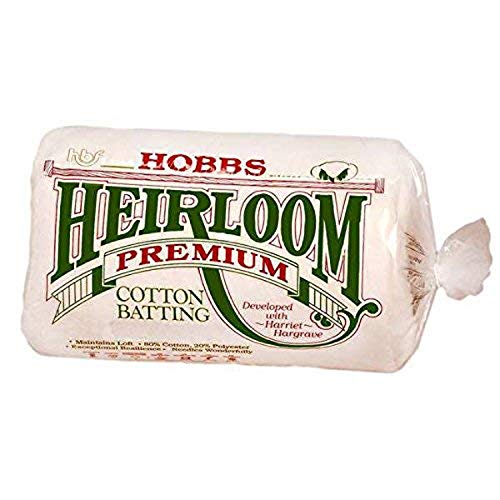 Hobbs Heirloom 80/20 Queen Hobbs Heirloom 80/20 Queen | $28.99 | 90 x 108 in | 80% cotton, 20% polyester | About 1/8 in loft | Price |
 Quilters Dream Cotton Request Quilters Dream Cotton Request | $38.99 | Queen | Natural cotton | Request loft | Price |
 Hobbs Heirloom 80/20 King Hobbs Heirloom 80/20 King | $44.14 | 120 x 120 in | 80% cotton, 20% polyester | Up to 4 in apart | Price |
 Quilters Dream Wool Queen Quilters Dream Wool Queen | $67.94 | 108 x 93 in | Merino wool, thermally bonded | Lofty, light | Price |
 Hobbs Tuscany Wool Queen Hobbs Tuscany Wool Queen | $76.22 | 96 x 108 in | 100% washable wool | Lofty, light | Price |
 Warm & White King Warm & White King | $77.17 | 120 x 124 in | Cotton, needle-punched with scrim | Up to 10 in apart | Price |
 Warm & Natural King 4-Pack Warm & Natural King 4-Pack | $175.77 | 120 x 124 in, 4 batts | Cotton | Needle-punched | Price |
 Warm & Natural 40 yd Roll Warm & Natural 40 yd Roll | $299.99 | 90 in x 40 yd | U.S.-grown cotton, scrim | Needle-punched | Price |
Beginner
Beginner picks: easy-to-quilt cotton and blends under $45
Thin, stable batts are the easiest to quilt on a home machine because they add little bulk under the arm and resist shifting. Start here for your first quilts.
Hobbs Heirloom 80/20 Cotton/Poly Batting, Queen
$28.99About 1/8 in loft, 3 to 5% shrinkage and a soft 80/20 blend. The queen size covers throws, twins and fulls with room to trim.
Best for: Most quilts
Check price Hobbs Heirloom Premium 80/20 Cotton/Poly Batting, King, 120 x 120 in
$44.14The same 80/20 batt in a 120 x 120 in king, with a published quilting distance up to 4 in apart. Buy it for queen and king quilts.
Best for: Queen and king quilts
Check price Quilter's Dream Natural Cotton Batting, Request Loft, Queen
$38.99Natural cotton in the Request loft, described by the maker as versatile for both hand and machine quilting with a soft drape.
Best for: All-cotton quilts with drape
Check pricePrices change often, so confirm on Amazon. As an Amazon Associate we earn from qualifying purchases.
Intermediate
Intermediate picks: wool and wide-spacing cotton, $68 to $78
Wool batts are warm yet light and show quilting texture beautifully. Needle-punched cotton with scrim allows quilting lines farther apart, which suits minimal straight-line quilting.
Quilters Dream Wool Batting, Queen, 108 x 93 in
$67.94Scoured, super-washed merino wool that is carded, cross-lapped and thermally bonded, in a 108 x 93 in queen. Owners frequently praise its light warmth and crisp stitch definition.
Best for: Warm, light bed quilts
Check price Hobbs Tuscany 100% Washable Wool Batting, Queen, 96 x 108 in
$76.22A 96 x 108 in washable wool batt from Hobbs, lofty and light, suited to quilts that will be laundered.
Best for: Wool quilts that get washed
Check price Warm & White Cotton Batting, King
$77.17A 120 x 124 in needle-punched cotton batt with scrim that allows quilting lines up to 10 in apart. White, so it will not shadow through light fabrics.
Best for: Light fabrics and wide quilting
Check pricePrices change often, so confirm on Amazon. As an Amazon Associate we earn from qualifying purchases.
Expert
Expert picks: bulk batting for frequent and longarm quilters, $176 to $300
Who should NOT buy this tier: quilters who finish only a few quilts a year, or who like trying different batts. Bulk saves money per quilt only if you use it; a roll takes storage space and commits you to one batting.
Warm & Natural Cotton Batting, King (4 Pack)
$175.77Four 120 x 124 in king batts. Enough for four large quilts, or many smaller ones cut down, at a lower cost per batt.
Best for: Frequent bed-quilt makers
Check price Warm & Natural Cotton Batting, 90 in x 40 yd Roll
$299.99A 90 in wide, 40 yd roll of needle-punched U.S.-grown cotton with scrim. Cut exactly what each quilt needs straight onto a longarm frame.
Best for: Longarm owners and gift-quilt makers
Check pricePrices change often, so confirm on Amazon. As an Amazon Associate we earn from qualifying purchases.
What size quilt batting do I need?
Batting should be larger than your quilt top on every side, because quilting draws the layers in and you need a margin to hold and square the quilt. Common practice is about 2 to 3 in extra per side for home machine quilting and about 4 in per side for longarm quilting. Get exact figures from the batting size calculator, and compare packaged batts on the batting size chart.
| Quilt | Typical top | Batting for home machine (+3 in per side) | Batting for longarm (+4 in per side) | Batt that fits |
|---|---|---|---|---|
| Crib | 36 x 52 in | 42 x 58 in | 44 x 60 in | Crib batt, about 45 x 60 in |
| Throw | 50 x 65 in | 56 x 71 in | 58 x 73 in | Twin batt, about 72 x 90 in |
| Twin | 70 x 90 in | 76 x 96 in | 78 x 98 in | Hobbs Heirloom 80/20 Queen |
| Full | 80 x 90 in | 86 x 96 in | 88 x 98 in | Hobbs Heirloom 80/20 Queen |
| Queen | 90 x 100 in | 96 x 106 in | 98 x 108 in | Hobbs Heirloom 80/20 King |
| King | 108 x 108 in | 114 x 114 in | 116 x 116 in | Warm & White King |
Quilt top sizes vary by pattern and mattress depth; confirm yours with the quilt size calculator or the quilt size chart. Leftover batting pieces can be joined for small projects.
What is the best batting for machine quilting?
For home machine quilting, thin and stable batts are easiest: 80/20 blends like Hobbs Heirloom 80/20 Queen and needle-punched cotton like Warm & White King do not shift much and add little bulk under the arm. Needle-punched batts with scrim, a thin stabilizing web, allow quilting lines farther apart.
Longarm quilters can use almost any batt because the frame holds the layers taut. Wool is a longarm favorite for showing texture. For a full walk-through of fiber, loft and drape, read how to choose quilt batting.
Cotton vs wool vs polyester batting: which is warmest?
Wool is warmest for its weight and stays light, which is why many quilters choose it for bed quilts. It also resists permanent creases when folded. Polyester is lofty, inexpensive and warm, but breathes less. Cotton is the least warm per ounce but breathes well, softens with washing, and shrinks slightly to give an antique crinkle. Blends like 80/20 sit between cotton and polyester.
Washable wool
Always check the label. Some wool batts are specifically made to be washable, like the Hobbs Tuscany Wool Queen; follow the manufacturer care instructions for any wool quilt.
Warm and Natural vs Hobbs batting: which should you buy?
Warm and Natural is a needle-punched cotton batt with a scrim, known for stability and wide quilting distance, and it is dense and flat. Hobbs Heirloom 80/20 is softer and drapier with a little loft from the polyester. Choose Warm & Natural King 4-Pack for wall hangings, table runners and minimal straight-line quilting; choose Hobbs Heirloom 80/20 Queen for cuddly throws and bed quilts. See Warm and Natural vs Hobbs batting.
Should you prewash quilt batting?
Most quilters do not prewash batting, and many batts are not designed for it. Unwashed cotton and cotton-blend batts shrink a few percent in the first wash, which gives a finished quilt its crinkled texture. If you want a flat look with minimal shrinkage, follow the manufacturer instructions, which may suggest soaking or steaming rather than machine washing. Wash a small quilted sample first when in doubt.
How we chose
We did not test these batts in person. We compared manufacturer specifications for fiber content, size, loft, shrinkage and maximum quilting distance, verified live pricing, and recurring themes in owner reviews about hand, drape, bearding, shrinkage and ease of quilting. Where a maker does not publish a spec, we describe the batt qualitatively rather than guess.
Buying tips
- Check the maximum quilting distance and plan your quilting design within it.
- Buy one size up rather than piecing batting for a bed quilt.
- Choose white batting under light fabrics to avoid a shadow.
- Relax folded batting by opening it flat a day before quilting, or following the maker's instructions.
- Buy by the roll only if you finish many quilts.
Frequently asked questions
What is the most popular quilt batting?
Cotton and cotton-blend batts are the most widely used by quilters, and brands such as Warm Company and Hobbs are staples in quilt shops. Hobbs Heirloom 80/20 is popular for soft, drapey bed quilts and throws, while Warm and Natural is known for its stability and wide quilting distance, making it a favorite for wall hangings and straight-line quilting.
What batting is best for a baby quilt?
Choose a washable batting that stays soft through frequent laundering. An 80/20 blend or cotton batt quilted closely enough to meet the manufacturer maximum distance holds up well. Wool is warm and light, but check that it is labeled washable. Avoid very high loft batts for babies, and follow current safe sleep guidance, which advises against loose bedding in cribs.
What is quilt batting loft?
Loft is the thickness and puffiness of batting. Low loft batts, around 1/8 in like Hobbs Heirloom 80/20, lie flat, drape well and are easiest to quilt on a home machine. High loft batts are puffier and warmer and show quilting as deep texture, but they are harder to push through a domestic machine and suit tied quilts or longarm quilting better.
How far apart should quilting lines be?
It depends on the batting. Each manufacturer publishes a maximum distance between quilting lines. Hobbs Heirloom 80/20 lists up to 4 in, while Warm and White lists up to 10 in thanks to its needle-punched scrim construction. Quilting farther apart than the batting allows can let fibers shift or clump after washing, so plan your quilting design around it.
Is it cheaper to buy batting by the roll?
Usually, per square inch, if you finish many quilts. A 90 in by 40 yd roll such as the Warm and Natural roll can yield several bed quilts and many smaller projects. It needs storage space and commits you to one batting type. For occasional quilters, buying packaged batts sized to each project avoids waste and gives more flexibility.
How we research: we compare manufacturer specifications, owner manuals, published standards and recurring themes in verified owner reviews. We do not test products in person, and this is researched guidance, not professional advice. Follow your machine manual and pattern, and take care with rotary cutters, hot irons and needles. As an Amazon Associate we earn from qualifying purchases.