Embroidery Hoop Size Calculator: Hand and Machine Hoops
For hand embroidery, choose a hoop about 1 1/2 inches larger than the design: a 5 inch design fits a 7 inch hoop. For machine embroidery, the design must fit inside the hoop's stitching area: a 4.5 x 6 inch design needs at least a 5 x 7 inch (130 x 180 mm) hoop, so a 4 x 4 inch machine cannot stitch it.
Choose hand or machine embroidery and enter your design size. For machines, the calculator finds the smallest standard hoop that fits and how many machines in our verified product data can stitch it.
Your design
Your results
Smallest hoop that fits
130 x 180 mm
| Verified machines that fit | 21 |
|---|---|
| Tip | Keep the design slightly inside the field. |
Hoops and stands for hand embroidery
No-slip hoops and a stand make hand stitching more even and less tiring.

Morgan No-Slip Embroidery Hoops, 5, 7 and 9-Inch Set
$42.00Three no-slip hoop sizes that grip fabric firmly.
Check price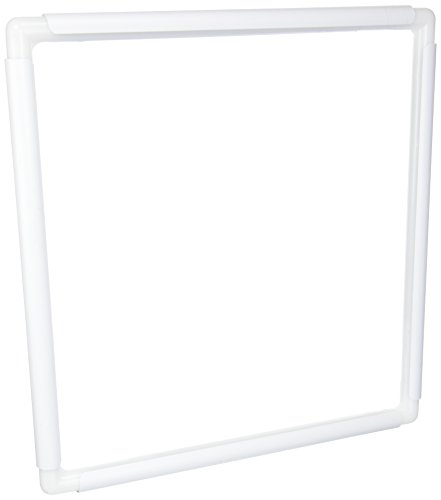
Q-Snap Frame 17 x 17 Inch
$27.12A snap frame for larger pieces without hoop marks.
Check price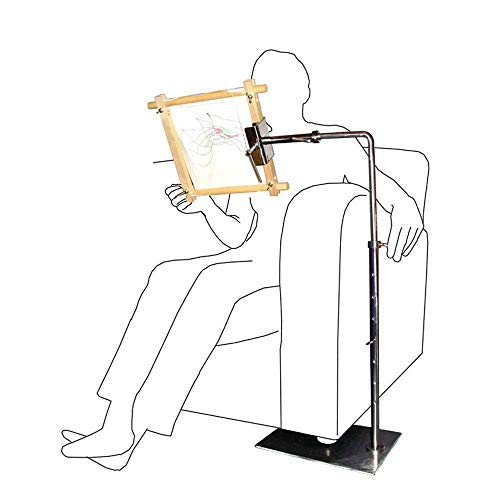
Lowery Workstand with Side Clamp
$229.97A floor stand that holds hoops and frames hands-free.
Check pricePrices change often, so confirm on Amazon. As an Amazon Associate we earn from qualifying purchases.
Machines with a 4 x 4 inch field or larger
Small designs fit almost every embroidery machine.
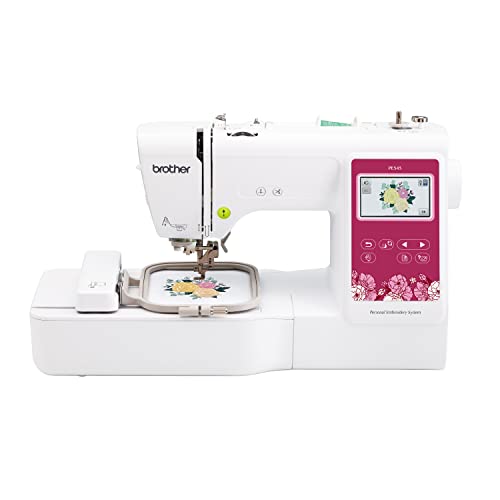
Brother PE545 Embroidery Machine
$429.99An embroidery-only machine with a 4 x 4 inch field.
Check price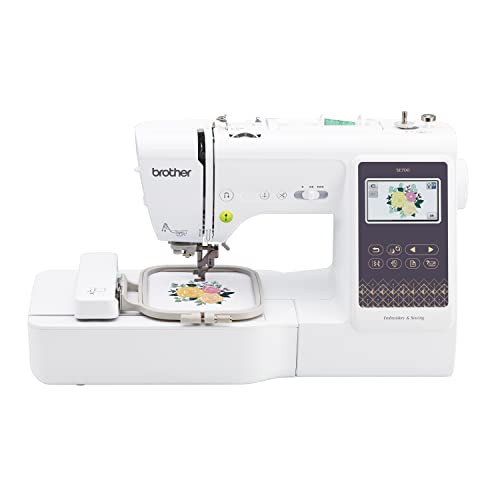
Brother SE700 Sewing and Embroidery Machine
$529.99Sews and embroiders with a 4 x 4 inch field and wireless design transfer.
Check price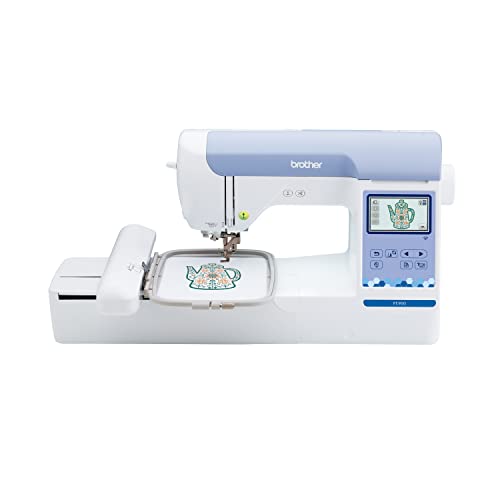
Brother PE900 Embroidery Machine
$1,179.99Steps up to a 5 x 7 inch field for room to grow.
Check pricePrices change often, so confirm on Amazon. As an Amazon Associate we earn from qualifying purchases.
Machines that stitch 5 x 7 inch designs
The most popular field size for towels, totes and shirts.
Brother PE900 Embroidery Machine
$1,179.99A 5 x 7 inch embroidery-only machine.
Check price
Brother SE2000 Sewing and Embroidery Machine
$1,469.99Sewing plus 5 x 7 inch embroidery in one machine.
Check price
Brother Innov-is NQ1700E Embroidery Machine with BES Blue Software
$2,399.99A 6 x 10 inch field for bigger projects.
Check pricePrices change often, so confirm on Amazon. As an Amazon Associate we earn from qualifying purchases.
Machines with a large embroidery field
Quilt blocks, pillows and jacket backs need 6 x 10 inches or more.
Brother Innov-is NQ1700E Embroidery Machine with BES Blue Software
$2,399.99A 6 x 10 inch field on an embroidery-only machine.
Check price
Janome Memory Craft 500E Limited Edition Embroidery Machine
$2,099.00A 7.9 x 11 inch field from Janome.
Check price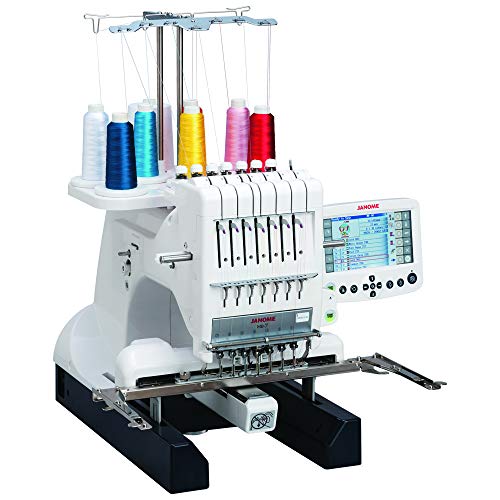
Janome MB-7 Seven-Needle Embroidery Machine
$5,999.00A 7-needle machine for large and business embroidery.
Check pricePrices change often, so confirm on Amazon. As an Amazon Associate we earn from qualifying purchases.
How do you choose an embroidery hoop size?
For machine embroidery, compare the design's smaller dimension with the hoop's smaller side and the larger dimension with the larger side; both must fit. For hand embroidery, add about 1 1/2 inches to the design's larger side and pick the next standard hoop. Choose a hoop 1 to 2 in larger than the design area so the stitching sits inside the ring.
What are the machine embroidery hoop sizes?
| Hoop (in) | mm | Verified machines |
|---|---|---|
| 4 x 4 | 100 x 100 | 27 |
| 5.5 x 5.5 | 140 x 140 | 19 |
| 5 x 7 | 130 x 180 | 21 |
| 5.5 x 7.9 | 140 x 200 | 17 |
| 6 x 10 | 160 x 260 | 14 |
| 7.9 x 7.9 | 200 x 200 | 13 |
| 7.9 x 11 | 200 x 280 | 10 |
| 8 x 12 | 200 x 300 | 8 |
| 9.5 x 14 | 240 x 360 | 4 |
| 10 5/8 x 16 | 272 x 408 | 1 |
What size hand embroidery hoop fits your design?
| Hoop | Designs up to about | Typical uses |
|---|---|---|
| 3 in | 1.5 in | Tiny motifs, Ornaments, Framing mini pieces in the hoop |
| 4 in | 2.5 in | Small motifs, Monograms, Framed mini embroidery, Kids first projects |
| 5 in | 3.5 in | Small designs, Beginner kits, Clothing embellishment |
| 6 in | 4.5 in | Most beginner embroidery kits, Everyday surface embroidery, Hoop art |
| 7 in | 5.5 in | Medium designs, Hoop art, Punch needle (small) |
| 8 in | 6.5 in | Medium to large designs, Tea towels, Pillowcase borders |
| 10 in | 8.5 in | Large designs, Cross stitch on Aida, Punch needle |
| 12 in | 10.5 in | Large embroidery, Hand quilting small projects, Wall hoop art |
| 14 in | 12.5 in | Hand quilting (lap hoop), Large tapestry-style pieces |
Hoop the stabilizer too
For machine embroidery, hoop the fabric and stabilizer together, drum tight but not stretched. Puckering usually starts with loose hooping, not the design.
Frequently asked questions
What size embroidery hoop do I need?
For hand embroidery, pick a hoop 1 to 2 inches larger than the design so the stitching sits inside the ring, or move a smaller hoop around a large piece. For machine embroidery, the design must be no larger than the hoop's stitching field, and the hoop must be one your machine accepts.
What is the largest design for a 5 x 7 hoop?
A 5 x 7 inch machine hoop (130 x 180 mm) stitches designs up to about 5 x 7 inches, in either orientation. Many embroiderers keep designs a little smaller than the maximum so the fabric and stabilizer sit flat inside the hoop and the design stays centered.
Can I split a large embroidery design across hoops?
Yes, with software or machines that support multi-hooping or split designs, you can stitch a large design in sections and rehoop between them. It takes careful alignment with registration marks. Many people find a machine with a larger field worth the extra cost if they do this often.
What size hoop is best for beginners?
For hand embroidery, a 6 inch hoop suits most beginner kits and is comfortable to hold. For machine embroidery, a machine with a 5 x 7 inch field covers towels, totes and shirt fronts, which is the most common reason 4 x 4 inch owners upgrade.
Do hoop sizes in mm and inches match exactly?
Not exactly. Hoop names are rounded: 130 x 180 mm is sold as 5 x 7 inches even though it is about 5.1 x 7.1 inches. When a design is close to the limit, compare the millimeter figures from your machine manual and your design file.
How we research: we compare manufacturer specifications, owner manuals, published standards and recurring themes in verified owner reviews. We do not test products in person, and this is researched guidance, not professional advice. Follow your machine manual and pattern, and take care with rotary cutters, hot irons and needles. As an Amazon Associate we earn from qualifying purchases.