Flying Geese Calculator: No-Waste and Stitch-and-Flip Cut Sizes and Yardage
For no-waste flying geese, cut one large square 1 1/4 inches bigger than the finished width and four small squares 7/8 inch bigger than the finished height, which makes four geese. For 24 geese finishing 2 x 4 inches, cut 6 squares at 5 1/4 inches and 24 squares at 2 7/8 inches.
A flying geese unit is a rectangle twice as wide as it is tall, with a large center triangle, the goose, and two small side triangles, the sky. Enter the finished size and how many you need. The calculator gives the pieces to cut and the yardage of goose and sky fabric for both popular methods.
Your flying geese
Your results
Goose fabric
large squares, 1/4 yard
Sky fabric
small squares, 1/4 yard
| Geese made | 24 |
|---|---|
| Unfinished unit | 2 1/2 x 4 1/2 in |
| Stitch and flip instead | 24 x 4 1/2 x 2 1/2 in rectangles, 48 x 2 1/2 in squares |
Width is not twice the height. These formulas assume a 2 to 1 unit; use a specialty ruler or foundation paper piecing for other shapes.
Tools for a quilt full of flying geese
Two dozen geese or more means lots of small squares and lots of trimming. These make both faster.

Olfa 17 x 17 Rotating Cutting Mat RM-17S
$100.98Trim all four sides of each goose by turning the mat, not the unit.
Check price
Creative Grids 12-1/2 x 24-1/2 Rectangle Quilt Ruler
$55.99A 12 1/2 x 24 1/2 in ruler for cutting squares from strips without switching rulers.
Check price
AccuQuilt GO! Fabric Cutter Starter Set
$329.99A folding die cutter that cuts up to six layers of cotton at once.
Check pricePrices change often, so confirm on Amazon. As an Amazon Associate we earn from qualifying purchases.
Tools for a few flying geese blocks
For a handful of stars, accurate square rulers and a long strip ruler cover everything.

Omnigrid Square Quilting Ruler Value Pack (4-1/2, 6-1/2, 9-1/2 and 12-1/2 in)
$61.86Four square rulers from 4 1/2 to 12 1/2 in with a 45 degree diagonal line.
Check price
Creative Grids Quilt Ruler 6-1/2 x 24-1/2 in Rectangle CGR24
$39.99A non-slip 6 1/2 x 24 1/2 in ruler with 1/8 in markings for strips.
Check price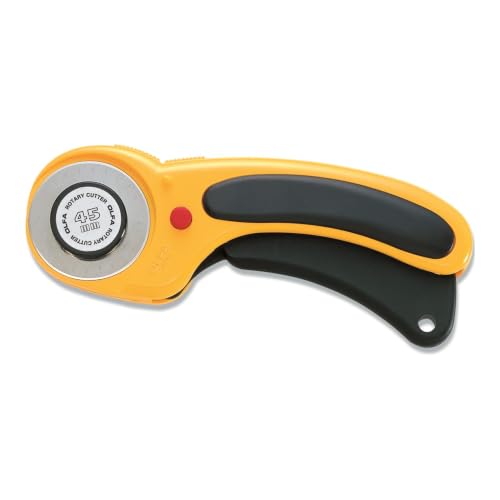
Olfa 45mm Ergonomic Squeeze-Handle Rotary Cutter RTY-2/DX
$19.69A 45 mm cutter with a squeeze trigger that retracts the blade automatically.
Check pricePrices change often, so confirm on Amazon. As an Amazon Associate we earn from qualifying purchases.
A hundred geese or more: cut and sew faster
Big flying geese quilts are all about repetition. An electric die cutter and a fast straight-stitch machine carry that load.

AccuQuilt GO! Big Electric Fabric Cutter Starter Set
$699.99One-button electric die cutter for up to six layers, compatible with all GO! dies.
Check price
Olfa 35 x 70 Continuous Grid Connecting Rotary Mat Set
$209.99A 35 x 70 in cutting surface for stacks of strips and squares.
Check price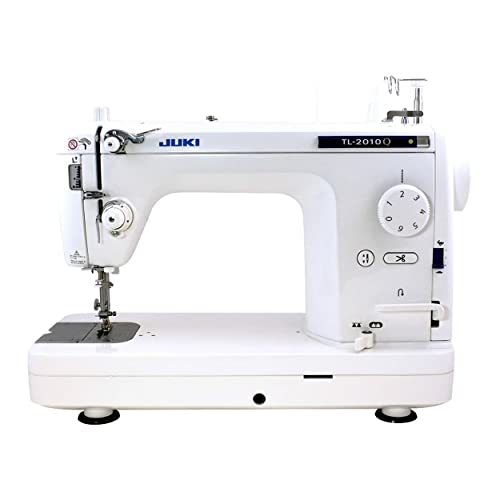
Juki TL-2010Q High-Speed Sewing and Quilting Machine
$1,199.00A 1,500 SPM straight-stitch machine that makes short work of hundreds of seams.
Check pricePrices change often, so confirm on Amazon. As an Amazon Associate we earn from qualifying purchases.
How do you calculate flying geese cut sizes?
Every size here is for a unit that finishes 2 x 4 inches, meaning it shows 2 inches tall and 4 inches wide in the quilt. Before it is sewn into a block, it measures 2 1/2 x 4 1/2 inches, which includes a 1/4 inch seam allowance on all four sides.
No-waste method, four at a time
- Large square for the geese: finished width + 1 1/4 inches. 4 + 1 1/4 = 5 1/4 inches.
- Four small squares for the sky: finished height + 7/8 inch. 2 + 7/8 = 2 7/8 inches.
- Sets needed: geese divided by 4, rounded up. 24 / 4 = 6 large squares and 24 small squares.
- Yardage: 5 1/4 inch squares fit 7 across a 40 inch strip, so 6 squares take 1 strip, or 1/4 yard of goose fabric. 2 7/8 inch squares fit 13 per strip, so 24 take 2 strips, 1/4 yard of sky fabric.
To sew, place two small squares on opposite corners of the large square, right sides together, so their tips overlap in the middle. Draw a diagonal through both, sew 1/4 inch on each side of the line, cut on the line and press toward the small triangles. Place a small square on the remaining corner of each piece, draw, sew both sides, cut and press. Four geese.
Stitch-and-flip method, one at a time
- Goose rectangle: finished width + 1/2 by finished height + 1/2. 4 1/2 x 2 1/2 inches.
- Two sky squares per goose: finished height + 1/2. 2 1/2 inches, 48 squares for 24 geese.
- Yardage: 3 strips for the rectangles, 1/4 yard, and 3 strips for the squares, 1/4 yard.
Draw a diagonal on each sky square, place one on a corner of the rectangle, sew on the line, trim 1/4 inch past the seam and press. Repeat on the opposite corner so the two seams meet at the top center, 1/4 inch below the raw edge.
What size do you cut for each flying geese size?
This chart covers the standard 2 to 1 sizes. Each size links to its own page with sawtooth star measurements.
| Finished | Unfinished | No-waste large | No-waste small (4) | Flip rectangle | Flip squares (2) |
|---|---|---|---|---|---|
| 1 x 2 in | 1 1/2 x 2 1/2 | 3 1/4 in | 1 7/8 in | 2 1/2 x 1 1/2 in | 1 1/2 in |
| 1 1/2 x 3 in | 2 x 3 1/2 | 4 1/4 in | 2 3/8 in | 3 1/2 x 2 in | 2 in |
| 2 x 4 in | 2 1/2 x 4 1/2 | 5 1/4 in | 2 7/8 in | 4 1/2 x 2 1/2 in | 2 1/2 in |
| 2 1/2 x 5 in | 3 x 5 1/2 | 6 1/4 in | 3 3/8 in | 5 1/2 x 3 in | 3 in |
| 3 x 6 in | 3 1/2 x 6 1/2 | 7 1/4 in | 3 7/8 in | 6 1/2 x 3 1/2 in | 3 1/2 in |
| 3 1/2 x 7 in | 4 x 7 1/2 | 8 1/4 in | 4 3/8 in | 7 1/2 x 4 in | 4 in |
| 4 x 8 in | 4 1/2 x 8 1/2 | 9 1/4 in | 4 7/8 in | 8 1/2 x 4 1/2 in | 4 1/2 in |
| 6 x 12 in | 6 1/2 x 12 1/2 | 13 1/4 in | 6 7/8 in | 12 1/2 x 6 1/2 in | 6 1/2 in |
How much fabric do you need for 24 flying geese?
Twenty-four geese make six sawtooth stars, a common block count for a table runner or the center of a baby quilt. Yardage uses 40 inches of usable width and rounds up to the next 1/8 yard.
| Finished | No-waste goose | No-waste sky | Flip goose | Flip sky |
|---|---|---|---|---|
| 1 x 2 in | 1/8 yd | 1/8 yd | 1/8 yd | 1/8 yd |
| 1 1/2 x 3 in | 1/8 yd | 1/4 yd | 1/4 yd | 1/4 yd |
| 2 x 4 in | 1/4 yd | 1/4 yd | 1/4 yd | 1/4 yd |
| 2 1/2 x 5 in | 1/4 yd | 3/8 yd | 3/8 yd | 3/8 yd |
| 3 x 6 in | 1/2 yd | 3/8 yd | 1/2 yd | 1/2 yd |
| 3 1/2 x 7 in | 1/2 yd | 3/8 yd | 5/8 yd | 5/8 yd |
| 4 x 8 in | 5/8 yd | 1/2 yd | 3/4 yd | 3/4 yd |
| 6 x 12 in | 3/4 yd | 1 yd | 1 1/2 yd | 1 1/2 yd |
For small geese the two methods look the same on paper, because yardage rounds up to the nearest 1/8 yard. The difference grows with size. Stitch-and-flip trims away two sky triangles from every goose, which on 6 x 12 inch geese is a lot of fabric in the scrap bin. Some quilters sew a second line 1/2 inch from the first before trimming and turn those offcuts into small bonus half square triangles.
Keep the points
After pressing, the tip of the goose should sit exactly 1/4 inch below the top raw edge. Then when the unit is sewn to its neighbor, the seam passes just above the point instead of cutting it off.
Which flying geese method should you use?
- No-waste is the favorite for quilts with many matching geese. It makes four at a time from one large and four small squares, uses fabric efficiently, and each goose has straight grain on its outside edges. It does need precise 1/8 inch cuts.
- Stitch-and-flip is the easiest to understand and the best for scrappy quilts where every goose has different sky fabric. It uses whole 1/2 inch measurements, but the sewn diagonal can drift and it wastes fabric.
- Oversize and trim works with either method. Cutting the no-waste squares 1/4 and 1/8 inch larger, then trimming each goose to size with a square ruler, is the most reliable path to sharp points.
Flying geese are the frame of the sawtooth star, the backbone of a geese border, and a common unit in larger star blocks. A 3 x 6 inch goose builds a 12 inch sawtooth star. For matching half square triangles, use the half square triangle calculator, and to plan the whole quilt, the quilt fabric yardage calculator adds up every fabric.
Can you cut flying geese with a die cutter?
Yes. Fabric die cutters use steel-rule dies to cut shapes through several layers at once, with the seam allowance built in. For a quilt with a hundred or more geese, that means stacking fabric instead of drawing and trimming every diagonal. The results panel switches to die-cutting and machine suggestions when your count reaches 100. If you are deciding between systems, the AccuQuilt GO! vs GO! Big comparison explains the size and die differences.
Frequently asked questions
What size squares do I cut for no-waste flying geese?
Add 1 1/4 inches to the finished width for the one large goose square, and 7/8 inch to the finished height for the four small sky squares. For a 3 x 6 inch finished goose, cut one 7 1/4 inch square and four 3 7/8 inch squares. That set makes four identical geese, each 3 1/2 x 6 1/2 inches before sewing into a block.
Why does a flying geese unit have to be twice as wide as it is tall?
The goose is a right triangle whose long side runs across the bottom of the unit and whose point touches the middle of the top. That shape only happens when the width is exactly twice the height. Both the no-waste and stitch-and-flip formulas rely on it. For other proportions, use a specialty ruler or foundation paper piecing.
Which flying geese method is most accurate?
The no-waste method cut oversize and trimmed is usually the most accurate, because you square each goose after sewing. For 2 x 4 inch geese, cut the large square at 5 1/2 inches and small squares at 3 inches, then trim to 2 1/2 x 4 1/2. Stitch-and-flip is simplest for a few geese, but the sewn diagonal can drift and it trims away fabric.
How many flying geese does a sawtooth star need?
Four. A sawtooth star uses four geese around a center square, plus four corner squares. With 3 x 6 inch geese, the center is 6 inches finished, the corners are 3 inches, and the block finishes at 12 inches. Cut the center at 6 1/2 inches and the corners at 3 1/2 inches.
What if I need a number of geese that is not divisible by four?
The no-waste method always makes geese in sets of four, so the calculator rounds up. For 10 geese at 3 x 6 inches it cuts 3 large squares and 12 small squares, making 12 geese with 2 left over. Extra geese are handy for a pillow or a label, or use stitch-and-flip for the last few.
How we research: we compare manufacturer specifications, owner manuals, published standards and recurring themes in verified owner reviews. We do not test products in person, and this is researched guidance, not professional advice. Follow your machine manual and pattern, and take care with rotary cutters, hot irons and needles. As an Amazon Associate we earn from qualifying purchases.