Best Quilting Rulers (2026): 9 Cutting Rulers, HST Trimmers and Ruler Work Kits
The best quilting ruler to buy first is the Creative Grids 6-1/2 x 24-1/2 in ruler, about $40, with a non-slip grip and markings in 1/8 in increments. Add a 12-1/2 in square for squaring blocks and the Bloc-Loc HST set for trimming half-square triangles. For machine ruler work, you also need a ruler foot.
Quilting rulers are thick, clear acrylic guides for rotary cutting, marked in 1/8 in increments with angle lines for triangles. The long ruler does most of the work, and the Creative Grids 6-1/2 x 24-1/2 is our pick for its non-slip grip, which holds the ruler in place under light pressure so it does not creep mid-cut.
There are two kinds of quilting rulers, and people mix them up: cutting rulers (thin, for rotary cutters) and ruler work templates (1/4 in thick, for guiding a sewing machine or longarm). We cover both, including the feet and bases that make ruler work possible.
Quilting rulers at a glance
| Product | Price | Size | Job | Standout feature | Buy |
|---|---|---|---|---|---|
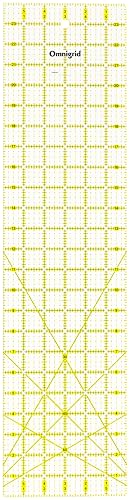 Omnigrid 6x24 Omnigrid 6x24 | $25.59 | 6 x 24 in | Strip cutting | 1/8 in edges, 30/45/60 degree lines | Price |
 Creative Grids 6-1/2 x 24-1/2 Creative Grids 6-1/2 x 24-1/2 | $39.99 | 6-1/2 x 24-1/2 in | Strip cutting | Non-slip grip | Price |
 Omnigrid 12-1/2 in Square Omnigrid 12-1/2 in Square | $27.04 | 12-1/2 x 12-1/2 in | Squaring blocks | Double-sight lines | Price |
 Creative Grids 12.5x24.5 Creative Grids 12.5x24.5 | $55.99 | 12-1/2 x 24-1/2 in | Wide cuts, squaring quilts | Non-slip, 45 and 30/60 degree lines | Price |
 Omnigrid 4-Square Value Pack Omnigrid 4-Square Value Pack | $61.86 | 4-1/2 to 12-1/2 in | Squaring blocks | Four common sizes | Price |
 Bloc Loc HST Set #2 Bloc Loc HST Set #2 | $72.75 | 2-1/2, 4-1/2, 6-1/2 in | HST trimming | Locks onto the seam | Price |
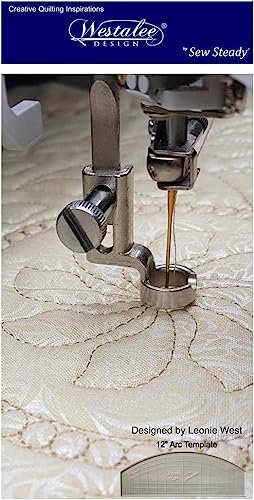 Westalee Ruler Foot Kit (Low Shank) Westalee Ruler Foot Kit (Low Shank) | $49.88 | Low shank | Machine ruler work | Starter package | Price |
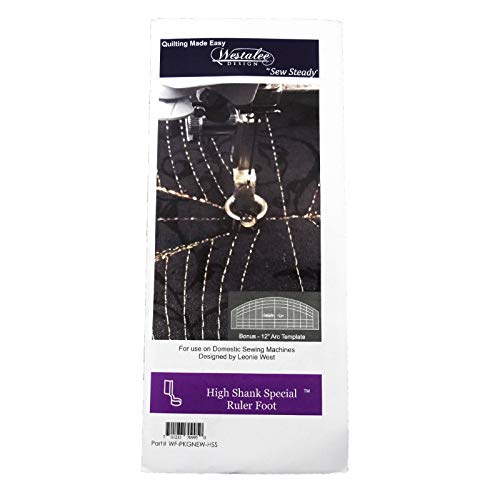 Westalee Ruler Foot Kit (High Shank) Westalee Ruler Foot Kit (High Shank) | $41.95 | High shank | Machine ruler work | Starter package | Price |
 HQ Steady-Fit Ruler Base 15 in HQ Steady-Fit Ruler Base 15 in | $159.95 | 15 in | Longarm ruler work | Fits HQ Moxie and Moxie XL | Price |
Beginner
Beginner picks: the two rulers every quilter needs, under $40 each
A long ruler for strips and a square for trimming blocks cover most beginner patterns. Choose one long ruler; you do not need both.
Creative Grids Quilt Ruler 6-1/2 x 24-1/2 in Rectangle CGR24
$39.99The non-slip grip holds under light pressure, and black and white markings read on light and dark fabrics. Made in the USA.
Best for: Your first and main ruler
Check price Omnigrid 6 x 24 Rectangle Quilting Ruler
$25.59A classic 6 x 24 in ruler with 1/8 in edge markings, a 1/4 in grid, and 30, 45 and 60 degree angle lines, for about $26.
Best for: Budget long ruler
Check price Omnigrid 12-1/2 x 12-1/2 in Square Quilting and Sewing Ruler
$27.04Squares up 12 in finished blocks with 1/8 in markings on two edges, a 1/4 in grid and double-sight lines.
Best for: Squaring up blocks
Check pricePrices change often, so confirm on Amazon. As an Amazon Associate we earn from qualifying purchases.
Intermediate
Intermediate picks: wide, square and HST rulers, $56 to $73
Once patterns get more precise, specialty rulers save time and fabric. The biggest accuracy gain for most quilters is trimming half-square triangles to exact size.
Creative Grids 12-1/2 x 24-1/2 Rectangle Quilt Ruler
$55.99A 12-1/2 x 24-1/2 in non-slip ruler with 45 and 30/60 degree lines. Cuts wide pieces in one pass and helps square the edges of a finished quilt.
Best for: Wide cuts and squaring quilts
Check price Omnigrid Square Quilting Ruler Value Pack (4-1/2, 6-1/2, 9-1/2 and 12-1/2 in)
$61.86Four square rulers at 4-1/2, 6-1/2, 9-1/2 and 12-1/2 in, each with a 45 degree diagonal. Matching the ruler to the block size speeds up trimming.
Best for: Block-heavy patterns
Check price Bloc Loc Half-Square Triangle Ruler Set #2
$72.75Three sizes at 2-1/2, 4-1/2 and 6-1/2 in. A groove on the underside sits on the diagonal seam so the ruler cannot shift while you trim.
Best for: Perfect half-square triangles
Check pricePrices change often, so confirm on Amazon. As an Amazon Associate we earn from qualifying purchases.
Expert
Expert picks: ruler work feet and bases, $42 to $160
Ruler work means guiding a sewing machine or longarm along a thick template to stitch straight lines, curves and borders. Who should NOT buy this tier: quilters who send quilts out or only quilt with a walking foot. Ruler work needs free-motion quilting skills and a compatible machine.
Westalee Design Sew Steady Ruler Foot Starter Package, Low Shank
$49.88A starter package for ruler work on low shank domestic machines. The thick ruler foot is what lets a template ride safely against it.
Best for: Low shank home machines
Check price Westalee Design Sew Steady Ruler Foot Starter Package, High Shank
$41.95The high shank version for straight-stitch quilting machines and other high shank models. Confirm your machine shank type first.
Best for: High shank quilting machines
Check price Handi Quilter Steady-Fit Ruler Base 15 in for HQ Moxie and Moxie XL
$159.95A clear base that attaches to the HQ Moxie and Moxie XL, widening the flat surface around the needle so templates stay supported.
Best for: Handi Quilter Moxie owners
Check pricePrices change often, so confirm on Amazon. As an Amazon Associate we earn from qualifying purchases.
What rulers do you need for quilting?
Start with two, add the rest as patterns require. The table shows what each common ruler does and when it earns a place in your kit.
| Ruler | Main job | Buy when | Example |
|---|---|---|---|
| 6 or 6-1/2 x 24 in | Cutting strips across width-of-fabric | First quilt | Creative Grids 6-1/2 x 24-1/2 |
| 12-1/2 in square | Squaring blocks up to 12 in finished | First quilt | Omnigrid 12-1/2 in Square |
| 6-1/2 in square | Trimming smaller blocks and units | Blocks under 6 in | Omnigrid 4-Square Value Pack |
| 12-1/2 x 24-1/2 in | Wide cuts, squaring quilt edges | Larger projects | Creative Grids 12.5x24.5 |
| HST trimmer | Trimming half-square triangles to size | Triangle patterns | Bloc Loc HST Set #2 |
| Ruler work template, 1/4 in thick | Guiding machine stitching | Free-motion quilting | Use with a ruler foot |
What is the best ruler for trimming half square triangles?
A slotted HST trimmer is the most accurate choice. The Bloc Loc HST Set #2 has a groove that locks onto the pressed seam, so the diagonal is exactly centered while you trim two sides, then you rotate and trim the other two. Standard square rulers with a 45 degree line also work, but the line can drift off the seam.
Cut HSTs slightly oversized, then trim. Our half-square triangle calculator gives starting sizes for every method, and the how to make half-square triangles guide shows 2-at-a-time, 4-at-a-time and 8-at-a-time techniques. Browse sizes on the half-square triangle charts.
Are Creative Grids rulers better than Omnigrid?
Both are accurate; the difference is grip and markings. Creative Grids rulers like the Creative Grids 6-1/2 x 24-1/2 build a non-slip grip into the ruler that holds when pressed, which many quilters with less hand strength prefer. Omnigrid rulers like the Omnigrid 6x24 are lighter on the budget and use double-sight markings, and some people add grip dots.
The best advice: stick with one brand for your main rulers so the line thickness and markings match across cuts. Mixing brands on one project can add small errors that compound over many seams.
How do you use quilting rulers on a sewing machine?
Ruler work on a domestic machine needs three things: a ruler foot (a thick, round foot that a template can ride against), templates made for machine quilting at about 1/4 in thick, and the ability to lower or cover the feed dogs for free motion. The Westalee Ruler Foot Kit (Low Shank) and Westalee Ruler Foot Kit (High Shank) starter packages cover the foot; buy the version that matches your machine's shank.
A large flat surface around the needle helps keep templates steady, so a flush cabinet or extension table matters. Straight-stitch quilters like the Juki TL-2010Q are popular for ruler work. Our free-motion quilting guide covers the basics first.
Never use cutting rulers for ruler work
Thin rotary cutting rulers can slide under a presser foot and into the needle path, breaking needles and sending fragments flying. Only use 1/4 in thick templates with a proper ruler foot or longarm ruler base.
What are the best longarm quilting rulers for beginners?
Start with a straight ruler and a gentle curve; they cover stitching in the ditch, borders, crosshatching and simple arcs. On a longarm, add a ruler base so the template has a stable surface, such as the HQ Steady-Fit Ruler Base 15 in for Moxie machines. Check your longarm maker's recommendation for template thickness and foot type.
If you are still choosing a longarm, see longarm quilting machines for home.
How we chose
We did not test these rulers in person. We compared published sizes, marking increments, grip features, angle lines and machine compatibility, verified live pricing, and recurring owner-review themes about slipping, readability and accuracy. Ruler work products were limited to established ruler foot and base systems with clear compatibility.
Buying tips
- Buy the 1/2 in extra. Rulers like 6-1/2 x 24-1/2 in and 12-1/2 in squares include seam allowances for common finished sizes.
- Stick to one brand for main cutting rulers.
- Check your machine's shank type before buying a ruler foot.
- Store rulers flat or hanging to avoid chips and warping.
- Keep cutting rulers and ruler work templates separate.
Frequently asked questions
What is the most useful quilting ruler?
The long ruler, typically 6 or 6-1/2 in by 24 in, is the most useful quilting ruler. It cuts strips across folded width-of-fabric and handles most sub-cutting. The Creative Grids 6-1/2 x 24-1/2 in adds a non-slip grip. A 12-1/2 in square is usually the second ruler quilters buy, for squaring blocks.
What quilt square ruler sizes should I buy?
The most common square-up sizes are 4-1/2, 6-1/2, 9-1/2 and 12-1/2 in, which match popular finished block sizes of 4, 6, 9 and 12 in plus seam allowance. The Omnigrid square value pack includes all four. If you only buy one, choose 12-1/2 in, because it trims every smaller block too, just less conveniently.
Can I use regular quilting rulers for free motion quilting?
No. Regular rotary cutting rulers are about 1/8 in thick and can slip under the presser foot, which risks broken needles and injury. Free-motion ruler work needs templates about 1/4 in thick, used with a ruler foot on a domestic machine or a ruler base and hopping foot on a longarm. Keep the two types of rulers separate.
Is there a ruler foot for the Juki TL-2010Q?
Ruler feet are made for straight-stitch machines like the Juki TL-2010Q, but you need the version that matches its shank and foot style. Check Juki accessory listings and the ruler foot maker compatibility chart for your exact model before buying. Starter packages like the Westalee high shank kit are sold for high shank machines.
How do you keep a quilting ruler from slipping?
Use a ruler with a built-in grip, such as Creative Grids, or apply small adhesive grip dots to the underside. Keep your hand spread flat with fingertips on the ruler, not over the edge, and walk your hand up the ruler as you cut long strips. A sharp blade also helps, because a dull blade requires more force, which pushes the ruler sideways.
How we research: we compare manufacturer specifications, owner manuals, published standards and recurring themes in verified owner reviews. We do not test products in person, and this is researched guidance, not professional advice. Follow your machine manual and pattern, and take care with rotary cutters, hot irons and needles. As an Amazon Associate we earn from qualifying purchases.