Yarn Substitution Calculator: Skeins, Yardage, WPI and Held Double
Multiply the pattern skeins by their yardage, then divide by your yarn yardage and round up. Six 220 yard skeins is 1,320 yards, so a 185 yard substitute needs 8 skeins. Held double, a 437 yard fingering needs 7 skeins, since two strands use twice the yards.
Using a different yarn than the pattern calls for is one of the most common questions in knitting and crochet. Enter the pattern yarn and your substitute from their ball bands. The calculator converts by total yardage, checks whether the weights match, and handles holding two strands together.
Pattern yarn and your yarn
Your results
Skeins of your yarn
1,320 yards needed (8 skeins with 10 percent extra)
Weight check
| Pattern total | 1,320 yd |
|---|---|
| Pattern yd per 100 g | 220 (Medium) |
| Your yarn, as worked | 185 yd per 100 g (Medium) |
| WPI suggests | Light or Medium |
A good substitute, and the tools to wind it
Worsted with a published gauge is the easiest substitute to plan, and a swift and winder turns a pile of new skeins into ready cakes.

Lion Brand Basic Stitch Anti-Pilling Yarn, Medium Worsted #4, 3 Pack, White
$16.71Three 185 yard, 100 g balls of anti-pilling worsted with a published knit gauge of 18 stitches on US 8.
Check price
Knit Picks Yarn Winding Bundle, Ball Winder and Birch Swift
$79.99A swift and ball winder together for 100 g skeins and hanks.
Check price
Stanwood Needlecraft 10 oz Metal Ball Winder and Amish Style Swift Bundle
$121.95A 10 oz metal winder with an Amish style swift for large hanks.
Check pricePrices change often, so confirm on Amazon. As an Amazon Associate we earn from qualifying purchases.
Holding yarn double? Wind the strands together
Two strands pulled from two balls twist and tangle. Winding them together into one cake first makes held double yarn behave like a single strand.

Stanwood Needlecraft Large Metal Ball Winder, 10 oz
$79.95A 10 oz steel winder with room for two strands wound into one big cake.
Check price
Olikraft Large Capacity Electric Yarn Ball Winder
$74.98An electric winder with a foot pedal and up to 9 oz capacity, hands free for guiding two strands.
Check price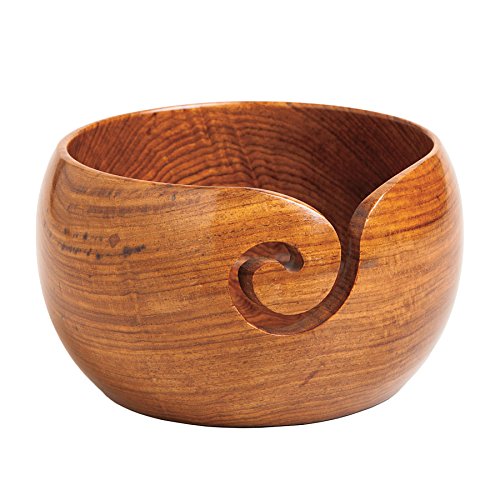
Knit Picks Rosewood Yarn Bowl
$27.00A rosewood bowl that keeps a cake from rolling while you pull from it.
Check pricePrices change often, so confirm on Amazon. As an Amazon Associate we earn from qualifying purchases.
Different weight? Swatch on several needle sizes
When the substitute is a category away, the fastest route to gauge is swatching on two or three sizes. A full needle set makes that free.

Knit Picks Sunstruck Wood Interchangeable Needle Set, US 4 to 11
$77.47Nine pairs of tips from US 4 to 11, the mid sizes most substitutions land in.
Check price
Clover Takumi Bamboo Combo Interchangeable Circular Needle Set
$95.59Bamboo tips from US 3 to 15 with five cord lengths for 60 combinations.
Check price
HiyaHiya Sharp Interchangeable Needle Set, Expanded, 5 inch tips
$249.95Sharp tips from US 2 to 15 and four cable lengths for any gauge you need to chase.
Check pricePrices change often, so confirm on Amazon. As an Amazon Associate we earn from qualifying purchases.
How do you calculate yarn substitution?
Yarn substitution comes down to one rule: match yards, not skeins. A pattern that says "6 skeins" is really asking for the length of yarn on those skeins. The calculator works in four steps, shown here for the default.
- Find the pattern's total yardage. Skeins x yards per skein: 6 x 220 = 1,320 yards.
- Account for strands. One strand needs 1,320 yards. Holding two strands together doubles it to 2,640.
- Divide by your skein yardage and round up. 1,320 / 185 = 7.14, so buy 8 skeins. With a 10 percent cushion it is 8.
- Check the weight. Yards per 100 grams = yards / grams x 100. The pattern yarn is 220 and yours is 185. Both fall in the Medium range on retailer charts, so the weights match.
Now the held double version. Suppose you want to use a fingering yarn with 437 yards per 100 grams, two strands at once. You need 2,640 yards of it: 2,640 / 437 = 6.04, so 7 skeins. Two strands together behave roughly like one strand at half the yardage, 218.5 yards per 100 grams, which is inside the Medium range. That makes it a reasonable, approximate stand in for the worsted, pending a swatch.
What is the yarn weight by wraps per inch?
Wraps per inch (WPI) is the old, reliable way to identify yarn with no label: a mystery skein from a destash, a hand spun yarn, or a ball whose band is long gone. Wrap the yarn around a ruler or a WPI tool with the strands touching but not overlapping or stretched, then count how many wraps fill one inch. The Craft Yarn Council publishes a WPI range for each weight, shown below with the retailer yardage ranges and knit gauge.
| Weight | Also called | WPI | Yd per 100 g | Knit sts per 4 in |
|---|---|---|---|---|
| Lace (0) | Fingering (CYC type), 10-count crochet thread, Cobweb | 30 to 40+ | 600 or more | 33 to 40 |
| Super Fine (1) | Sock, Fingering, Baby | 14 to 30 | 380 to 600 | 27 to 32 |
| Fine (2) | Sport, Baby | 12 to 18 | 300 to 380 | 23 to 26 |
| Light (3) | DK, Light Worsted | 11 to 15 | 230 to 300 | 21 to 24 |
| Medium (4) | Worsted, Afghan, Aran | 9 to 12 | 170 to 230 | 16 to 20 |
| Bulky (5) | Chunky, Craft, Rug | 6 to 9 | 100 to 170 | 12 to 15 |
| Super Bulky (6) | Super Bulky, Roving | 5 to 6 | under 100 | 7 to 11 |
| Jumbo (7) | Jumbo, Roving | 1 to 4 | Not published | 6 or fewer |
The WPI ranges overlap, so one count can point to two or three weights; 11 wraps per inch could be Light or Medium. Use WPI together with yards per 100 grams and a swatch. The yardage figures are retailer chart ranges, not a CYC standard, and they vary with fiber, so they are a cross check rather than a verdict.
Does holding two strands of yarn together make a heavier weight?
Yes, roughly. Because two strands use twice the yardage, their effective yards per 100 grams is half of one strand. The table halves each weight's retailer yardage range and shows which single strand weights that halved range overlaps. It is an approximation: two strands are thicker than one but not twice as thick, and held double yarn has a slightly rounder, bumpier texture.
| One strand of | Yd per 100 g, 1 strand | Effective, 2 strands | Overlaps the range of |
|---|---|---|---|
| Super Fine (1) | 380 to 600 | 190 to 300 | Fine or Light or Medium |
| Fine (2) | 300 to 380 | 150 to 190 | Medium or Bulky |
| Light (3) | 230 to 300 | 115 to 150 | Bulky |
| Medium (4) | 170 to 230 | 85 to 115 | Bulky or Super Bulky |
| Bulky (5) | 100 to 170 | 50 to 85 | Super Bulky |
Two strands of super fine, for example, work out to 190 to 300 yards per 100 grams, overlapping Fine or Light or Medium. Where the halved range straddles two weights, the swatch decides which one you really have. Holding double is also a handy way to use up leftovers or blend two colors into a marled fabric.
Wind double strands into one cake first
Pulling two strands from two separate balls twists them together as you work. Put both ends through a ball winder at once and wind a single cake, and the pair feeds as smoothly as one strand.
What should match besides yardage when you substitute yarn?
- Gauge. This is non negotiable for fitted garments. Knit or crochet a swatch with the substitute, wash it, and compare with the pattern gauge using the knitting gauge calculator.
- Fiber behavior. Wool is springy and blocks well. Cotton and linen are heavier and drape downward. Acrylic is easy care but does not open up lace the way wool does. Superwash wool can grow when wet.
- Construction. A plied yarn gives crisp stitch definition for cables; a single ply or a brushed yarn blurs it. Chainette and tape yarns behave differently again.
- Dye lot. Buy every skein at once, from one dye lot, with 10 to 15 percent extra.
If you do not have the pattern's yardage at all, estimate it by project with the how much yarn do I need calculator, then come back here to convert to your skeins.
Can you substitute a yarn when the pattern yarn is discontinued?
Yes, and it is the most common reason to substitute. Older patterns often call for yarns that are no longer made, and the label details are the only clue left. Look up the original yarn's yardage, weight in grams and fiber from the pattern notes or an online yarn database, then enter them as the pattern yarn above. If the pattern only lists the number of balls, search for the ball size: a vintage pattern calling for 50 gram balls needs twice as many as one using 100 gram skeins of the same yarn.
When you truly cannot find the yardage, work backward from the finished measurements and the gauge. Estimate the project total with a yardage guide, add a generous cushion, and swatch in your substitute before buying the full amount.
How do you wind and prepare substitute yarn?
Substitute yarns often come as hanks rather than pull skeins, especially wool and hand dyed yarns, and they must be wound before use. A swift holds the hank open while a ball winder builds a center pull cake. For sweater quantities, the Stanwood Winder + Amish Swift handles 10 ounce cakes, enough for two strands wound together. If the substitute is a category away and you need to swatch on several sizes, a full set such as the HiyaHiya Sharp Expanded 5" means you are never a needle short.
Frequently asked questions
How do I substitute yarn in a knitting or crochet pattern?
Match the yarn weight and gauge first, then match the total yardage, never the skein count. Multiply the pattern skeins by the yards on each: 6 skeins of 220 yards is 1,320 yards. Divide by the yards on your yarn and round up. At 185 yards a skein that is 7.14, so buy 8, or 8 with a 10 percent cushion. Then swatch before you cast on.
Can I use two strands of thinner yarn instead of a heavier yarn?
Often, yes, as an approximation. Two strands held together use twice the yardage, so their effective yards per 100 grams is half of one strand. A fingering yarn at 437 yards per 100 grams held double acts like about 218.5 yards per 100 grams, which falls in the Medium range. Held double yarn is also rounder and less smooth, so swatch to check gauge and drape.
What is WPI in yarn?
WPI means wraps per inch. Wrap the yarn snugly around a ruler or pencil, side by side without overlapping or stretching, and count the wraps in one inch. The Craft Yarn Council lists ranges for each weight, such as 9 to 12 for medium (worsted) and 11 to 15 for light (DK). The ranges overlap, so an 11 WPI yarn could be Light or Medium. It is a good check for unlabeled yarn.
Should I compare yarns by grams or by yards?
By yards. Grams tell you how heavy the yarn is, but fibers differ in density, so a 100 gram skein of cotton and a 100 gram skein of wool in the same weight category can have very different lengths. The pattern ran out of yarn at a yardage, not a weight. Use grams only to work out yards per 100 grams, which helps confirm the weight category.
Does substituting a different fiber change my project?
It can, even at the same weight and gauge. Cotton and linen are heavier and drape downward, so a cotton sweater may grow in length. Superwash wool can stretch when wet. Acrylic holds its shape but does not block as dramatically as wool, which matters for lace. Knit a swatch, wash it the way you will wash the finished piece, and measure it before committing.
What if my substitute yarn is one weight category different?
You may still get gauge by changing needle or hook size, especially between neighboring categories like light and medium, since the CYC gauge ranges sit close together. The fabric will feel different: a thinner yarn on bigger needles is more open, and a thicker yarn on smaller needles is denser. More than one category apart, expect to rework the pattern rather than just swap yarn.
How we research: we compare manufacturer specifications, owner manuals, published standards and recurring themes in verified owner reviews. We do not test products in person, and this is researched guidance, not professional advice. Follow your machine manual and pattern, and take care with rotary cutters, hot irons and needles. As an Amazon Associate we earn from qualifying purchases.