Best Coverstitch Machine (2026): 8 Picks for Professional Knit Hems
The best coverstitch machine for most sewists is the Janome CoverPro 2000CPX (about $800), with 1, 2 or 3 needle chain, cover and triple cover stitches, Tension Level Control, a 4 by 5.5 inch bed and LED lighting. The Brother 2340CV (under $600) is the value pick, and the Juki MO-735 is the best serger and cover hem combo.
A coverstitch machine sews the hem you see on store-bought T-shirts: two or three parallel rows of stitching on top and a looped thread on the back that stretches with the fabric. A serger cannot sew it, and a twin needle on a sewing machine only imitates it. If you sew knits often, it is the machine that makes handmade look professional.
Our top pick is the Janome CoverPro 2000CPX for its three-needle versatility and Tension Level Control. The Brother 2340CV is the value choice. Note that coverstitch machines start near $570; there is no reliable budget tier the way there is for sergers, so the Beginner picks below are the lowest-priced proven models.
Coverstitch machines compared
| Product | Price | Stitches | Max speed | Standout | Buy |
|---|---|---|---|---|---|
 Janome CoverPro 900CPX Janome CoverPro 900CPX | $569.00 | Chain, 2-needle cover | 1,000 SPM | Free arm, lowest price | Price |
 Brother 2340CV Brother 2340CV | $579.49 | Tri-cover, wide and narrow cover | 1,100 SPM | 3 to 6 mm width, metal frame | Price |
 Janome CoverPro 1000CPX Janome CoverPro 1000CPX | $649.00 | Chain, cover, triple cover | 1,000 SPM | 4 x 5.5 in bed | Price |
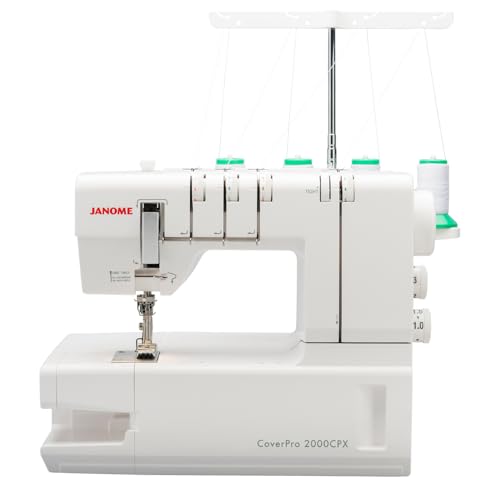 Janome CoverPro 2000CPX Janome CoverPro 2000CPX | $799.00 | Chain, cover, triple cover | 1,000 SPM | Tension Level Control, LED | Price |
 Juki MCS-1600 Juki MCS-1600 | $799.00 | Cover, chain | 1,350 SPM | Fastest here | Price |
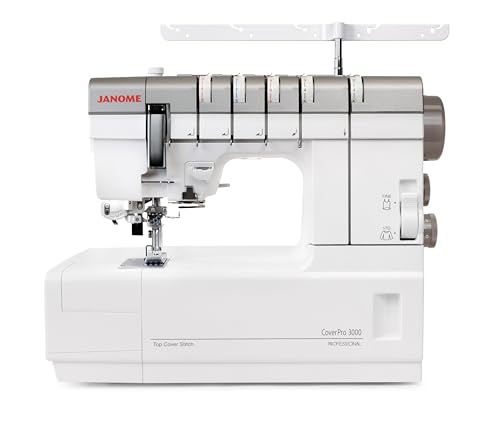 Janome CoverPro 3000P Janome CoverPro 3000P | $1,399.00 | Cover stitches | Not listed | Thread chain-off, top cover guide | Price |
 Juki MO-735 Juki MO-735 | $1,295.00 | Serger plus cover hem | Not listed | 5-thread combo | Price |
 Elna eXtend Covermax Elna eXtend Covermax | $1,399.00 | Serger plus cover, 7 programs | 1,000 SPM | Built-in top cover spreader | Price |
Beginner
Beginner picks: first coverstitch machine, $570 to $650
These sew excellent knit hems and chain stitches. Their limits are fewer needle options on the least expensive model and less tension automation.
Brother 2340CV Coverstitch Machine
$579.49A metal-frame, coverstitch-only machine with tri-cover, wide and narrow cover stitches from 3 to 6 mm, lay-in color-coded threading and up to 1,100 stitches per minute. It is the most common first coverstitch machine.
Best for: The value pick for knit hems
Check price Janome CoverPro 900CPX Coverstitch Machine
$569.00Switches between a 2-thread chain stitch and a 3-thread cover stitch, with a free arm for sleeve and leg hems, the Seam Tightening System and differential feed from 0.5 to 2.25.
Best for: Sleeve hems on a budget
Check price Janome CoverPro 1000CPX Coverstitch Machine
$649.00Chain, cover and triple cover stitches with 1, 2 or 3 needles, a 4 by 5.5 inch bed and the Seam Tightening System, sold here with a bonus package. The triple cover adds a sporty, sturdy hem.
Best for: Triple cover without the top price
Check pricePrices change often, so confirm on Amazon. As an Amazon Associate we earn from qualifying purchases.
Intermediate
Intermediate picks: easier tension and more speed, $800
This tier refines the stitch: better tension control, better lighting and faster sewing.
Janome CoverPro 2000CPX Coverstitch Machine
$799.00Tension Level Control helps balance stitches across fabric thicknesses, and LED lighting shows the stitch line clearly. It sews 1, 2 or 3 needle chain, cover and triple cover stitches on a free arm.
Best for: Most sewists who hem knits often
Check price Juki MCS-1600 Cover Stitch and Chain Stitch Machine
$799.00A 3-needle cover stitch and chain stitch machine with easy looper threading, differential feed adjustment and a 1,350 stitches per minute top speed.
Best for: Faster hemming in batches
Check pricePrices change often, so confirm on Amazon. As an Amazon Associate we earn from qualifying purchases.
Expert
Expert picks: premium and combination machines, $1,295 to $1,400
Who should NOT buy this tier: sewists who hem a few T-shirts a season, and anyone who expects a combo machine to switch between serging and cover hemming quickly. Combos save space, not time, since converting between modes means rethreading and adjusting.
Janome CoverPro 3000 Professional Coverstitch Machine
$1,399.00Janome's top coverstitch with Enhanced Tension Level Control, a thread chain-off feature, a 3-position needle threader, a built-in top cover stitch guide and LED lighting.
Best for: Dedicated knitwear sewists
Check price Juki MO-735 5-Thread Serger and Cover Hem Machine
$1,295.00A 5-thread combination machine that serges and sews cover hems, so one footprint covers overlocked seams and knit hems.
Best for: Small sewing spaces
Check price Elna eXtend Covermax Coverstitch Serger
$1,399.00A serger and coverstitch combo with 2, 3, 4 or 5 thread sewing on 1, 2 or 3 needles, 7 stitch programs, Tension Level Control, a free arm and a built-in spreader for top cover stitch.
Best for: Decorative top cover stitching
Check pricePrices change often, so confirm on Amazon. As an Amazon Associate we earn from qualifying purchases.
What is a coverstitch machine used for?
A coverstitch machine uses two or three needles on top and one looper underneath. On the right side, you see parallel rows of straight stitches; on the wrong side, the looper thread zigzags between them, covering the raw edge. Unlike a serger, there is no knife, so it sews away from the edge.
Common uses:
- Hems on T-shirts, leggings, knit dresses and activewear.
- Binding necklines and armholes with a binder attachment.
- Decorative topstitching along seams, like sportswear style.
- Chain stitch for basting or a stretchy single row of stitching.
- Elastic application on waistbands and lingerie.
Coverstitch machine vs serger: what is the difference?
They are complementary tools, not alternatives. Read serger vs coverstitch for more, or start with the table.
| Factor | Coverstitch machine | Serger |
|---|---|---|
| Main job | Hems and topstitching on knits | Sewing and finishing seams |
| Knife | None | Trims fabric as it sews |
| Where it sews | Anywhere on the fabric | Along the edge |
| Stitch on top | 2 or 3 parallel rows | Overlock wrapped around the edge |
| Needles | Up to 3 | Usually 1 or 2 |
| Typical price | About $570 to $1,400 | About $250 to $1,400 |
| Buy first if | You already serge and want pro hems | You are starting to sew knits |
Most sewists buy a serger first; see the best sergers.
Is a coverstitch machine better than a twin needle?
A twin needle on a regular sewing machine sews two parallel rows on top, but the bobbin thread underneath simply zigzags between the two needle threads. That gives some stretch, but less than a coverstitch, and on lightweight knits it often creates a raised ridge between the rows, called tunneling. Stitches can also pop when a hem is stretched over the shoulders or hips.
A coverstitch machine's looper forms a flexible loop on the back, which stretches with the fabric and lies flat. The twin needle is fine for occasional knit hems. If you sew knit tops or leggings every month, the coverstitch difference shows in every garment.
| Factor | Twin needle on a sewing machine | Coverstitch machine |
|---|---|---|
| Cost | A few dollars for the needle | About $570 and up |
| Stretch | Moderate | High |
| Tunneling on light knits | Common | Uncommon with correct settings |
| Stitch on the back | Bobbin zigzag | Looper thread covering the raw edge |
| Width options | Set by the needle spacing | 3 to 6 mm on the Brother 2340CV |
Is a serger and coverstitch combo machine worth it?
A combo like the Juki MO-735 or Elna eXtend Covermax makes sense when space is the constraint. You get overlocking, safety stitches, cover hems and chain stitch from one machine, often for less than buying a good serger and coverstitch separately.
The trade-off is workflow. Knit garments usually alternate between seams and hems, and converting a combo from serger to coverstitch means moving needles, changing the threading and disengaging the knife. Owners frequently describe it as fine for occasional use and tedious for regular T-shirt sewing. If you have room for two machines, separates like the Brother 1034D plus the Brother 2340CV are usually faster to work with.
Why is my coverstitch machine skipping stitches?
- Needles not fully inserted or the wrong type. Push each needle all the way up. Many coverstitch manuals specify a particular needle system or ballpoint needles for knits; use what yours calls for.
- Threading out of order. Thread the looper first, then the needles, following the manual.
- Pulling or pushing the fabric. Let the feed dogs move it; guide only.
- Crossing a thick seam too fast. Slow down at side seam humps, or press them flat first.
- Old or linty thread. Fresh polyester serger thread feeds more evenly.
- Differential feed or presser foot pressure off. Adjust one setting at a time on a scrap.
Ending a coverstitch hem
A coverstitch cannot backstitch. To end, stop with the needles up, raise the foot, pull the fabric gently back to create slack, cut the needle threads on top, pull them to the wrong side and tie them off with the looper thread.
How we chose
We did not test these machines in person. We compared manufacturer specifications (stitch types, needle counts, stitch widths, bed space, speed, tension systems, differential feed), owner manuals, and recurring themes in verified owner reviews about skipped stitches, tunneling, threading and conversion time on combination machines. We included combos only with clear notes about their workflow trade-offs.
Buying tips
- Buy a serger first unless you already own one.
- Check whether a binder attachment is available for your model if you want to bind necklines.
- Stock three or four cones of polyester serger thread; textured nylon in the looper adds softness and stretch.
- Practice on the same knit you plan to hem; results vary a lot between jersey, rib and swimwear.
- Look for a free arm if you hem sleeves and children's clothing.
Frequently asked questions
What is the best coverstitch machine for home use?
The Janome CoverPro 2000CPX is the best coverstitch machine for most home sewists, with chain, cover and triple cover stitches on 1, 2 or 3 needles, Tension Level Control, LED lighting and a free arm. The Brother 2340CV is the best value at under $600. If you need one machine for seams and hems, the Juki MO-735 combines a serger and cover hem machine.
Do I need a coverstitch machine if I have a serger?
Not strictly. A serger sews and finishes knit seams, and you can hem with a twin needle on a sewing machine. A coverstitch machine is worth adding when you sew knits often and want hems that stretch without popping and look like ready-to-wear. Many sewists add one a year or two after buying a serger, once T-shirts and leggings become regular projects.
Can a serger do a coverstitch?
A standard serger cannot sew a coverstitch, because it has no way to place parallel needle rows away from the edge with a looper beneath. Combination machines like the Juki MO-735 and Elna eXtend Covermax can do both, but they must be converted between modes. A flatlock stitch on a serger looks somewhat similar decoratively but is not a hem stitch.
What is a triple cover stitch used for?
A triple cover stitch uses three needles to sew three parallel rows on top with a looper underneath. It is wider and sturdier than a two-needle cover stitch, and it is common on activewear, sweatshirts and children's clothing where hems take a lot of stress. Machines like the Janome CoverPro 1000CPX and Janome CoverPro 2000CPX sew triple cover stitches.
How do you stop tunneling on a coverstitch machine?
Tunneling, a raised ridge between the needle rows, usually comes from needle tension that is too tight for the fabric, or from lightweight knits without enough support. Loosen the needle tension slightly, check differential feed, and try a strip of lightweight fusible stabilizer in the hem allowance. Press the hem before sewing and let the machine feed the fabric without pulling.
How we research: we compare manufacturer specifications, owner manuals, published standards and recurring themes in verified owner reviews. We do not test products in person, and this is researched guidance, not professional advice. Follow your machine manual and pattern, and take care with rotary cutters, hot irons and needles. As an Amazon Associate we earn from qualifying purchases.