Serger vs Coverstitch Machine: Which Do You Need First? (Juki MO-654DE vs Brother 2340CV)
Buy a serger first, because it sews and finishes the seams on almost every knit garment: the Juki MO-654DE costs about $599 with 2, 3 or 4 thread options. Add a coverstitch like the Brother 2340CV, about $579, only when you want professional stretchy hems on T-shirts, leggings and activewear.
The verdict
These are different tools that do different halves of a knit garment, and for most sewists the serger comes first. A serger sews the seams, trims them and wraps the edge. A coverstitch machine sews the hems: two or three parallel needle lines on top with a looper thread underneath, like the hem on a store-bought T-shirt.
Here is the part that costs a sale: many sewists never buy the coverstitch at all. A twin needle on a regular sewing machine makes a passable knit hem for free, and if you sew only a few T-shirts a year, that is the right answer. A coverstitch earns its space when you sew knits weekly or sell what you make.
Serger vs Coverstitch: side by side
| Feature | Serger | Coverstitch |
|---|---|---|
| Representative model | Juki MO-654DE | Brother 2340CV |
| Price | About $599 | About $579 |
| Main job | Sew, trim and overcast seams | Hem knits, bind necklines, topstitch |
| Trims fabric | Yes, built-in knife | No |
| Thread options | 2, 3 or 4 threads | Narrow cover, wide cover, tri-cover |
| Stitch width | Not listed in the specs we verified | 3 to 6 mm cover stitch |
| Max speed | Not listed in the specs we verified | 1,100 SPM |
| Can it sew a seam? | Yes | Not a finished seam |
| Can it hem like ready-to-wear? | No | Yes |
| Extras | Workbook CD and instructional DVD | Metal frame |
What is the difference between a serger and a coverstitch machine?
A serger uses one or two needles and two loopers, with a knife that trims the fabric edge just ahead of the needles. The result is a seam that is sewn and finished in one pass, with stretch built in. A coverstitch uses two or three needles and a single looper, with no knife. It works away from the edge, so it can sew a hem an inch up from the raw edge, leaving parallel straight lines on the right side and a stretchy chain of looper thread covering the raw edge on the wrong side.
Put simply, turn a store-bought T-shirt inside out. The side seams are serged. The hem and sleeve cuffs are coverstitched. You can see why the serger comes first: every garment needs seams, and not every garment needs a coverstitched hem.
| Task | Serger | Coverstitch | Sewing machine with twin needle |
|---|---|---|---|
| Side and shoulder seams | Best | No | Stretch stitch, slower |
| T-shirt and leggings hems | No | Best | Good for light use, can tunnel or pop |
| Neckband topstitching | No | Best | Acceptable |
| Finishing woven seam allowances | Best | No | Zigzag works |
| Rolled hems on scarves | Yes | No | Rolled hem foot, fiddly |
| Cost to add | About $285 to $600 | About $570 to $800 | A few dollars for a twin needle |
Is a serger and coverstitch combo machine worth it?
A combo like the Juki MO-735 (up to 5 threads, serger and cover hem) or the Elna eXtend Covermax saves space and can cost less than two good machines. The catch owners mention again and again is the conversion: switching from serging to coverstitching means rethreading, moving needles, changing plates or covers, and disengaging the knife. If you hem a batch of shirts after serging them, you do that conversion twice per project.
Combos make the most sense for sewists with a small room who sew knits in batches. If you switch between seaming and hemming often, two machines side by side are faster and less frustrating. Our best coverstitch machines roundup covers both routes.
Coverstitch machine vs twin needle: is the machine worth it?
A twin needle fits most zigzag sewing machines and sews two parallel lines on top with a single zigzagging bobbin thread underneath. It is fine for occasional hems on stable knits. Owners of coverstitch machines commonly switch because twin needle hems can tunnel, forming a raised ridge between the lines, or snap when stretched over a head. A dedicated machine like the Brother 2340CV or Janome CoverPro 1000CPX uses a looper for true stretch and a flat finish. If knit hems are a weekly job, the machine pays back in time and fewer ripped stitches.
Choose Serger if
- You are adding your second machine after a sewing machine.
- You sew knit garments and want fast, stretchy, finished seams.
- You also want to finish woven seam allowances and sew rolled hems.
- You want 2-thread capability for lightweight fabrics.
Choose Coverstitch if
- You already own a serger.
- You sew T-shirts, leggings, swimwear or activewear every week.
- Twin needle hems keep tunneling or popping on you.
- You sell knit garments and want a ready-to-wear finish.
Our picks for each machine type

Brother 1034D Serger
$284.99The budget first serger: 3 or 4 threads and 1,300 SPM for about $285.
Check price
Juki Pearl Line MO-654DE Serger
$599.00A sturdy step-up serger with 2, 3 or 4 thread options.
Check price
Brother 2340CV Coverstitch Machine
$579.49Tri-cover, wide and narrow cover stitches on a metal frame for about $579.
Check price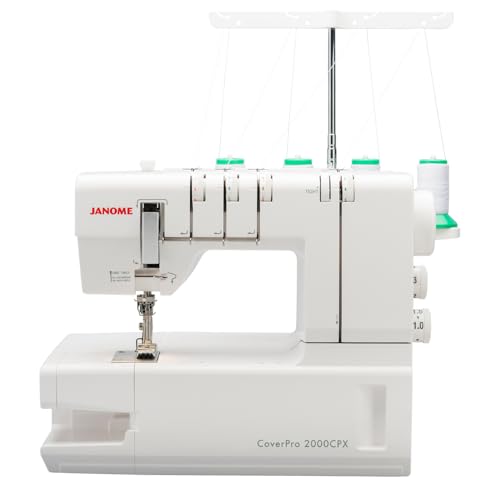
Janome CoverPro 2000CPX Coverstitch Machine
$799.00A coverstitch with 3 or 6 mm widths and 4 x 5.5 in of bed space.
Check price
Juki MO-735 5-Thread Serger and Cover Hem Machine
$1,295.00A 5-thread serger and cover hem in one machine for small sewing rooms.
Check pricePrices change often, so confirm on Amazon. As an Amazon Associate we earn from qualifying purchases.
This comparison is drawn from published specifications, owner manuals and the consensus of verified owner reviews, not side-by-side testing.
Frequently asked questions
Can a serger do a coverstitch?
A standard serger cannot. Its knife and needle layout are built to sew on the fabric edge, while a cover stitch sits away from the edge with two or three parallel needle lines. Some convertible combo machines, such as the Juki MO-735, do both after a conversion. A regular 3 or 4 thread serger like the MO-654DE does not.
Can a coverstitch machine sew seams?
Not finished seams. A coverstitch can sew a chain stitch that holds fabric together, and some sewists use it for lapped seams or decorative topstitching, but it does not trim or overcast the edge, so raw edges remain. For knit garments you still need a serger or a sewing machine stretch stitch for the construction seams.
What is a tri-cover stitch?
A tri-cover stitch uses three needles to sew three parallel lines on the right side of the fabric, with a looper thread covering the back. It gives a wide, sporty hem often seen on activewear and sweatshirts. The Brother 2340CV offers tri-cover plus wide and narrow two-needle cover stitches, with widths from 3 to 6 mm.
Should I buy a serger or coverstitch first?
Buy the serger first for almost all garment sewists. It sews and finishes the seams that every garment needs, while the coverstitch only hems. A twin needle on your sewing machine covers occasional knit hems in the meantime. The exception is a sewist who already finishes seams well on a sewing machine and mainly struggles with hems on knits.
Is the Brother 2340CV good for beginners?
Owner reviews frequently call the Brother 2340CV an approachable first coverstitch, praising its metal frame, price and three stitch options. The recurring learning curve is thread tension and preventing skipped stitches at seam crossings, which applies to every coverstitch. Practice on scraps of the same knit, and use stretch or ballpoint needles for best results.
How we research: we compare manufacturer specifications, owner manuals, published standards and recurring themes in verified owner reviews. We do not test products in person, and this is researched guidance, not professional advice. Follow your machine manual and pattern, and take care with rotary cutters, hot irons and needles. As an Amazon Associate we earn from qualifying purchases.