Brother 2340CV vs Janome CoverPro 1000CPX: Which Coverstitch to Buy?
Buy the Janome CoverPro 1000CPX, about $649, if you want a chain stitch, a free arm and a 4 x 5.5 inch bed for about $70 more. Buy the Brother 2340CV, about $579, if you only need cover hems: it sews tri-cover, wide and narrow cover stitches from 3 to 6 mm at up to 1,100 SPM.
 Janome CoverPro 1000CPX Coverstitch Machine $649.00 Check price on Amazon
 The verdict
The CoverPro 1000CPX is the slightly better machine for most knit sewists, because its chain stitch, free arm and large bed make it more versatile for about $70 more. The 2340CV is the better buy if hemming T-shirts and leggings is the whole job and you want to spend less.
A coverstitch machine sews hems like the ones on store-bought T-shirts: two or three parallel lines on top, with a looper thread covering the raw edge underneath. Both of these do that well. The recurring frustration owners report on both, skipped stitches over thick seam crossings, is mostly technique rather than machine choice.
Brother 2340CV vs Janome CoverPro 1000CPX: side by side
| Feature | Brother 2340CV | Janome CoverPro 1000CPX |
|---|---|---|
| Price | About $579 | About $649 |
| Stitches | Tri-cover, wide cover, narrow cover | Chain stitch, cover stitch, triple cover stitch |
| Needles | 3 needles, 1 looper | 1, 2 or 3 needles |
| Cover stitch width | 3 to 6 mm | 3 or 6 mm with 2 needles, 6 mm with 3 |
| Stitch length | 2 to 4 mm | 1 to 4 mm |
| Max speed | 1,100 SPM | 1,000 SPM |
| Differential feed | Slide lever | 0.5 to 2.25 ratio |
| Free arm and bed | Not listed in the specs we verified | Free arm, 4 x 5.5 in bed space |
| Tension feature | Not listed | Seam Tightening System (STS) |
| Warranty | Brother 1/5/25 year limited serger warranty | See Janome dealer terms |
What is the difference between the Brother 2340CV and Janome CoverPro 1000CPX?
The chain stitch and the free arm. Janome lists a 1 needle, 2 thread chain stitch on the 1000CPX, which is useful for basting, decorative topstitching and securing seams. Brother's stitch list for the 2340CV covers tri-cover plus wide and narrow cover stitches, with no chain stitch listed.
Janome also lists a free arm and 4 by 5.5 inches of bed space. A free arm lets you slide a sleeve cuff or child's leg opening around the machine instead of hemming it flat, which is the fiddliest part of coverstitching small garments.
| Project | [[brother-2340cv]] | [[janome-coverpro-1000cpx]] | Why |
|---|---|---|---|
| Adult T-shirt hems | Excellent | Excellent | Both sew 2 and 3 needle cover stitch |
| Sleeve cuffs and kids leg openings | Good | Better | Janome lists a free arm |
| Wide sporty hems | Tri-cover up to 6 mm | Triple cover at 6 mm | Same finished width |
| Chain stitch topstitching | Not listed | Yes | Decorative lines and basting |
| Hemming dark knits | Add task lighting | Add task lighting | Neither page lists a built-in LED |
| Thick seam crossings | Practice needed | Practice needed | Hammer seams flat and slow down |
| Production speed | 1,100 SPM | 1,000 SPM | Brother slightly faster on paper |
Why does my coverstitch skip stitches?
It is the most common complaint about every coverstitch machine, including these two. The usual causes are a stack too thick at a side seam, a dull or wrong needle, or thread tension that is off for the fabric. Owners report success from pressing or hammering the seam crossing flat, using stretch needles in the size the manual recommends, sewing slowly through the bump and stitching a test on scraps of the same knit.
Janome presents its Seam Tightening System on the 1000CPX as part of its answer to stitch quality. It is a helpful feature, not a substitute for good setup.
Is it worth stepping up to a better coverstitch?
For weekly knit sewing, the step up worth considering is the Janome CoverPro 2000CPX, about $799, which keeps the same stitches, free arm and bed but lists Tension Level Control, an LED light, 4 cones of thread and a dust cover. The Juki MCS-1600, also about $799, lists 3 needles, cover and chain stitch and a faster 1,350 SPM. At the top, the CoverPro 3000P adds Enhanced Tension Level Control, a 3-position needle threader and a built-in cover stitch guide.
If you do not yet own a serger, buy that first; our serger vs coverstitch comparison explains why.
Choose Brother 2340CV if
- You only need cover hems on T-shirts, leggings and sweatshirts.
- You want the lower price and a slightly faster published speed.
- You like Brother's lay-in color-coded threading.
- You mostly hem adult garments flat, not small tubes.
Choose Janome CoverPro 1000CPX if
- You want a chain stitch for topstitching and basting.
- You sew children's clothes or fitted sleeves on a free arm.
- You want 4 by 5.5 inches of bed space.
- You want a published 0.5 to 2.25 differential feed range.
Our coverstitch picks by budget

Brother 2340CV Coverstitch Machine
$579.49Tri-cover, wide and narrow cover stitches at up to 1,100 SPM for about $579.
Check price Janome CoverPro 1000CPX Coverstitch Machine
$649.00Chain, cover and triple cover with a free arm and 4 x 5.5 in bed.
Check price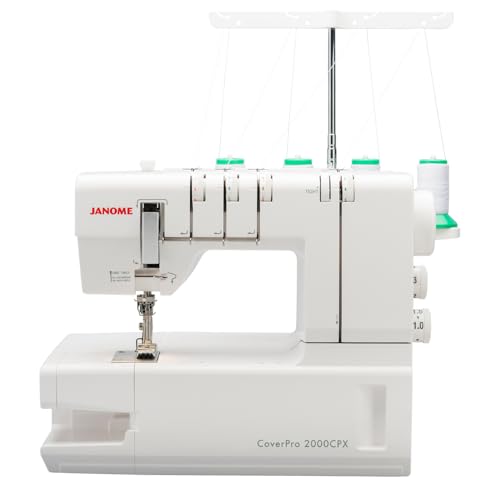
Janome CoverPro 2000CPX Coverstitch Machine
$799.00Adds Tension Level Control, LED lighting, thread and a dust cover.
Check price
Juki MCS-1600 Cover Stitch and Chain Stitch Machine
$799.00Three needles, cover and chain stitch at a fast 1,350 SPM.
Check price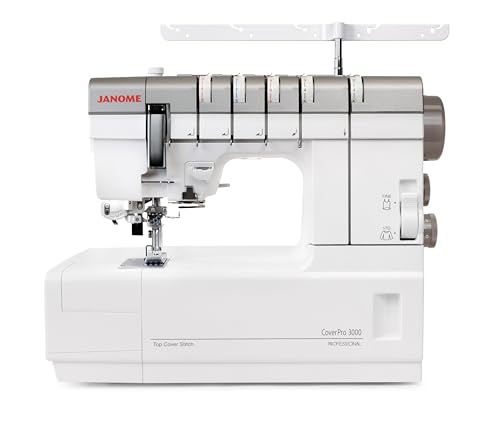
Janome CoverPro 3000 Professional Coverstitch Machine
$1,399.00Janome's top coverstitch with Enhanced Tension Level Control.
Check pricePrices change often, so confirm on Amazon. As an Amazon Associate we earn from qualifying purchases.
This comparison is drawn from published specifications, owner manuals and the consensus of verified owner reviews, not side-by-side testing.
Frequently asked questions
Does the Brother 2340CV do a chain stitch?
Brother's published stitch list for the 2340CV covers tri-cover plus wide and narrow cover stitches, and a chain stitch is not listed. If you want a chain stitch for decorative topstitching or basting, the Janome CoverPro 1000CPX and Juki MCS-1600 both list one. For hemming knits, the cover stitches are what matter.
What is a free arm on a coverstitch machine?
A free arm is a narrow bed you can slide a tube of fabric around, such as a sleeve cuff, a leg opening or a small child's T-shirt hem. Without one, you hem small tubes by stretching them flat or sewing inside out. Janome lists a free arm on the CoverPro 1000CPX, which makes small garments noticeably easier.
Is the Janome CoverPro 1000CPX good for beginners?
Yes. Owners frequently describe the CoverPro 1000CPX as a reliable first coverstitch once tension and needle choice are sorted out, and its large bed and free arm help with handling. Expect the usual coverstitch learning curve: securing the thread tail at the end of a hem and crossing thick seams without skipping take practice on scraps.
How do you secure the end of a coverstitch hem?
A cover stitch unravels from the end if pulled, so it must be secured. The common method is to stop, raise the needles, pull the fabric back slightly, cut the threads leaving tails, then pull the needle threads to the wrong side and tie them off. Some sewists overlap the start by about an inch instead. Both the 2340CV and 1000CPX manuals illustrate the steps.
Can a coverstitch machine replace a twin needle?
Yes, and it does the job better. A twin needle on a sewing machine uses a single zigzagging bobbin thread underneath, which can tunnel or snap when stretched. A coverstitch like the 2340CV uses a looper for true stretch and a flat finish. For a few hems a year a twin needle is fine; for weekly knit sewing, the machine pays back.
Sources
How we research: we compare manufacturer specifications, owner manuals, published standards and recurring themes in verified owner reviews. We do not test products in person, and this is researched guidance, not professional advice. Follow your machine manual and pattern, and take care with rotary cutters, hot irons and needles. As an Amazon Associate we earn from qualifying purchases.