Best Industrial Sewing Machine for Home Use (2026): 9 Picks and Setup Realities
The best industrial sewing machine for home use is the Juki DDL-8700 (about $1,100 complete), the standard straight lockstitch rated to 5,500 stitches per minute, sold with a 110V motor. For upholstery, canvas and leather, choose the Juki DU-1181 walking foot (about $1,725) with its servo motor and table.
An industrial sewing machine is a single-purpose sewing head mounted in a table with a separate motor underneath, built to run for hours a day. For the right home sewist, it is a revelation: faster, stronger and more consistent than any domestic machine. For the wrong one, it is a heavy, loud, straight-stitch-only piece of furniture.
Our top pick is the Juki DDL-8700, the high-speed straight stitcher found in garment workrooms, sold as a complete setup. If you sew thick materials, the Juki DU-1181 walking foot machine is the better choice. And if you want industrial-style stitching without the table, the semi-industrial Juki TL-2000Qi is the gentle entry point.
Industrial and semi-industrial picks
| Product | Price | Class | Max speed or key spec | Motor and table | Buy |
|---|---|---|---|---|---|
 Consew CP206RL Consew CP206RL | $524.95 | Portable walking foot | Walking foot, longer arm | Built-in 110V motor, no table | Price |
 Juki TL-2000Qi Juki TL-2000Qi | $999.00 | Semi-industrial | 1,500 SPM | Tabletop | Price |
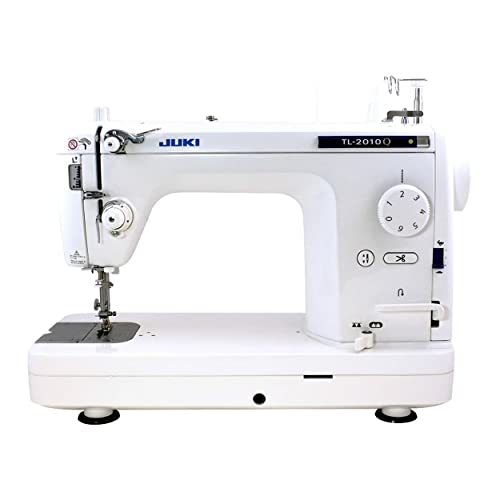 Juki TL-2010Q Juki TL-2010Q | $1,199.00 | Semi-industrial | 1,500 SPM, knee lifter | Tabletop | Price |
 Juki DDL-8700 (head) Juki DDL-8700 (head) | $691.11 | Industrial lockstitch | 5,500 SPM | Head only, supply your own | Price |
 Juki DDL-8700 Juki DDL-8700 | $1,099.00 | Industrial lockstitch | 5,500 SPM, 5 mm stitch | 110V clutch motor | Price |
 Janome HD9 Janome HD9 | $1,599.00 | Semi-industrial | 1,600 SPM, up to 5 lb foot pressure | Tabletop | Price |
 Consew 206RB-5 Consew 206RB-5 | $1,661.99 | Industrial walking foot | 10 mm stitch, 14 mm knee lift | Servo motor and table | Price |
 Juki DU-1181 Juki DU-1181 | $1,724.62 | Industrial walking foot | 2,000 SPM, 9 mm stitch | 3/4 HP servo, 110V, table | Price |
Beginner
Beginner picks: industrial-style without the table, $525 to $1,200
Start here if you want industrial stitch quality or strength but are not ready for a full-size table, a separate motor and a knee lever. These sit on a normal sewing table.
Juki TL-2000Qi Long-Arm Sewing and Quilting Machine
$999.00A semi-industrial straight-stitch machine running up to 1,500 stitches per minute, with a long track record among quilters and home decor sewists. It sews like a small industrial but plugs in and sits on a tabletop.
Best for: Trying industrial-style sewing
Check price Juki TL-2010Q High-Speed Sewing and Quilting Machine
$1,199.00The Juki TL-2000Qi approach plus an automatic thread trimmer and a knee lifter with up to 12 mm of lift, in an aluminum die-cast body. The knee lifter is good practice for full industrial machines.
Best for: Frequent straight-seam sewing
Check price Consew CP206RL Portable Walking Foot Machine
$524.95A portable walking foot machine with a built-in 110V motor, horizontal oscillating hook and reverse. It brings top-and-bottom feeding to canvas and vinyl projects without an industrial table, though the head itself is heavy.
Best for: Canvas and vinyl without a table
Check pricePrices change often, so confirm on Amazon. As an Amazon Associate we earn from qualifying purchases.
Intermediate
Intermediate picks: the straight lockstitch workhorse, $690 to $1,600
The classic industrial experience: high speed, a knee lifter, an oil-lubricated head and a table. Excellent for garments, curtains, bags and production runs of lighter to medium fabric.
Juki DDL-8700 Industrial Straight Stitch Sewing Machine
$1,099.00Rated up to 5,500 stitches per minute with a 5 mm maximum stitch length and DBx1 needles from size 9 to 18, sold complete with a 110V clutch motor. It is the machine most industrial sewing technicians know inside out.
Best for: A complete home workroom setup
Check price Juki DDL-8700 Industrial Straight Lockstitch Machine, Head Only
$691.11The bare DDL-8700 head with a 1/2 inch knee-lever foot lift, for sewists who already own an industrial table and motor or want to choose a quiet servo motor themselves.
Best for: Owners of an existing table and motor
Check price Janome HD9 Professional High-Speed Straight Stitch Machine
$1,599.00A semi-industrial straight stitcher running up to 1,600 stitches per minute with presser foot pressure up to 5 lb, an adjustable knee lift and an automatic thread cutter, bundled with an even feed foot and extra-large extension table.
Best for: Tabletop power for quilts and heavy seams
Check pricePrices change often, so confirm on Amazon. As an Amazon Associate we earn from qualifying purchases.
Expert
Expert picks: walking foot industrials, $1,660 to $1,730
Who should NOT buy this tier: garment and quilting sewists, and anyone who mostly sews lightweight fabric. Walking foot industrials are built for thick, layered materials and slower, more controlled stitching. They need a dedicated spot, since the table and head are heavy and awkward to move.
Juki DU-1181 Single Needle Walking Foot Industrial Machine with Stand and Servo Motor
$1,724.62A top and bottom feed walking foot lockstitch machine with a 9 mm maximum stitch length and 15 mm knee lift, rated to 2,000 stitches per minute, supplied with a table and a 3/4 HP 110V servo motor.
Best for: Upholstery, canvas, bags and leather goods
Check price Consew 206RB-5 Walking Foot Industrial Sewing Machine with Table and Servo Motor
$1,661.99A compound (triple) feed walking foot machine with a 10 mm maximum stitch length, a 9/16 inch knee lift, a large bobbin and adjustable walking height, sold with a table and servo motor.
Best for: Marine, auto and furniture upholstery
Check pricePrices change often, so confirm on Amazon. As an Amazon Associate we earn from qualifying purchases.
What is the difference between an industrial and a home sewing machine?
The short version: home machines do many things adequately, industrial machines do one thing extremely well. Our industrial vs home sewing machine comparison goes deeper; here are the key differences.
| Factor | Home machine | Industrial machine | Example industrial spec |
|---|---|---|---|
| Stitches | Straight, zigzag, stretch, buttonholes | Usually one stitch type | Juki DDL-8700: straight lockstitch |
| Top speed | Roughly 750 to 1,600 SPM | Up to several thousand SPM | 5,500 SPM on the DDL-8700 |
| Motor | Built in | Separate clutch or servo under the table | 3/4 HP servo on the Juki DU-1181 |
| Presser foot lift | Hand lever | Knee lever, higher lift | 15 mm knee lift on the DU-1181 |
| Lubrication | Minimal user oiling | Oil reservoir and regular oiling | Follow the manual before first use |
| Needles | Household 130/705 H system | Industrial systems, by machine | DBx1 on the DDL-8700 |
| Footprint | Tabletop | Full-size table and stand | Plan floor space and a chair |
Can you use an industrial sewing machine at home?
Yes, and many home sewists do. The machines on this page run on standard 110V household power. The practical questions are space, weight, noise and learning time.
- Space. An industrial table is a permanent piece of furniture. Measure a spot with room for the table, a chair and fabric flowing off the back and left side.
- Weight and delivery. Heads, tables and motors are heavy and usually ship by freight. Plan for two people to assemble and place the head.
- Noise. A clutch motor hums continuously while switched on. A servo motor is silent until you press the pedal.
- Learning. Industrial pedals are very sensitive. Expect several sessions of practice on scraps before sewing a real project.
- Oil. Many industrial heads need oil added before first use. Running one dry can damage it.
Check your circuit and cords
Plug the motor directly into a grounded outlet, not a light-duty extension cord, and keep the belt guard and finger guard in place. Turn the motor off whenever you change needles, thread or bobbins.
Clutch motor vs servo motor: which is better for home use?
For most home sewists, a servo motor is the better choice. The Juki DDL-8700 complete package ships with a clutch motor, and many owners later swap it for a servo; the Juki DU-1181 and Consew 206RB-5 already include servos.
| Factor | Clutch motor | Servo motor |
|---|---|---|
| Noise when idle | Spins and hums constantly | Silent until you press the pedal |
| Slow-speed control | Hard to feather; tends to jump | Smooth, with an adjustable top speed |
| Power use | Higher, runs continuously | Lower, runs only when sewing |
| Best for | Production sewing at speed | Home sewists, leather, thick seams |
| Learning curve | Steeper | Gentler |
What is the best industrial sewing machine for quilting?
Most quilters do not want a flat-bed industrial lockstitch like the DDL-8700: its small throat space makes quilting anything bigger than a baby quilt hard. What quilters usually mean by "industrial" is a semi-industrial straight-stitch machine, like the Juki TL-2010Q or Janome HD9, or a sit-down longarm with a much larger throat.
Use the throat space calculator to see how much room your quilts need, then compare sit-down longarm quilting machines and Juki TL-2010Q vs Janome HD9.
How do you read industrial sewing machine needle sizes?
Industrial needles are labeled with a system (the shank and length design, like DBx1) and a size, often shown in both metric and Singer numbering. The metric number is the needle diameter in hundredths of a millimeter, so a 90 is 0.9 mm thick. The two scales line up the same way as household needles: 65/9, 75/11, 90/14, 100/16 and 110/18.
The system must match the machine. The Juki DDL-8700 uses DBx1 needles in sizes 9 to 18, and household 130/705 H needles will not fit. Walking foot machines use different heavy-duty systems, so check the manual before ordering. Our needle size chart lists sizes by fabric.
Do industrial sewing machines sew zigzag?
Most do not. Industrial machines are specialized: straight lockstitch, walking foot, overlock, coverstitch, bar tack, buttonhole and zigzag are each separate machines in a workroom. Industrial zigzag machines exist, but none of the picks here sew zigzag. Most home sewists keep a domestic machine for zigzag, buttonholes and stretch stitches, and use the industrial for fast, strong straight seams.
How we chose
We did not test these machines in person. We compared manufacturer and seller specifications (stitch type, speed, stitch length, knee lift, motor, voltage and included table), owner manuals, and recurring themes in verified owner reviews about home installation, noise and learning curves. Every pick runs on 110V household power. Semi-industrial tabletop machines are included because they suit many home sewists better than a full industrial.
Buying tips
- Confirm exactly what ships: head, table, stand, motor, thread stand, bobbin winder and lamp.
- Choose a servo motor if the package offers one, or budget to add one.
- Buy a supply of the correct needle system and bobbins at the same time.
- Plan freight delivery, assembly and a permanent location before ordering.
- Find an industrial sewing machine technician nearby for setup, timing and service.
Frequently asked questions
What is the best industrial sewing machine for home use?
The Juki DDL-8700 is the best industrial sewing machine for most home workrooms, a high-speed straight lockstitch sold complete with a 110V motor. For thick materials like upholstery, canvas and leather, the Juki DU-1181 walking foot machine with a servo motor and table is the better choice. If you want industrial-style stitching on a tabletop, start with the Juki TL-2000Qi.
Is an industrial sewing machine good for a beginner?
Usually not as a first machine. Industrial machines are extremely fast, have sensitive pedals, sew only one stitch type and need a dedicated table. A beginner learns more easily on a domestic machine that sews zigzag, buttonholes and stretch stitches. Once you know you want faster, stronger straight seams, a semi-industrial tabletop machine or a servo-equipped industrial is a great second machine.
How loud is an industrial sewing machine at home?
It depends mostly on the motor. A clutch motor spins the whole time it is switched on, making a steady hum even when you are not sewing, which many people find tiring in a home. A servo motor is silent until you press the pedal and quieter while sewing. The sewing head itself makes a rhythmic mechanical sound similar to a large domestic machine.
Do industrial sewing machines need 220V power?
Not necessarily. Many industrial machines sold for home and small-shop use, including the Juki DDL-8700 package and the Juki DU-1181 with its servo motor, run on standard 110V household power. Always check the motor voltage on the listing. Plug directly into a grounded outlet and avoid light-duty extension cords, since motors draw more current at startup.
Can an industrial sewing machine sew leather?
A walking foot industrial like the Juki DU-1181 or Consew 206RB-5 is designed for leather and heavy materials, with top and bottom feed and long stitch lengths. A flat-bed straight lockstitch like the DDL-8700 is intended for light to medium fabrics and is not the right tool for thick leather. Match the needle system and thread size to the leather thickness.
How we research: we compare manufacturer specifications, owner manuals, published standards and recurring themes in verified owner reviews. We do not test products in person, and this is researched guidance, not professional advice. Follow your machine manual and pattern, and take care with rotary cutters, hot irons and needles. As an Amazon Associate we earn from qualifying purchases.