Best Serger for Beginners (2026): 9 Picks, Air Threading vs Standard
The best serger for beginners is the Brother AIR1800 (about $900) if your budget allows: push-button air threading removes the hardest part of learning to serge. On a budget, the Brother 1034D (under $300) is the best beginner serger, with color-coded threading and years of tutorials to learn from.
Almost every new serger owner has the same fear: threading. A standard serger has four threads, two of them running through loopers in a specific order, and if one breaks, you may need to rethread from the start. Air threading sergers blow thread through the loopers at the push of a button, which is why our top pick for beginners is the Brother AIR1800.
That said, thousands of beginners learn happily on a standard machine. The Brother 1034D is the budget classic, and learning a few tricks makes threading far less daunting. This page helps you decide which camp you are in.
Beginner sergers compared
| Product | Price | Looper threading | Beginner-friendly feature | Thread options | Buy |
|---|---|---|---|---|---|
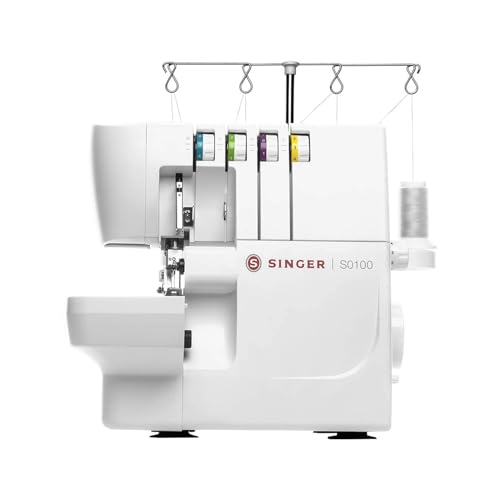 Singer S0100 Singer S0100 | $253.95 | Manual, color-coded | Arrives pre-threaded | 2, 3 or 4 | Price |
 Brother 1034D Brother 1034D | $284.99 | Manual, color-coded | Most tutorials available | 3 or 4 | Price |
 Janome 8002D Janome 8002D | $360.00 | Manual, color-coded | Clearly marked tension dials | 3 or 4 | Price |
 Juki MO-654DE Juki MO-654DE | $599.00 | Manual | Workbook and video included | 2, 3 or 4 | Price |
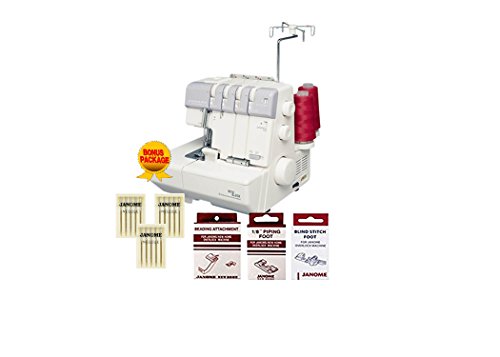 Janome MyLock 634D Janome MyLock 634D | $699.00 | Self-threading lower looper | Lay-in tension, retractable knife | 2, 3 or 4 | Price |
 Brother AIR1800 Brother AIR1800 | $899.99 | Air, push button | Air threading at a lower price | 2, 3 or 4 | Price |
 Brother Airflow 3000 Brother Airflow 3000 | $1,199.99 | Air | Brightly lit work area | 2, 3 or 4 | Price |
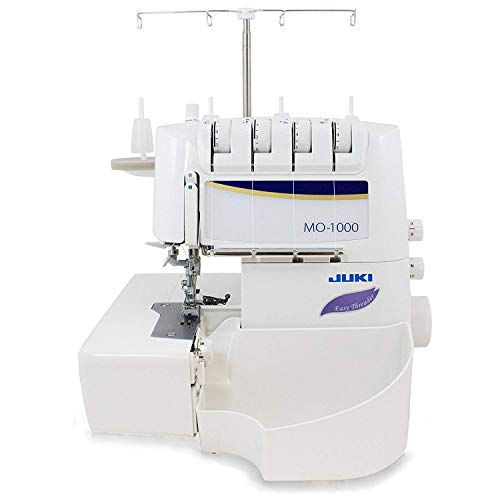 Juki MO-1000 Juki MO-1000 | $1,293.37 | Jet air, push button | Seconds-fast looper threading | Not listed | Price |
 Janome AirThread 2000D Janome AirThread 2000D | $1,399.00 | One-push air | Needle threader, built-in 2-thread converter | 2, 3 or 4 | Price |
Beginner
Beginner picks: learn on a standard serger, $250 to $360
Manual threading, but with color-coded guides and printed diagrams inside the front cover. Choose this tier if you are patient, budget-minded or not sure how often you will serge.
Brother 1034D Serger
$284.99Color-coded threading, 3 or 4 thread stitches, a metal frame and more free video tutorials than any other home serger. When you get stuck, someone has already filmed the fix for this exact machine.
Best for: Learning with lots of help online
Check price Singer S0100 Serger Overlock Machine
$253.95It arrives pre-threaded, so your very first session can be sewing rather than threading. Color-coded paths, adjustable differential feed and 2, 3 or 4 thread options round it out.
Best for: Sewing on day one
Check price Janome 8002D Serger
$360.00Color-coded threading and clearly marked tension dials, which make it easier to note settings that worked and return to them, with adjustable differential feed.
Best for: Beginners who like clear settings
Check pricePrices change often, so confirm on Amazon. As an Amazon Associate we earn from qualifying purchases.
Intermediate
Intermediate picks: easier threading or better teaching, $600 to $900
A middle path: machines that make threading easier or come with structured learning materials, plus the air threading pick that tops this page.
Brother AIR1800 Air Threading Serger
$899.99Air threading handles the loopers, you thread the needles, and you are sewing. It sews 2, 3 or 4 thread stitches with one or two needles, including flatlock and rolled hem.
Best for: Beginners who want threading solved
Check price Janome MyLock 634D Serger
$699.00The lower looper, usually the trickiest path, is self-threading, and lay-in tension dials mean threads snap into place. A quick change rolled hem and a retractable upper knife add flexibility.
Best for: A halfway step to air threading
Check price Juki Pearl Line MO-654DE Serger
$599.00Juki's widely recommended 2, 3 or 4 thread serger comes with an electronic workbook and instructional video, so a beginner has a structured way to learn stitch types and adjustments.
Best for: Structured learners
Check pricePrices change often, so confirm on Amazon. As an Amazon Associate we earn from qualifying purchases.
Expert
Expert picks: premium air threading, $1,200 to $1,400
Who should NOT buy this tier: a beginner who is testing whether serging is for them. These are excellent machines, but a $1,300 serger that sits in a closet is expensive. They make sense if you already sew garments often and want the easiest possible serger from day one.
Janome AirThread 2000D Serger
$1,399.00One-push air looper threading, a built-in needle threader, lay-in tension, an 8-piece feed dog system and a built-in one-step 2-thread converter. It removes more beginner friction than any other serger here.
Best for: The easiest serger to own
Check price Juki MO-1000 Air Threading Serger
$1,293.37Push-button jet air looper threading on Juki's premium home serger, suited to sewists who plan to switch thread colors for nearly every project.
Best for: Frequent thread changes
Check price Brother Airflow 3000 Air Threading Serger
$1,199.99Brother's upper-tier air threading overlocker with three presser feet and a brightly lit work area, helpful when threading needles and watching the knife line.
Best for: Good visibility while serging
Check pricePrices change often, so confirm on Amazon. As an Amazon Associate we earn from qualifying purchases.
What is an air threading serger?
On an air threading serger, each looper thread path is an enclosed tube. You insert the thread end at the entrance, press a button or lever, and a burst of air carries the thread through the looper to the exit. Threading that can take a beginner many minutes on a standard serger takes seconds.
One common misunderstanding: on most air threading sergers, only the loopers are air threaded. You still thread the needles by hand, although some models, like the Janome AirThread 2000D, include a needle threader to help. Owners frequently mention that the thread must be cut cleanly and inserted far enough for the air to catch it.
Air threading serger vs regular serger: is it worth the extra cost?
It depends on how often you change threads and how you feel about fiddly tasks. Our air threading vs regular serger comparison goes deeper; here is the quick version.
| Factor | Standard serger | Air threading serger |
|---|---|---|
| Typical price | About $250 to $360, e.g. Brother 1034D | About $900 to $1,400, e.g. Brother AIR1800 |
| Looper threading | By hand, in a set order | Push button |
| Needle threading | By hand | By hand, some with a threader |
| Changing colors | Tie-on method or full rethread | Quick rethread |
| After a thread breaks | May need to rethread in order | Rethread the looper in seconds |
| Best for | Patient learners, tight budgets | Frequent color changes, dexterity or vision challenges |
Air threading is especially worth considering if arthritis, tremor or low vision makes tweezers and tiny looper eyes difficult. Our guide to crafting with arthritis has more ideas for making sewing comfortable.
Is a serger hard to learn for a beginner?
A serger feels different from a sewing machine at first, but it is not hard to learn if you take it in stages:
- Sew with the factory threading. Many sergers arrive pre-threaded. Sew practice seams before you ever unthread it.
- Learn the tie-on method. Cut each thread near the cone, tie the new color on with a small knot, raise the presser foot, loosen tensions and pull the threads through one at a time.
- Thread from scratch once, deliberately. Follow the order in your manual exactly, usually upper looper, lower looper, then needles. Order matters.
- Change one tension dial at a time. Sew a sample after each change and label it with the setting.
- Keep the knife in mind. Guide fabric so the knife trims a sliver, never pins.
Our how to use a serger guide walks through each step.
Pins and the knife
Never serge over pins. A pin hitting the knife can break the blade or needle and send metal flying. Use clips such as Clover Wonder Clips 50, or remove pins well before they reach the foot.
What should a beginner sew first on a serger?
- Finish seam edges on a woven project. Serge the raw edges of a tote or pajama pants sewn on your regular machine.
- A pillowcase. Long straight seams, forgiving fabric and a quick result.
- Rolled hem napkins. A great way to learn the 3-thread rolled hem setting.
- A simple knit T-shirt or leggings. Sew the side and sleeve seams with a 4-thread overlock, then hem on your sewing machine or a coverstitch machine.
Use the garment fabric calculator to buy enough knit, and note that most serger patterns use a 1/4 to 3/8 inch seam allowance; the seam allowance chart helps when a pattern was written for a sewing machine.
What is the best cheap serger for beginners?
The Brother 1034D is the best inexpensive serger for beginners, and the Singer S0100 is the lowest-priced pick here. Very cheap no-name sergers below these are where owners most often report tension that will not balance, knives that dull quickly and poor instructions, which is especially discouraging for a beginner. If price is the main concern, the Brother 1034D is the safer choice. Compare the budget standouts in Janome 8002D vs Brother 1034D.
How we chose
We did not test these sergers in person. We focused on the features that decide how easy a serger is to learn: threading method, lay-in tension, color-coded guides, included learning materials, and differential feed. Rankings draw on manufacturer specifications, owner manuals and recurring themes in verified owner reviews from first-time serger owners, weighted toward threading difficulty and early frustrations.
Buying tips
- Before unthreading a pre-threaded serger, photograph every thread path from the front and side.
- Buy four cones of neutral serger thread and a pair of long tweezers.
- Label practice samples with tension settings for 3-thread, 4-thread and rolled hem.
- Check that your chosen model has a clear manual and good video support.
- Place the serger to the left or right of your sewing machine so you can swivel between them.
Frequently asked questions
What is the easiest serger to thread for a beginner?
Air threading sergers are the easiest, because the loopers thread with a push of a button. The Janome AirThread 2000D adds a needle threader and lay-in tension, making it the easiest overall, while the Brother AIR1800 is a lower-priced air threading option. Among standard sergers, the Janome MyLock 634D has a self-threading lower looper, which removes the trickiest path.
Is air threading worth it on a serger?
Air threading is worth it if you change thread colors often, find tweezers and small looper eyes difficult, or know rethreading would stop you from using the machine. If you are patient, sew with neutral thread most of the time and learn the tie-on method, a standard serger like the Brother 1034D does the same job for far less money.
Should a beginner buy a serger or a coverstitch machine first?
A serger first. It sews and finishes seams on knits and wovens, which almost every garment needs. A coverstitch machine only sews hems and decorative topstitching on knits. You can hem knits on a regular sewing machine with a twin needle until you know you want the professional finish a coverstitch machine gives.
Can a beginner learn to use a serger without classes?
Yes. Many sewists learn from the owner manual, manufacturer videos and free tutorials. Popular models like the Brother 1034D have extensive online help, and the Juki MO-654DE includes a workbook and instructional video. Start with the factory threading, sew practice seams, then learn rethreading. A single class can speed things up, but it is not required.
What serger thread should a beginner buy?
Start with four cones of polyester serger thread in one neutral color, such as white, grey or beige, depending on the fabrics you sew most. Serger seams sit inside garments, so exact color matching rarely matters. Once you are comfortable, add black cones and a textured nylon thread for rolled hems and swimwear. Avoid old or bargain thread that sheds lint.
How we research: we compare manufacturer specifications, owner manuals, published standards and recurring themes in verified owner reviews. We do not test products in person, and this is researched guidance, not professional advice. Follow your machine manual and pattern, and take care with rotary cutters, hot irons and needles. As an Amazon Associate we earn from qualifying purchases.