How Much Yarn for a Cowl? Yardage by Weight for Knit and Crochet
A cowl in worsted weight yarn takes roughly 200 to 300 yards to knit and 250 to 400 yards to crochet, based on published planning ranges. That is 1 to 2 worsted skeins of 100 grams, which run about 170 to 230 yards each. Crochet uses about 25 to 33 percent more yarn. Buy 10 to 15 percent extra.
Published yardage guides give planning ranges for a cowl in worsted weight yarn: 200 to 300 yards to knit and 250 to 400 yards to crochet. Crochet usually takes 25 to 33 percent more yarn than knitting because the stitches are taller and denser. Treat every figure here as a planning estimate: the yardage printed on your pattern always wins.
How much yarn for a cowl by yarn weight?
Yards are the reliable unit, because grams per yard change with fiber. Skeins of 100 grams and grams use the retailer yards-per-100-gram range for each weight, so a range of skeins covers both dense and lofty yarns.
| Yarn weight | Knit (yd) | Crochet (yd) | Yards per 100 g | 100 g skeins, knit | 100 g skeins, crochet | Grams, knit |
|---|---|---|---|---|---|---|
| Medium (worsted) | 200 to 300 | 250 to 400 | 170 to 230 | 1 to 2 | 2 to 3 | 90 to 180 g |
How many skeins and packs of yarn to buy for a cowl?
Skeins per pack and yards per skein come from each yarn label. The last column covers the top of the crochet range plus 10 percent, so knitters will usually need fewer packs.
| Yarn | Weight | Per skein | Skeins, knit | Skeins, crochet | Packs to buy |
|---|---|---|---|---|---|
| Caron One Pound 2-Pack | Medium | 454 g / 812 yd | 1 | 1 | 1 |
| Caron Simply Soft (3 Pack) | Medium | 170 g / 315 yd | 1 | 1 to 2 | 1 |
| Lion Brand Basic Stitch Anti-Pilling (3 Pack) | Medium | 100 g / 185 yd | 2 | 2 to 3 | 1 |
| Lion Brand Vanna's Choice (3 Pack) | Medium | 100 g / 170 yd | 2 | 2 to 3 | 1 |
Yarn and tools for a cowl

Lion Brand Vanna's Choice Yarn, Medium Worsted #4, 3 Pack, Barley
$18.82Three 170 yard skeins of worsted acrylic with a published knit gauge on US 9 needles.
Check price
Clover Takumi Bamboo Circular Knitting Needle, 24 inch, US 8
$7.20A 24 inch bamboo US 8 circular, a handy length for cowls and hats worked in the round.
Check price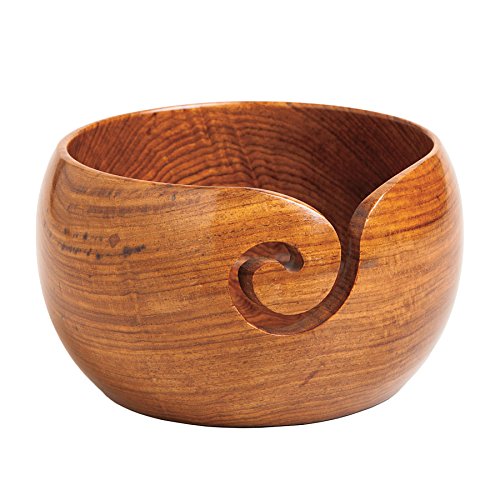
Knit Picks Rosewood Yarn Bowl
$27.00A rosewood yarn bowl that keeps a 100 g cake from rolling away while you work.
Check pricePrices change often, so confirm on Amazon. As an Amazon Associate we earn from qualifying purchases.
How does a cowl compare with other knit and crochet projects?
All figures below are for the same yarn so you can compare projects directly: worsted weight for knit and crochet, plus bulky weight for knit where a published range exists.
| Project | Worsted, knit (yd) | Worsted, crochet (yd) | Bulky, knit (yd) |
|---|---|---|---|
| Adult Hat | 200 to 225 | 250 to 300 | 125 to 200 |
| Cowl | 200 to 300 | 250 to 400 | Not published |
| Mittens | 150 to 250 | 200 to 325 | 100 to 150 |
| Scarf | 375 to 500 | 475 to 675 | 250 to 375 |
| Adult Socks | 275 to 375 | 350 to 500 | 250 to 350 |
| Shawl | 375 to 550 | 475 to 725 | 350 to 500 |
| Adult Sweater | 1,125 to 1,625 | 1,400 to 2,150 | 950 to 1,125 |
| Baby Blanket | 1,000 to 1,125 | 1,250 to 1,500 | 875 to 1,000 |
| Throw Blanket | 2,250 to 3,125 | 2,825 to 4,150 | 2,000 to 2,250 |
| Twin Size Blanket | 4,100 to 5,700 | 5,150 to 7,600 | 3,650 to 4,100 |
| Full Size Blanket | 5,000 to 6,900 | 6,250 to 9,200 | 4,450 to 5,000 |
| Queen Size Blanket | 6,250 to 8,650 | 7,800 to 11,500 | 5,550 to 6,250 |
| King Size Blanket | 7,500 to 10,400 | 9,400 to 13,850 | 6,650 to 7,500 |
Why do yarn estimates for a cowl vary so much?
- Planning estimates only. The yardage stated on the pattern always wins.
- Crochet usually uses about 25 to 33 percent more yarn than knitting for the same size piece.
- Stitch pattern changes yardage: garter used about 46 percent more yarn than stockinette in one test; cables, textures, and colorwork use more.
- Buy 10 to 15 percent extra, from the same dye lot.
- Lion Brand ranges do not state knit or crochet; they are used here as the knit baseline.
Buy it all from one dye lot
Colors shift between dye lots, and a new lot halfway through a cowl can show as a stripe. Buy your full amount plus extra at once. The yarn yardage calculator works out a custom size and gauge.
Frequently asked questions
How many yards of yarn do you need for a cowl?
Published planning ranges put a cowl at 200 to 300 yards of worsted weight yarn to knit and 250 to 400 yards to crochet. That is usually one skein for a simple knit cowl. Size, stitch pattern and how tightly you work all shift the total, so treat these figures as planning estimates. The yardage printed on your pattern always wins.
How many skeins of yarn for a cowl?
In 100 gram skeins of worsted, which run about 170 to 230 yards each, a cowl takes 1 to 2 skeins to knit and 2 to 3 to crochet. With Lion Brand Basic Stitch at 185 yards per skein, that is 2 skeins knit or 2 to 3 crocheted. Always count by yards on the label rather than grams, because fiber content changes how far 100 grams goes.
Does crochet use more yarn than knitting for a cowl?
Yes. Crochet usually uses about 25 to 33 percent more yarn than knitting for the same size piece, because crochet stitches are taller and denser. For a cowl in worsted that is 200 to 300 yards knit against 250 to 400 yards crocheted, a difference of up to 100 yards, or about 1 more skein of 100 grams. Open lacy crochet stitches narrow the gap; dense single crochet widens it.
How much yarn for a cowl in grams?
Divide yards by the yarn's yards per 100 grams, then multiply by 100. Worsted runs about 170 to 230 yards per 100 grams, so a cowl knit in worsted weighs roughly 90 to 180 grams. Grams vary with fiber: wool, cotton and acrylic in the same weight class can differ a lot in yards per gram.
What yarn weight is best for cowls?
CYC-based charts list cowls among the typical projects for bulky (chunky) and super bulky yarn. Finer yarn gives drape and detail, while heavier yarn works up faster and warmer. In worsted, a cowl takes 200 to 300 yards knit. Pick the weight your pattern was written for, then match its gauge with a swatch.
How much extra yarn should I buy for a cowl?
Buy 10 to 15 percent more than the estimate, all from the same dye lot, because a second lot can show as a visible stripe. For a cowl at the top of the worsted crochet range, 400 yards, that means about 450 to 460 yards in total. Garter stitch used about 46 percent more yarn than stockinette in one test, and cables, textures and colorwork add more.
How we research: we compare manufacturer specifications, owner manuals, published standards and recurring themes in verified owner reviews. We do not test products in person, and this is researched guidance, not professional advice. Follow your machine manual and pattern, and take care with rotary cutters, hot irons and needles. As an Amazon Associate we earn from qualifying purchases.