Juki HZL-G120 Review: Is This $819 Box Feed Sewing Machine Worth It?
The Juki HZL-G120 is worth about $819 for sewists who want Juki's box feed for even seams on knits, denim and layers without paying for automation. Juki lists 180 stitch patterns, a 7 mm zigzag, 900 stitches per minute, a lever needle threader and a drop feed switch. It lacks an automatic thread cutter and knee lifter.
Our verdict
Buy the Juki HZL-G120 if even feeding matters most to you: knits that stretch out, slippery fabrics that shift, hems through several layers of denim, or quilt blocks that need to stay matched. Skip it if you want the machine to trim threads and lift the foot for you, since that automation starts on the Juki HZL-DX5, or if your budget is closer to $400, where the Janome JW8100 covers everyday sewing well.
Juki America lists 180 stitch patterns including 1 font and buttonhole patterns, a maximum sewing speed of 900 stitches per minute, a 7 mm maximum zigzag width, a 5 mm maximum stitch length, the box feed system, an automatic lever needle threader, a drop feed switch for free-motion work, a wide underarm space and a weight of 20 lb. Juki's suggested retail price is $1,499.
Juki HZL-G120 specs
| Stitch patterns | 180, including 1 font and buttonhole patterns |
|---|---|
| Buttonholes | 8 types listed |
| Feed | Box feed system |
| Max sewing speed | 900 stitches per minute |
| Max zigzag width / stitch length | 7 mm / 5 mm |
| Needle threader | Automatic, lever operated |
| Drop feed | Yes, switch |
| Presser foot | Manual lift, adjustable pressure, low shank |
| Needle / bobbin | 130R/705H needles; class 15 bobbins |
| Weight / size | 20 lb; 17.5 W x 11.5 H x 8.75 D in |
| Suggested retail price | $1,499 (Juki America) |
Specs above come from Juki America's HZL-G120 product page, Juki America's warranty FAQ and the manufacturer bullets on the Amazon listing.
What does the Juki HZL-G120 do best?
Box feed is the reason to buy the Juki HZL-G120. On most home machines the feed dogs move in an oval, touching the fabric only briefly. Juki's box feed moves them up, back, down and forward in a rectangle, so they stay in contact with the fabric longer. Juki says this eliminates the shrinking and shifting of fabric, which is what makes knit seams wavy and quilt layers creep.
Juki also points to improved presser foot construction for powerful feeding, calling out hemming denim jeans. With a 20 lb body, a wide underarm space and adjustable foot pressure, it is steadier on bulky projects than lightweight machines. The drop feed switch lowers the feed dogs for free-motion quilting and embroidery.
For everyday garment work, 180 stitch patterns and a 7 mm zigzag cover stretch stitches, overcasting, decorative stitches and lettering, and the lever needle threader helps tired eyes. Our how to choose a sewing machine guide explains where feed systems matter most.
What is the honest weakness of the Juki HZL-G120?
At about $819 you are paying for feeding, not convenience. Juki lists a manual presser foot lift, and the spec page shows no automatic thread cutter or knee lifter. The Juki HZL-HT740 adds automatic upper and lower thread trimming for less money, and the Juki HZL-DX5 combines box feed with trimming, a pivot function and electronic foot lift for about $280 more.
Its 900 stitches per minute is slower than many computerized rivals, which matters little for garments but is noticeable on long quilting seams. Juki's page is also slightly inconsistent, listing 7 buttonhole patterns and 8 buttonhole types; count on the buttonholes Juki shows, and note that some sewing forum members prefer Juki's F series for buttonholes.
Finally, the owner review pool is thin. PatternReview has discussion threads rather than many formal reviews, and warranty service runs through the selling dealer.
What do Juki HZL-G120 owners consistently report?
- Praise: even, professional-looking seams attributed to the box feed.
- Praise: sews through thick fabric such as several layers of denim without fuss.
- Praise: sturdy and stable, with little vibration for its size.
- Praise: useful for both garment sewing and quilting, with drop feed for free-motion.
- Complaint: some sewists prefer the buttonholes and feel of Juki's pricier F series.
Owner reviews of this model are fewer than for budget brands, so treat these themes as a smaller sample.
What warranty and support come with the Juki HZL-G120?
Juki America lists a limited warranty of 5 years on all other parts related to factory defects and 2 years on motors, light assembly, wiring, switches, circuit boards and speed control. Routine service, tension and skipped stitches are not covered, and warranty service is provided by the dealer you bought from, so check that your seller is an authorized Juki dealer.
The machine uses common 130R/705H needles and class 15 bobbins, so supplies are easy to find. We found no recall for the HZL-G120 in a search of CPSC's sewing machine recall listings.
How does the Juki HZL-G120 compare with the Janome JW8100 and Juki HZL-DX5?
Our Juki HZL-G120 vs Janome JW8100 comparison is the main head-to-head, and Juki vs Janome covers the brands more broadly.
| Machine | Price | Stitches | Max width | Feed | Best reason to choose it |
|---|---|---|---|---|---|
| Juki HZL-G120 | about $819 | 180 patterns | 7 mm | Box feed | Even feeding without paying for automation |
| Janome JW8100 | about $369 | 100 | 7 mm | 7-piece feed dogs | Half the price, extension table and hard cover |
| Juki HZL-HT740 | about $649 | See listing | Not listed | Standard | Automatic thread trimming |
| Juki HZL-DX5 | about $1,099 | 185 patterns | 7 mm | Box feed | Box feed plus trim, pivot, electronic lift |
Sibling reviews: Janome JW8100 review, Juki HZL-DX5 review and Juki HZL-F600 review. Our best sewing machines for clothes ranks garment machines by budget.
What space, accessories and budget does the Juki HZL-G120 need?
At 17.5 inches wide and 20 lb, the G120 wants a solid table rather than a folding card table; the Sew Ready Pro Stitch gives room to the left for garment pieces. If the built-in light feels dim on dark fabric, a stick-on strip like the Madam Sew Light Strip or a clamp lamp such as the Daylight Slimline 4 helps.
- Needles: it takes 130R/705H household needles: Schmetz Universal Needles for wovens, Schmetz Stretch Needles for knits and Schmetz Gold Jeans needles 100/16 for denim hems.
- Thread: a basic color set like the Gutermann Sew-All 20 Spool Set.
- Feet: Juki's standard accessory list does not include a walking foot or knee lifter; box feed reduces the need for a walking foot, but budget $30 to $60 for extra low shank feet if you quilt.
Plan yardage with the garment fabric calculator, and see our intermediate garment sewing setup.
Who it suits
- Garment sewists who fight wavy knit seams and shifting slippery fabric
- Sewists hemming jeans and sewing through several layers
- Quilters who want even piecing plus drop feed for free-motion
- Buyers with a local Juki dealer for warranty service
Who should skip it
- Sewists who want automatic thread trimming or a knee lifter; see the Juki HZL-DX5
- Budget buyers whose sewing is mainly cotton and simple projects; the Janome JW8100 is about $450 less
- Quilters who want high piecing speed or a larger harp
Alternatives to the Juki HZL-G120

Janome JW8100 Computerized Sewing Machine
$369.00100 stitches, 7 one-step buttonholes, a 7-piece feed dog system, extension table, even feed foot and hard cover for about $369.
Check price
Juki HZL-HT740 Computerized Sewing Machine
$649.00Adds automatic upper and lower thread trimming, a metal interior frame and 6.4 inches from needle to body for about $170 less.
Check price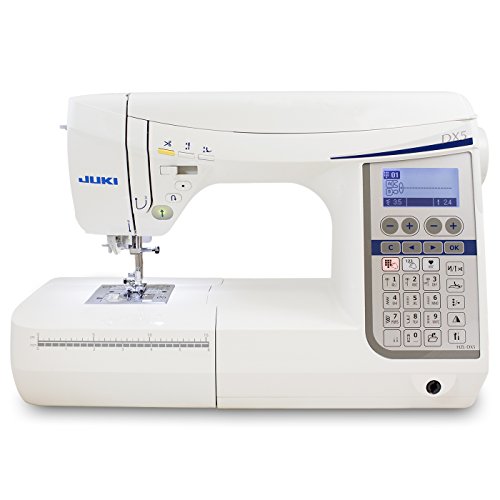
Juki HZL-DX5 Computerized Sewing Machine
$1,099.00Keeps box feed and adds automatic thread trimming, a presser foot pivot function, electronic foot lift and 16 buttonholes.
Check pricePrices change often, so confirm on Amazon. As an Amazon Associate we earn from qualifying purchases.
This review is compiled from manufacturer specifications, the owner manual, warranty terms and recurring themes in verified owner reviews. We did not test this machine in person.
Frequently asked questions
What is box feed on the Juki HZL-G120?
Box feed moves the feed dogs in a rectangular path, up, back, down and forward, instead of the oval most home machines use. On the Juki HZL-G120 that keeps the feed dogs in contact with the fabric longer, which Juki says eliminates shrinking and shifting. The benefit shows most on knits, slippery fabrics and multiple layers.
Juki HZL-G120 vs Janome JW8100: which should I buy?
Choose the Janome JW8100 at about $369 for 100 stitches, 7 one-step buttonholes, an extension table, even feed foot and hard cover, which suits most beginners and quilters. Choose the Juki HZL-G120 at about $819 for box feed, 180 stitch patterns and a heavier 20 lb body, which pays off for knits, slippery fabrics and thick seams.
Is the Juki HZL-G120 good for quilting?
It works well for piecing and smaller quilts. Box feed keeps layers matched, the drop feed switch lets you free-motion quilt, and the wide underarm space helps. It runs at 900 stitches per minute and has a manual presser foot lift with no knee lifter, so quilters making many large quilts often prefer a dedicated straight stitch or larger harp machine.
Does the Juki HZL-G120 have an automatic thread cutter?
Juki does not list an automatic thread cutter, and the presser foot lift is manual. The HZL-G120 focuses its price on box feed and stitch variety. If thread trimming matters, the Juki HZL-HT740 trims upper and lower threads automatically, and the Juki HZL-DX5 adds trimming, a pivot function and electronic foot lift to box feed.
Can the Juki HZL-G120 sew denim?
Yes. Juki highlights improved presser foot construction for powerful feeding and names hemming denim jeans as an example, and owners report sewing through several layers of denim. Use a jeans needle in size 100/16, lengthen the stitch for topstitching, and walk the handwheel slowly over the thickest hem crossings on the G120.
Sources
- Juki HZL-G120 product page and specifications (Juki America)
- Juki HZL-G220 and G120 brochure (PDF, Juki America)
- Juki America FAQ, including home machine warranty terms
- CPSC sewing machine recall listings
- PatternReview discussion: Juki HZL-G120 or Janome Skyline S3
- Amazon listing feature bullets and owner reviews (aggregated themes)
How we research: we compare manufacturer specifications, owner manuals, published standards and recurring themes in verified owner reviews. We do not test products in person, and this is researched guidance, not professional advice. Follow your machine manual and pattern, and take care with rotary cutters, hot irons and needles. As an Amazon Associate we earn from qualifying purchases.