Sashing and Border Calculator: Strip Counts, Cut Lengths and Yardage for Quilts
Sashing strips are cut 1/2 inch wider than finished and as long as the unfinished block. Thirty 12 inch blocks set 5 by 6 with 2 inch sashing and cornerstones need 71 strips cut 2 1/2 x 12 1/2 inches and 42 cornerstones. With 3 and 5 inch borders the quilt finishes 88 x 102 inches.
Sashing is the fabric strips between quilt blocks, and borders are the frames around the outside. Enter your block layout, sashing width and up to two borders. The calculator counts every strip, gives the cut sizes and yardage, and shows the size of the finished quilt.
Your layout
Your results
Finished quilt size
Center with sashing 72 x 86 in, 30 blocks
| Sashing strips | 71 cut 2 1/2 x 12 1/2 in |
|---|---|
| Cornerstones or long strips | 42 squares cut 2 1/2 in |
| Sashing fabric | 1 3/4 yd (+ 1/4 yd cornerstones) |
| Border 1 | 9 strips x 3 1/2 in, 7/8 yd |
| Border 2 | 10 strips x 5 1/2 in, 1 5/8 yd |
| Total fabric | 4 1/2 yd |
Machines that handle this quilt comfortably
Baby, crib and wall quilts fit through almost any machine. A good computerized machine with a walking foot and wide table is plenty.
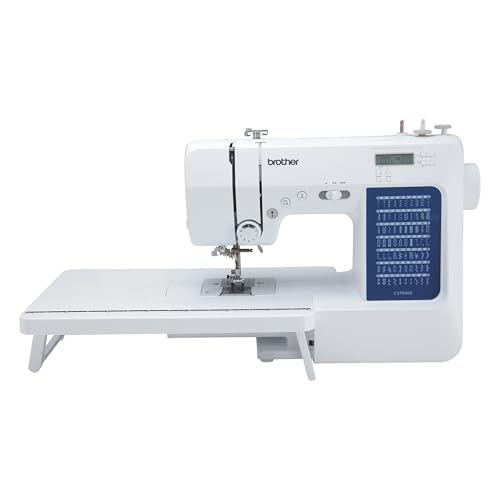
Brother CS7000X Computerized Sewing and Quilting Machine
$279.99Wide extension table, quilt guide and walking-foot friendly, at a beginner price.
Check price
Janome 3160QDC-G Sewing and Quilting Machine
$749.00Janome build quality in a compact computerized machine made with quilters in mind.
Check price
Juki TL-2000Qi Long-Arm Sewing and Quilting Machine
$999.00A straight-stitch workhorse that grows with you into bigger quilts.
Check pricePrices change often, so confirm on Amazon. As an Amazon Associate we earn from qualifying purchases.
Machines with room for throws and lap quilts
At this width a larger harp makes free-motion and straight-line quilting far less of a wrestle.
Janome 3160QDC-G Sewing and Quilting Machine
$749.00Compact and quilter-focused, fine for throws with patient rolling.
Check price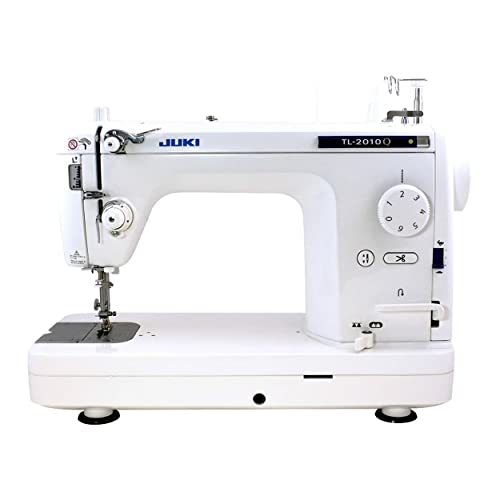
Juki TL-2010Q High-Speed Sewing and Quilting Machine
$1,199.00High-speed straight stitch with a large work area and knee lift.
Check price
Janome HD9 Professional High-Speed Straight Stitch Machine
$1,599.00A professional straight-stitch machine built for long quilting sessions.
Check pricePrices change often, so confirm on Amazon. As an Amazon Associate we earn from qualifying purchases.
Machines built for twin to queen quilts
Twin and queen tops are where an extended arm pays for itself in comfort and time.
Juki TL-2010Q High-Speed Sewing and Quilting Machine
$1,199.00The most popular step up for quilters moving past a standard machine.
Check price
Janome 1600P-QC Straight Stitch Sewing and Quilting Machine
$1,599.00Straight-stitch speed and a heavy frame for big quilts.
Check price
Juki TL-15 Mid-Arm Quilting and Piecing Machine
$1,399.00A midarm with a much bigger throat for queen-size quilting at a table.
Check pricePrices change often, so confirm on Amazon. As an Amazon Associate we earn from qualifying purchases.
Longarms and frames for king-size quilts
King quilts are heavy. A midarm, sit-down longarm or frame system lets the machine do the work instead of your shoulders.

Grace Little Rebel Sewing and Quilting Machine
$2,799.00A midarm with built-in stitch regulation that can sit on a table or a frame.
Check price
Handi Quilter Amara ST 20 Stationary Longarm with Lift Table
$9,495.00A 20 inch sit-down longarm with a lift table: room for king quilts without a frame.
Check price
Grace Qnique 16X Longarm with Q-Zone Queen Frame
$4,849.00A complete longarm and frame system for quilting large tops edge to edge.
Check pricePrices change often, so confirm on Amazon. As an Amazon Associate we earn from qualifying purchases.
How do you calculate sashing for a quilt?
There are two common sashing layouts, and they count strips differently. The worked example uses 30 blocks of 12 inches set 5 across and 6 down with 2 inch finished sashing.
Framed sashing with cornerstones
Every block is surrounded by sashing, including the outside edges, and a cornerstone sits at every crossing.
- Horizontal strips: blocks across x (rows + 1) = 5 x 7 = 35.
- Vertical strips: blocks down x (columns + 1) = 6 x 6 = 36. Total: 71 strips.
- Cut size: sashing width + 1/2 by block size + 1/2, so 2 1/2 x 12 1/2 inches.
- Cornerstones: (columns + 1) x (rows + 1) = 6 x 7 = 42, each cut 2 1/2 inches square.
- Yardage: cut 12 1/2 inch wide strips across the fabric and subcut them every 2 1/2 inches. Each strip gives 16 pieces, so 71 pieces take 5 strips, 62.5 inches, or 1 3/4 yards. The cornerstones take 3 strips 2 1/2 inches wide, 1/4 yard.
- Center size: 5 blocks x 12 + 6 strips x 2 = 72 inches wide, and 6 x 12 + 7 x 2 = 86 inches long.
Sashing without cornerstones
Short strips go between blocks in each row, and one long strip goes between rows, with no sashing around the outside. The same layout needs 24 short strips cut 2 1/2 x 12 1/2 inches and 5 long strips cut 2 1/2 x 68 1/2 inches. The long strips are longer than the fabric is wide, so they are joined from 9 width-of-fabric strips. The center measures 68 x 82 inches and uses 1 3/8 yards.
How do you calculate border strips and yardage?
This calculator uses butted borders, the most common method: sides first, then top and bottom. Each border adds twice its width to both dimensions of the quilt.
- Side borders: 2 strips cut 3 1/2 inches wide (3 inches + 1/2) and as long as the unfinished center, 86 1/2 inches.
- Top and bottom borders: 2 strips as long as the center width plus both side borders, 72 + 6 + 1/2 = 78 1/2 inches.
- Strips to cut: total length 330 inches, divided by about 39 1/2 usable inches per joined strip, rounds up to 9 strips, which is 7/8 yard.
- Second border: repeat on the bigger quilt. The 5 inch border is cut 5 1/2 inches wide, sides 92 1/2 inches and ends 88 1/2 inches: 10 strips, 1 5/8 yards.
The finished quilt is 72 + 6 + 10 = 88 inches wide and 86 + 6 + 10 = 102 inches long. All together, sashing, cornerstones and both borders take 4 1/2 yards if each is a different fabric.
How much sashing do common layouts need?
With 2 inch finished sashing, here is how the two layouts compare. Framed sashing with cornerstones makes the quilt 4 inches bigger in each direction than inner-only sashing.
| Layout | Blocks | With cornerstones | Center size | Without cornerstones | Center size |
|---|---|---|---|---|---|
| 3 x 3 of 12 in blocks | 9 | 24 strips, 16 stones, 3/4 yd | 44 x 44 | 6 short, 2 long, 5/8 yd | 40 x 40 |
| 4 x 5 of 12 in blocks | 20 | 49 strips, 30 stones, 1 1/2 yd | 58 x 72 | 15 short, 4 long, 7/8 yd | 54 x 68 |
| 5 x 6 of 12 in blocks | 30 | 71 strips, 42 stones, 1 3/4 yd | 72 x 86 | 24 short, 5 long, 1 3/8 yd | 68 x 82 |
| 5 x 7 of 10 in blocks | 35 | 82 strips, 48 stones, 1 3/4 yd | 62 x 86 | 28 short, 6 long, 1 1/4 yd | 58 x 82 |
| 6 x 7 of 12 in blocks | 42 | 97 strips, 56 stones, 2 1/2 yd | 86 x 100 | 35 short, 6 long, 2 yd | 82 x 96 |
| 7 x 8 of 12 in blocks | 56 | 127 strips, 72 stones, 2 7/8 yd | 100 x 114 | 48 short, 7 long, 2 3/8 yd | 96 x 110 |
| 8 x 8 of 10 in blocks | 64 | 144 strips, 81 stones, 2 5/8 yd | 98 x 98 | 56 short, 7 long, 2 3/8 yd | 94 x 94 |
How much fabric does a quilt border take?
Borders around a 60 x 72 inch center, 5 by 6 blocks of 12 inches with no sashing. Crosswise yardage assumes strips joined end to end; lengthwise yardage is enough to cut the longest border in one piece.
| Border width | Cut width | Strips (crosswise) | Crosswise yardage | Lengthwise yardage | Quilt size |
|---|---|---|---|---|---|
| 2 in | 2 1/2 in | 7 | 1/2 yd | 2 1/8 yd | 64 x 76 |
| 3 in | 3 1/2 in | 8 | 7/8 yd | 2 1/8 yd | 66 x 78 |
| 4 in | 4 1/2 in | 8 | 1 yd | 2 1/8 yd | 68 x 80 |
| 5 in | 5 1/2 in | 8 | 1 1/4 yd | 2 1/8 yd | 70 x 82 |
| 6 in | 6 1/2 in | 8 | 1 1/2 yd | 2 1/8 yd | 72 x 84 |
| 8 in | 8 1/2 in | 8 | 2 yd | 2 1/8 yd | 76 x 88 |
Lengthwise yardage is often more fabric for narrow borders, but the leftover width is still usable for binding or backing. For wide borders on big quilts, cutting lengthwise can be close to the same amount and avoids joining seams entirely.
Measure through the middle
Quilt tops stretch at the edges. Measure the length through the center and cut both side borders to that number, then ease the quilt to fit. Borders cut to the edge measurement tend to ripple.
Should you use sashing and cornerstones at all?
Sashing is optional, and it solves real problems. It separates busy blocks so each one reads clearly, makes the quilt bigger without making more blocks, and hides small size differences between blocks, since you can ease a block to a strip more easily than to another pieced block. Cornerstones go one step further: every row seam meets at a square, which makes lining up the rows much easier.
The cost is time and extra cutting. A 5 by 6 layout with cornerstones adds 71 strips and 42 squares to sew. For planning the blocks themselves, the quilt block size calculator works backward from a target size, and the blocks needed calculator counts blocks with sashing included. When the top is done, the quilt binding calculator and quilt backing calculator finish the plan.
Frequently asked questions
How do you calculate sashing strips for a quilt?
Cut each strip to the finished sashing width plus 1/2 inch, and to the unfinished block length. For a 5 by 6 layout of 12 inch blocks with framed sashing and cornerstones, count 35 horizontal and 36 vertical strips, 71 in all, each 2 1/2 x 12 1/2 inches, plus 42 cornerstones cut at 2 1/2 inches. That uses 1 3/4 yards of sashing fabric.
What are cornerstones in quilt sashing?
Cornerstones are small squares placed where sashing strips cross, cut the same size as the sashing width plus seam allowance. They make the sashing look like a lattice, help line up rows because every seam meets at a square, and use scraps. Without cornerstones, sashing is usually short strips between blocks and one long strip between rows.
How long should I cut quilt borders?
Measure the quilt top through the center, not the edges, and cut side borders to that length. Sew them on, then measure the width through the center including the new borders and cut the top and bottom borders. For this 72 x 86 inch center, the first 3 inch side borders are cut 86 1/2 inches long and the top and bottom 78 1/2 inches.
Should borders be cut on the lengthwise grain?
Long borders cut along the length of the fabric parallel to the selvage stretch less and need no joining seams, which helps a large quilt hang straight. The trade-off is fabric: the 5 inch outer border here needs 1 5/8 yards cut crosswise and pieced, but 2 5/8 yards to cut in one length. Crosswise strips joined with straight or diagonal seams are fine for most quilts.
How wide should sashing be?
Common finished sashing widths are 1, 1 1/2, 2 and 3 inches. A good starting point is about one sixth of the block size, so 2 inches for 12 inch blocks. Narrow sashing frames each block quietly, while wide sashing gives the eye a rest and makes the quilt bigger with fewer blocks. Try a few widths in the calculator and watch the final size change.
Do borders need to be the same width on all sides?
No. Different widths on the sides and the ends are a common way to hit an exact bed size, since most bed quilts are longer than they are wide. Most quilters keep the width equal on opposite sides so the quilt looks balanced. The calculator uses equal borders all around, so adjust one pair by hand if you need the length to change.
How we research: we compare manufacturer specifications, owner manuals, published standards and recurring themes in verified owner reviews. We do not test products in person, and this is researched guidance, not professional advice. Follow your machine manual and pattern, and take care with rotary cutters, hot irons and needles. As an Amazon Associate we earn from qualifying purchases.